
Julius Whittier
American football player
About Julius Whittier
Lived 1950 – 2018 (aged 67–68). Julius Whittier was an American.
Julius Whittier (July 7, 1950 – September 25, 2018) was the first black player on the University of Texas football team, among his other accomplishments.
Early life Whittier was born Julius Edward Whittier in San Antonio, Texas, on July 7, 1950. His father, Oncy Whittier, was a doctor. His mother, Loraine, was a schoolteacher and community activist who had led protests against a grocery store chain that refused to employ black cashiers. He had a younger sister named Mildred. Whittier's uncle Edward Sprott was said by Whittier to have been the head of the N.A.A.C.P. in Beaumont, Texas, where his house was bombed.
At 5'10" and 193 pounds, Whittier was not as large as many college football players.
Professional career For much of his professional career, he worked as a senior prosecutor in the Dallas County District Attorney's office. He retired in 2012 after being diagnosed with Alzheimer's disease. In 2011, his kitchen caught fire, and his home was destroyed. He then agreed to undergo a neuropsychological examination which found that he was suffering from Alzheimer's. According to Mildred, he wandered away from home twice and lost the ability to process information and care for himself.
Legacy Whittier's success opened doors between the University of Texas and black athletes.
Hall of Fame football legend Earl Campbell, who along with Ricky Williams gave his name to the field within the University of Texas football stadium, said, “I would not have been at this university except for Julius.” Campbell named Donnie Little, who was the first Black quarterback at Texas, Roosevelt Leaks, Raymond Clayborn and Ricky Williams as players for whom Whittier paved the way.
"Julius paved the road that gave us the opportunity," said Roosevelt Leaks, who was the first black football player from Texas to earn All-American and All-Conference honors. Whittier was Leaks' guide on campus when Leaks was being recruited.
Honors Whittier was inducted into the Texas Athletics Hall of Honor in 2013. His photograph is in the Frank Denius Family University of Texas Athletics Hall of Fame. He is a member of the San Antonio Independent School District Hall of Fame. After he died in 2018, the Texas Longhorns football team wore a "JW" decal on their helmets and dedicated a win over Kansas State to him.
On Friday, November 27, 2020, a 12-and-a-half foot bronze sculpture of Whittier was unveiled near the north end of Darrell K Royal-Texas Memorial Stadium. There was a discussion about naming part of the stadium for Whittier, but a statue was determined to be a better idea.
Don’t just read it —
keep it.
Full-length biographies made to live with: read them, listen on the way to work, watch them tonight.
- E-book
- Audio
- Video
Instant download · yours to keep · every purchase keeps this site free
Important facts
People in Julius Whittier's life
Named in this biography and alive at the same time
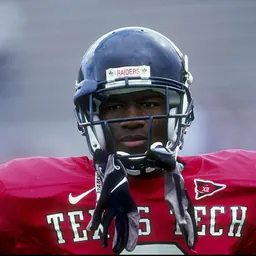

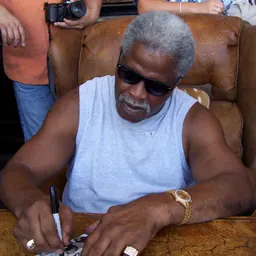


Contemporaries
People whose lives overlapped Julius Whittier's




Frequently asked questions
Who was Julius Whittier?
American football player (1950–2018)
When was Julius Whittier born?
Julius Whittier was born in 1950.
When did Julius Whittier die?
Julius Whittier died in 2018.
What nationality was Julius Whittier?
Julius Whittier was American.
Sources & further reading
Cite this page
APA: Biography.guide. (2026). Julius Whittier. https://biography.guide/julius-whittier/
MLA: "Julius Whittier." Biography.guide, https://biography.guide/julius-whittier/.
Chicago: "Julius Whittier." Biography.guide. https://biography.guide/julius-whittier/.
Data last updated: 2026-09-20 · Spot an error? Report a correction.
Page generated 2026-09-27 05:31 UTC