
Julius Eisenstein
Polish-American anthologist, diarist, encyclopedist, Jewish scholar, historian and philanthropist
About Julius Eisenstein
Lived 1854 – 1956 (aged 101). Julius Eisenstein was an American and Russian writer, translator, publisher and encyclopedist, known for Encyclopedia and Hebrew language.
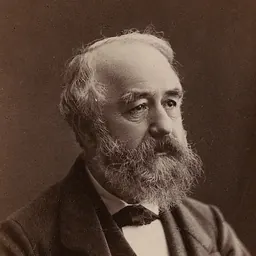
Julius (Judah David) Eisenstein (November 12, 1854 – May 17, 1956) was a Polish-Jewish-American anthologist, diarist, encyclopedist, Hebraist, historian, philanthropist, and Orthodox polemicist born in Międzyrzec Podlaski (known in Yiddish as Mezritch d'Lita), a town with a large Jewish majority in what was then Congress Poland. He died in New York City at the age of 101.
Lineage, education and early years Yehuda Dovid Eizensztejn, as he was named at birth, was the second of two children born to Rabbi Zeev Wolf and Toba Bluma (née Barg). His sister, Henna, was a year and a half older. When he was ten years old, his father became the first Jew from Mezritch to emigrate to the United States.
As a child, therefore, his education in Talmud was left to his paternal grandfather, Azriel Zelig, the son of Noson Neta Eizensztejn, a Talmudic scholar and dyer of indigo originally from the village of Stawiska (in Yiddish, Stavisk). His antecedents had moved there from Königsberg and claimed to be direct descendants of Rashi.
In 1872, Toba Bluma emigrated to the United States with her son and daughter and joined Zeev Wolf in New York. There, Yehuda Dovid anglicized his first name to Julius and adopted the American spelling of his family name. He married the following year.
Eisenstein's parents eventually divorced, after which his father made aliyah to Jerusalem, where he remarried and raised a second family. Both Zeev Wolf and Toiba Bluma's family were proto-Zionists. Her maternal grandfather, Rabbi Tzvi Zeev (in Yiddish, Hirsch Wolf) Fiszbejn, had already moved to Jerusalem with his two sons, Abraham and Isaac, and other descendants in 1863. Tzvi Zeev was a wealthy brush manufacturer in Mezritch and financed the construction of the original Etz Chaim Yeshiva in the Old City. They and Zeev Wolf are all buried near each other in the Mount of Olives Jewish Cemetery.
For obvious reasons, he was known by many colleagues as the Ba'al ha-Otzrot ("Master of the Anthologies"). His works remain standard reference books in yeshivot, batei midrash, synagogues, and Jewish libraries to this day.
Philanthropist and polemicist Eisenstein first visited the Land of Israel in 1899 via Egypt, where he met with local Jewish communities in Alexandria and Cairo. After arriving in Jaffa, he toured fledgling Zionist villages, including Rishon LeZion, Rehovot, and Petah Tikva, and reunited with his father in Jerusalem. Among other consumables, he brought ten thousand liters of American flour, which he sold without profit, half in Jaffa and half in Jerusalem. This marked the first time American flour was imported into the country. Until then, higher-cost Russian flour was imported via Odessa, and its price often placed it beyond the reach of many poor people.
Though Eisenstein became widely read as a writer, he was less successful as a businessman and lost much of his fortune in a failed effort to establish an agricultural colony for Jewish immigrants in New Jersey.
Family Eisenstein and his wife, Rebecca (née Cohen), were the parents of nine children: Isaac (1875-1961), Nathan (1878-1952), Miriam (1882-1969), Lilly (1885-1916), Selig (1886-1978), Birdie (1888-1984), Rose (1891-1984), and Benedict (1894-1983). The ninth, a daughter, Hattie, died from diphtheria at the age of three.
His grandson, Ira Eisenstein, who did not inherit his grandfather's outlook, was ordained a Conservative rabbi and is considered one of the founders of Reconstructionist Judaism. Eisenstein was also a second cousin of American champion bridge player Harry Fishbein. Popular kosher cookbook author Susie Fishbein is married to a second cousin thrice-removed.
Don’t just read it —
keep it.
Full-length biographies made to live with: read them, listen on the way to work, watch them tonight.
- E-book
- Audio
- Video
Instant download · yours to keep · every purchase keeps this site free
Important facts
more
J.D., Eyzenshtein, Yehudah Dovid Eisenstein, Yehuda EizensztejnPeople in Julius Eisenstein's life
Named in this biography and alive at the same time

Related people
Same field, nearest in time

Contemporaries
People whose lives overlapped Julius Eisenstein's





Frequently asked questions
Who was Julius Eisenstein?
Polish-American anthologist, diarist, encyclopedist, Jewish scholar, historian and philanthropist (1854–1956)
When was Julius Eisenstein born?
Julius Eisenstein was born on 12 November 1854 in Międzyrzec Podlaski.
When did Julius Eisenstein die?
Julius Eisenstein died on 17 May 1956 in New York City.
What was Julius Eisenstein's occupation?
Julius Eisenstein was a writer, translator, publisher and encyclopedist.
What was Julius Eisenstein known for?
Julius Eisenstein was known for Encyclopedia and Hebrew language.
What nationality was Julius Eisenstein?
Julius Eisenstein was American and Russian.
Sources & further reading
· Wikipedia: Julius Eisenstein
Cite this page
APA: Biography.guide. (2026). Julius Eisenstein. https://biography.guide/julius-eisenstein/
MLA: "Julius Eisenstein." Biography.guide, https://biography.guide/julius-eisenstein/.
Chicago: "Julius Eisenstein." Biography.guide. https://biography.guide/julius-eisenstein/.
Data last updated: 2026-09-20 · Spot an error? Report a correction.
Page generated 2026-09-27 05:20 UTC