
About Julio Vilamajó
Lived 1894 – 1948 (aged 53). Julio Vilamajó was an Uruguayan architect and painter.
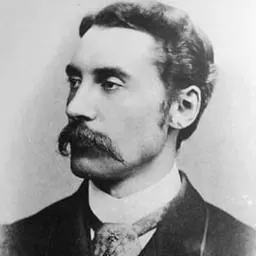
Julio Vilamajó Echaniz (July 1, 1894 – April 12, 1948) was one of the best known Uruguayan architects. He was a member of the Board of Design Consultants for the construction of the United Nations headquarters together with Le Corbusier and Oscar Niemeyer.
Childhood Vilamajó was born in Montevideo, Uruguay. He was the son of Ramón Vilamajó, a merchant born in Perpignan, France, and Eustaquia Echaniz, a native from San Sebastián in Spain. He was a pupil at School No. 24 in Montevideo from 1901 to 1903 and finished primary school at Colegio Sagrada Familia between 1904 and 1906. His grandfather, Josef Agustín Echaniz, was also an architect.
1910–1924 Education, early works and travel Vilamajó was only 20 years of age when he graduated from the Faculty of Architecture in 1915. His education was based on the classical guidelines of the École des Beaux-Arts, during a period of transition to modern architecture.
In 1917, Vilamajó began to teach at the School of Architecture and was appointed adjunct professor of Architectural Design, after a competitive selection process. In 1920, he applied for the annual competition organized by the School of Architecture intended to increase the training of its graduates abroad. His project, "Palace to serve as headquarters of the League of Nations" won the Grand Prize, which provided the funding for study abroad. This was a time of transition when Vilamajó began to move from a historical to a humanist standpoint, seeking to balance logic and rationality in his construction projects.
In 1931, Vilamajó and a coatings manufacturer named Debernardis, became concerned about the housing demand, and created and patented a building system (the Vibro-Econo) which comprised pieces of concrete manufactured in series.
1936–1948
The most representative works of this period are the Monument to the Argentine-Uruguayan Confraternity of Buenos Aires, the School of Engineering, Mesón de las Cañas, Ventorrilo de la Buena Vista, and El Mirador hotel in Colonia.
In 1936, Vilamajó won first prize, along with sculptor Antonio Pena, for the Monument to the Peoples' Confraternity project in Buenos Aires. He began construction of the School of Engineering building in the same year. In 1959, Richard Neutra visited the country. A group or architects took him to see the city and nothing seemed to attract him, until he stopped in front of the School of Engineering. He asked who was the author of the work and commented in praise: "it is the work of a master, the Japanese are just now discovering concrete."
In 1942, Vilamajó began teaching project subjects for 4th and 5th years at the School of Architecture, after the demise of long-time teacher, Joseph Carré. In 1944, he was commissioned to create the Annex Storage to Confitería La Americana. In 1945, Vilamajó was appointed director of the urban development plan for Villa Serrana. In 1946, he built Ventorrillo de la Buena Vista, and in 1947, he began the construction of Mesón de las Cañas.
In 1947, Vilamajó was selected as an external consultant for the building of the United Nations headquarters. He was part of an international group of architectural consultants chosen by the project coordinator, the American architect Wallace Harrison. Le Corbusier was also part of this group, while the Brazilian, Oscar Niemeyer and Julio Vilamajó were the only Latin Americans. Le Corbusier insisted for the rest of his life that his proposal, called "scheme 23A”, had been the design chosen, but his plan was highly modified to incorporate parts of the design submitted by Niemeyer, specifically, altering Le Corbusier's one-building design into a complex of buildings. The rivalry and tension that was generated by this New York assignment aggravated his hypertension, and he was quite ill when the consulting teamwork was done and he came back to Uruguay. Wallace Harrison, the project coordinator, acknowledged Vilamajó's work on the project in a note to Vilamajó in which he said: "I can't let you leave the country without first telling you how much I personally appreciate the sacrifice you did at the expense of your health, by staying until completing the United Nation studies. Your help on this project has been beyond value and it's been a great pleasure working in close contact with you these few last months." After the consulting team's last work session, Harrison had to choose an advisory team to monitor progress. He selected G. A. Soilleux (Australia), M. Nowicki (Poland), J. Havlicek ( Czechoslovakia), P. Noskov (U.S.S.R.), and Vilamajó from the original group of consultants and advisors. Vilamajó kept working from Montevideo, despite his health issues, until he died in 1948.
Don’t just read it —
keep it.
Full-length biographies made to live with: read them, listen on the way to work, watch them tonight.
- E-book
- Audio
- Video
Instant download · yours to keep · every purchase keeps this site free
Important facts
People in Julio Vilamajó's life
Named in this biography and alive at the same time





Related people
Same field, nearest in time

Contemporaries
People whose lives overlapped Julio Vilamajó's


Frequently asked questions
Who was Julio Vilamajó?
Uruguayan architect (1894-1948)
When was Julio Vilamajó born?
Julio Vilamajó was born on 1 July 1894 in Montevideo.
When did Julio Vilamajó die?
Julio Vilamajó died on 11 April 1948 in Montevideo.
What was Julio Vilamajó's occupation?
Julio Vilamajó was an architect and painter.
What nationality was Julio Vilamajó?
Julio Vilamajó was Uruguayan.
Sources & further reading
Cite this page
APA: Biography.guide. (2026). Julio Vilamajó. https://biography.guide/julio-vilamajo/
MLA: "Julio Vilamajó." Biography.guide, https://biography.guide/julio-vilamajo/.
Chicago: "Julio Vilamajó." Biography.guide. https://biography.guide/julio-vilamajo/.
Data last updated: 2026-09-20 · Spot an error? Report a correction.
Page generated 2026-09-27 05:05 UTC