
About Julian Salomons
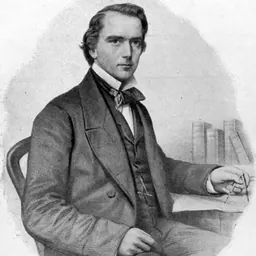
Lived 1835 – 1909 (aged 73). Julian Salomons was a British politician, barrister and judge.
Sir Julian Emanuel Salomons (formerly Solomons) (4 November 1835 – 6 April 1909) was a British emigrant to New South Wales, where he was a barrister, royal commissioner, Solicitor General, Chief Justice and member of parliament. He was the only Chief Justice of New South Wales to be appointed and resign before he was ever sworn into office. Salomons was said to be short of stature and somewhat handicapped by defective eyesight. However, he had great industry, great powers of analysis, a keen intellect and unbounded energy and pertinacity. His wit and readiness were proverbial, and he was afraid of no judge.
Early years Salomons was born Julian Emanuel Solomons on 4 November 1835 at Edgbaston, Warwickshire in England, the only son of Emanuel Solomons, a merchant in Birmingham. He arrived in Sydney on 4 September 1853, aged 16 years, on board the Atalanta. He was employed as a stockbroker's clerk and as an assistant in a bookshop. In 1855 he was appointed the secretary of the Great Synagogue at Sydney.
After passing the preliminary examination of the Barristers Admission Board (now the Legal Profession Admission Board) in 1857, he returned to England in 1858 where he entered Gray's Inn and was called to the bar on 26 January 1861. He returned to Sydney and was admitted to the New South Wales Bar on 8 July 1861 and then returned to England to marry his cousin, Louisa Solomons, at Lower Edmonton, Middlesex, on 17 December 1862. Salomons was instructed after the trial and was able to persuade the Full Court of the Supreme Court of New South Wales that Bertrand should have a new trial. The decision was tied with two judges for a new trial and two judges against, but one judge subsequently retracted his judgment resulting in a win for Salomons. Rather bullishly, Salomons after winning the appeal went further to argue that the judge could not retract his judgment in law. Fortunately for his client, the court held that it could and the order for retrial stood. However, the court's decision for a new trial was subsequently overturned on appeal to the Privy Council on the basis that the Supreme Court could not make such an order. The Governor of New South Wales commuted Bertrand's sentence to imprisonment for life, serving 28 years.
Royal commissioner In 1870 Salomons was a member of the Law Reform Commission, charged with making recommendations on updating and changing laws. On 16 August 1881 he was appointed a royal commissioner to inquire into the affairs of the Milburn Creek Copper Mining Co Ltd. Salomons reported on 3 November 1881 that 'there was an appropriation by the trustees themselves, not only without the consent or knowledge of their co-shareholders, but under circumstances of concealment and false statement, evidencing a consciousness on their part, that such appropriation was unauthorised and unjustifiable'. The report was to lead to Ezekiel Baker, a member of parliament and one of the trustees, being expelled from Parliament. He was appointed Solicitor General on 18 December 1869 in the Second Robertson ministry, and a member of the Cabinet, despite not being a member of parliament. He continued in the role in the fifth Cowper ministry from January 1870. He was appointed as a member of the New South Wales Legislative Council, taking his seat on 11 August 1870 and becoming the Representative of the Government in the Legislative Council on the same day. The Cowper government fell in December 1870 and Salomons resigned from the council on 14 February 1871.
Appointment as chief justice Salomons' advocacy had earned him a huge reputation. When Chief Justice Sir James Martin died, the position was first offered to William Bede Dalley and then Frederick Matthew Darley. Both refused, and Salomons was then offered the position. After some hesitation, he accepted notwithstanding that it involved a substantial reduction in income. His appointment attracted controversy in some quarters and it was reputed that the other judges of the court were against his appointment. Biographer Percival Serle states that Salomons' response to criticism was that his "appointment appears to be so wholly unjustifiable [to Justice William Windeyer ] as to have led to the utterance by him of such expressions and opinions … as to make any intercourse in the future between him and me quite impossible". Serle states that each of the judges of the court denied making any such statements. He was therefore gazetted as chief justice for only six days, having resigned twelve days after being offered the position. It was during this second term that it is thought that Salomons gave the longest speech in the history of the council, when he spoke for approximately eight hours on the Federation Bill. His speech continued over two days, 28 and 29 July 1897. The Federation Bill was an important issue in the history of the colony of New South Wales as it led to the birth of the nation of Australia.
Famous quotes Salomons was reported to have an unusual talent for wit. After the federation of the Australian colonies, the newly established High Court of Australia was said to be routinely overturning decisions of the various Supreme Courts around Australia. Salomons suggested, after appearing before the Supreme Court, that the judges of the court should append the following to all Supreme Court judgments: "We are unanimously of the opinion that judgment ought to be entered for (let us say) the plaintiff, but to save the trouble and expense to the parties of an appeal to the High Court, we order judgment to be entered for the defendant."
On the question of Sir Samuel Griffith's English translation of Dante Alighieri which had received numerous unflattering reviews, it was reported that when Griffith presented a copy to Salomons, the latter asked Griffith to autograph the fly leaf, explaining that "I should not like anyone to think that I had borrowed the book, even less should I like anyone to think that I had bought it". Salomons was a supporter of religion being a moderator of human behaviour. He endowed a local public school on the basis that religion was taught as a subject and was upset when it was not. In an address on Australian Federation, he said that having an "education without religion is like putting a sword into the hands of a savage".
Later life Salomons was the Agent-General for New South Wales at London between 1899 and April 1900, returning to Sydney the following month. He was also appointed standing counsel for the Commonwealth government in New South Wales in 1903 and all but practically retired from legal practice in 1907. He made a few appearances in court after 1907. He was also a Trustee of the Art Gallery of New South Wales and a member of the Barristers Admission Board. He died after a short illness on 6 April 1909 of a cerebral haemorrhage in his home "Sherbourne" in Woollahra, Sydney. He was buried in the Hebrew portion of Rookwood cemetery in Sydney's west.
Don’t just read it —
keep it.
Full-length biographies made to live with: read them, listen on the way to work, watch them tonight.
- E-book
- Audio
- Video
Instant download · yours to keep · every purchase keeps this site free
Important facts
People in Julian Salomons's life
Named in this biography and alive at the same time


Related people
Same field, nearest in time




Contemporaries
People whose lives overlapped Julian Salomons's





Frequently asked questions
Who was Julian Salomons?
Barrister, politician and judge in Australia
When was Julian Salomons born?
Julian Salomons was born on 4 November 1835 in Edgbaston.
When did Julian Salomons die?
Julian Salomons died on 6 April 1909 in Woollahra.
What was Julian Salomons's occupation?
Julian Salomons was a politician, barrister and judge.
What nationality was Julian Salomons?
Julian Salomons was British.
Sources & further reading
Cite this page
APA: Biography.guide. (2026). Julian Salomons. https://biography.guide/julian-salomons/
MLA: "Julian Salomons." Biography.guide, https://biography.guide/julian-salomons/.
Chicago: "Julian Salomons." Biography.guide. https://biography.guide/julian-salomons/.
Data last updated: 2026-09-20 · Spot an error? Report a correction.
Page generated 2026-09-27 05:27 UTC