
About Julia Simner
Julia Simner was a researcher.
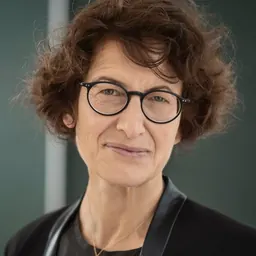
Julia Claire Simner is a British psychologist and professor of neuropsychology at the University of Sussex. Her research focuses on sensory diversity, examining a range of sensory traits, including synesthesia, misophonia and aphantasia.
Early life and education Simner completed her undergraduate studies in Modern Languages at the University of Oxford before receiving an Ontario Open Scholarship to undertake graduate research in Linguistics and Psycholinguistics at the University of Toronto. She later held an ESRC doctoral studentship at the University of Sussex, where her PhD examined memory activation during linguistic inference from anaphoric expressions. Following her doctorate, she was awarded a British Academy Postdoctoral Fellowship and subsequently moved to the University of Edinburgh. In 2005 she joined the faculty there as a lecturer, held a Leverhulme Early Career Fellowship, and was promoted to reader in 2010. Synaesthesia impacts over 4% of the population. She has shown that synaesthesia is heritable, that it is linked to the X chromosome, and that it develops after conception.
As part of her work in promoting the public understanding of science, Simner is the science officer for the UK Synaesthesia Association. She has been interviewed for numerous media outlets and programmes exploring human perception, including All in the Mind (BBC radio) with Claudia Hammond, Curious Cases of Rutherford and Fry, and the BBC Sounds episode of Curious Cases presented by Hannah Fry and Dara Ó Briain.
In 2025 she was featured on BBC Radio 4's The Life Scientific with Jim Al-Khalili.
Her research has been discussed widely in the media, including coverage in The New York Times, New Scientist, Science, Scientific American, The Conversation and BBC Radio 4 & World Service's The Compass , and There’s No Such Thing as a Fish Her work has also appeared in National Geographic and Psychology Today. She has been interviewed for additional programmes on perception and language, including BBC Future. Simner has also given public talks for events such as New Scientist Live, and has collaborated on arts‑science projects, including a performance with the Winnipeg Symphony Orchestra.
Simner is Science Lead for CrossSense, winners of the 2026 Longitude Prize on Dementia, an international challenge prize rewarding innovative technology that solves global problems. She was recognised by the Atomium Culture initiative of the Atomium European Institute for Science and Democracy (EISMD), as part of its European efforts to strengthen science communication and public engagement. Her Oxford Handbook was shortlisted for the British Medical Association Medical Book of the year, and was Highly Commended in the Category of Psychiatry.
Select publications Julia Simner (2019) Synaesthesia: A Very Short Introduction. Oxford University Press. pp160. ISBN 9780198749219 Julia Simner and Edward Hubbard (editors) 2013. The Oxford Handbook of Synesthesia Oxford University Press. pp 1104. ISBN 9780191750885.
Don’t just read it —
keep it.
Full-length biographies made to live with: read them, listen on the way to work, watch them tonight.
- E-book
- Audio
- Video
Instant download · yours to keep · every purchase keeps this site free
Important facts
Related people
Same field, nearest in time





Frequently asked questions
Who was Julia Simner?
British psychologist and professor
What was Julia Simner's occupation?
Julia Simner was a researcher.
Sources & further reading
Cite this page
APA: Biography.guide. (2026). Julia Simner. https://biography.guide/julia-simner/
MLA: "Julia Simner." Biography.guide, https://biography.guide/julia-simner/.
Chicago: "Julia Simner." Biography.guide. https://biography.guide/julia-simner/.
Data last updated: 2026-09-20 · Spot an error? Report a correction.
Page generated 2026-09-27 05:28 UTC