
About Julia Perry
Lived 1924 – 1979 (aged 55). Julia Perry was an American composer, conductor, musicologist, violinist, woman conductor and musician.
Julia Amanda Perry (March 25, 1924 – April 24, 1979) was an American classical composer and teacher who combined European classical and neo-classical training with her African-American heritage.
Life and education Born in Lexington, Kentucky, on March 25, 1924, Julia Perry moved with her family while still a child to Akron, Ohio. She studied voice, piano, and composition at Westminster Choir College from 1943 to 1948, earning her bachelor's and master's degrees in music. For her thesis she wrote a secular cantata titled Chicago.
In 1952, Perry began studying under Nadia Boulanger in Paris and was awarded the Boulanger Grand Prix for her Viola Sonata.
Perry also studied conducting at the Accademia Chigiana in Siena during the summers of 1956 and 1957, and in 1957 was sponsored by the U.S. Information Service to conduct a series of concerts in Europe.
After five and a half years in Europe, Perry returned to the US and continued her work in composition. She took up teaching at Tallahassee's Florida Agricultural and Mechanical College in 1967 and was also a visiting artist at Atlanta College.
In 1964 her three-act opera-ballet The Selfish Giant won an American Academy of Arts and Letters Prize in music.
Perry suffered a stroke about 1970 and her career began to decline. She died on April 24, 1979, and is buried in Glendale Cemetery in Akron, Ohio; the birth year on her tombstone, 1927, is incorrect.
In other works, Perry began branching out in her composition technique and experimenting with dissonance. One of her most notable works, Stabat Mater (1951), is composed for solo contralto and string orchestra. It incorporates dissonance, but remains within the classification of tonal music. These pieces incorporate more modern compositional techniques, such as quartal harmony, which voices chords in fourths rather than thirds and fifths. It was recorded on CRI, by the Japan Philharmonic Symphony Orchestra, William Strickland, conducting.
Other instrumental works by Perry include Requiem for Orchestra (also known as Homage to Vivaldi because of themes inspired by composer Antonio Vivaldi), a number of shorter orchestral works; several types of chamber music; a violin concerto; twelve symphonies; and two piano concertos. Her vocal works include a three-act opera and The Symplegades, which was based on the 17th century Salem witchcraft panic. The opera took more than ten years to write and was left incomplete at her death. She also composed an operatic ballet with her own libretto, based on Oscar Wilde's fable The Selfish Giant, and in 1976 composed Five Quixotic Songs for bass baritone and Bicentennial Reflections for tenor solo in 1977.
This piece is representative of Perry's neoclassical compositional style. It has a number of rhythmic elements that use syncopation. The piece itself it somewhat frantic and wild, with the strings and brass sections switching between background and foreground in the composition, and rhythmic fills from the percussion. After the opening, Short Piece settles down into a long, lyrical passage introduced by the woodwinds and expanded upon by the strings. The piece is scored for timpani, cymbals, snare drum, bass drum, wood blocks, xylophone, vibraphone, celesta, piano, and harp. Perry termed the work "pantonal" since is it neither in a major or minor key and it uses all available tones. Perry uses the title Homunculus as a symbol for the experimental nature of the piece; the name refers to the test tube creature brought to life by Wagner, a character in Goethe's Faust. The first ever recording of her 1964 Violin Concerto (performed at the Festival by Curtis Stewart and the Experiential Orchestra) was issued to coincide with the event.
In 2025 Samantha Ege and the Lontano Orchestra released a recording of the Concerto for Piano and Orchestra in Two Uninterrupted Speeds (1969).
Don’t just read it —
keep it.
Full-length biographies made to live with: read them, listen on the way to work, watch them tonight.
- E-book
- Audio
- Video
Instant download · yours to keep · every purchase keeps this site free
Important facts
People in Julia Perry's life
Named in this biography and alive at the same time
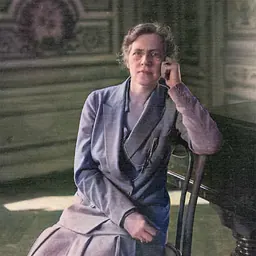


Related people
Same field, nearest in time



Contemporaries
People whose lives overlapped Julia Perry's




Frequently asked questions
Who was Julia Perry?
American composer (1924-1979)
When was Julia Perry born?
Julia Perry was born on 25 March 1924 in Lexington.
When did Julia Perry die?
Julia Perry died on 24 April 1979 in Akron.
What was Julia Perry's occupation?
Julia Perry was a composer, conductor, musicologist, violinist, woman conductor and musician.
What nationality was Julia Perry?
Julia Perry was American.
Sources & further reading
Cite this page
APA: Biography.guide. (2026). Julia Perry. https://biography.guide/julia-perry/
MLA: "Julia Perry." Biography.guide, https://biography.guide/julia-perry/.
Chicago: "Julia Perry." Biography.guide. https://biography.guide/julia-perry/.
Data last updated: 2026-09-26 · Spot an error? Report a correction.
Page generated 2026-09-27 05:16 UTC