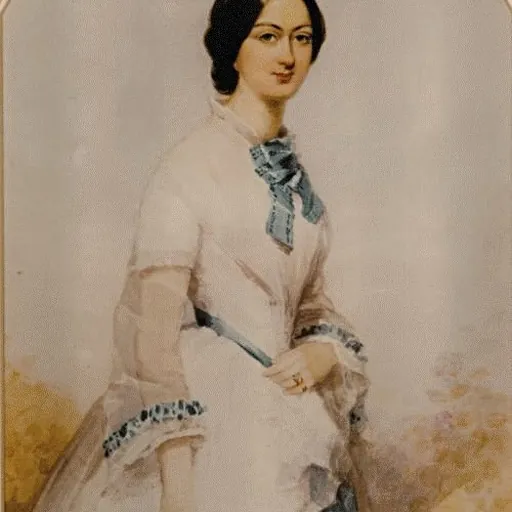
About Julia, Lady Inglis
Lived 1833 – 1904 (aged 70). Julia, Lady Inglis was a diarist.
Julia Selina, Lady Inglis (19 April 1833 – 3 February 1904) was a British memoir writer. She was the daughter of Frederic Thesiger, 1st Baron Chelmsford, and wife of Major-General Sir John Eardley Inglis, who commanded the British troops at the Siege of Lucknow in 1857. She kept a diary of her life during the siege, which was published as The Siege of Lucknow: a Diary. She aimed to give "a simple account of each day's events (which) may give a clear idea of what was done by the garrison under (her husband's) command".
Her mother was Anna Maria Tinling (1799–1875), daughter of William Tinling and niece of Francis Peirson, who was killed in the defence of Jersey during an attempted French invasion on 6 January 1781.
Her elder brother, Frederic (1827–1905) succeeded their father as 2nd Baron Chelmsford and led the British forces in the battles at Isandlwana and Ulundi during the Anglo-Zulu War of 1879.
Family On 19 July 1851, she married Lieutenant-Colonel John Eardley Inglis of the 32nd Regiment of Foot, who had commanded the 32nd at Suraj Kund and was present at the storming and capture of Multan, the action at Chiniot and the Battle of Gujrat, during the Second Anglo-Sikh War of 1848–49.
They had a total of seven children: John Frederic Inglis (b. 1852, died an infant) John Frederic Inglis (1853–1923), who played cricket for Kent and football for Wanderers and Scotland. Charles George Inglis (1855–1923), who became a tea planter on the Agra Kandy Estate in Ceylon. Alfred Markham Inglis (1856–1919), who played cricket for Kent. Victoria Alexandrina Inglis (1859–1929), who married Hubert Ashton, and was the mother of cricketers Hubert, Gilbert, Percy and Claude. Julia Mathilda Inglis (1861–1929), who married Sir George Herman Collier of the India Office. Rupert Edward Inglis (1863–1916), who was an England international rugby player and became a minister in the Church of England before serving as a chaplain in the First World War and was killed during the Battle of the Somme.
The Siege of Lucknow
Colonel John Inglis, Julia Inglis and two of their three children. Source: Illustrated London News, 28 November 1857 By June 1857, with three sons aged under five, Julia Inglis was living at Lucknow where her husband was in command of the 32nd Foot at the start of the Indian Mutiny. On 30 June, under the overall command of Sir Henry Lawrence, the British forces had failed in a preliminary skirmish at Chinhat and retreated into the residency at Lucknow, which immediately came under siege. Mrs. Inglis and her three sons lived in a room which "was very small, hardly more than a verandah, about twelve feet by six feet, with no doors nor windows, only arches" (30 June) in which screens had been erected for privacy; compared to other residents, Inglis was fortunate – "In the next square to us lived a good many of the ladies, who were all together in a large room, and very uncomfortable." (30 June) Major-General Inglis had also been appointed to the rank of Knight Commander of the Most Honourable Order of the Bath (K.C.B.) on 21 January 1858, although the news only reached Julia shortly before arriving in Suez several weeks later. The passengers and crew were rescued after spending a night in the ship's boats. "Johnny was delighted when [the waves] broke over the boat, and his merry laugh sounded sadly in my ears, for I quite thought that a watery grave awaited each one of us". The family eventually reached Alexandria before travelling on to Southampton, arriving there in early March. The diary has been variously described as "absorbing" and "blood-curdling".
Later life After his return from India, Sir John suffered from poor health: "the continued suffering which he had undergone in India, and the almost total loss of sleep, had shaken his constitution, originally strong and robust." He was appointed colonel of the 32nd light infantry on 5 May 1860, and soon after he was sent to Corfu to take command of the troops in the Ionian Islands. His failing health soon led to his retirement from active service, when he was advised by his physicians to take a course of treatment at the baths at Homburg in Germany; unfortunately, this was in vain and he died there on 27 September 1862, aged 47.
Lady Inglis later held the honorary position of "Housekeeper" of the State apartments of St James's Palace. After her husband's death she lived at Beckenham where she died on 3 February 1904.
Don’t just read it —
keep it.
Full-length biographies made to live with: read them, listen on the way to work, watch them tonight.
- E-book
- Audio
- Video
Instant download · yours to keep · every purchase keeps this site free
Important facts
Family & relationships
People in Julia, Lady Inglis's life
Named in this biography and alive at the same time

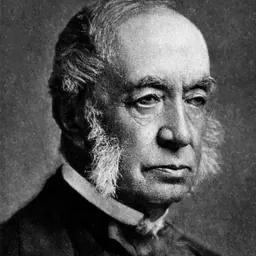




Related people
Same field, nearest in time


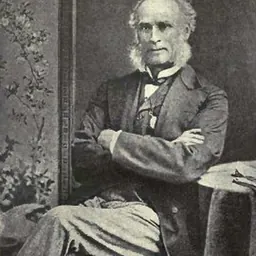
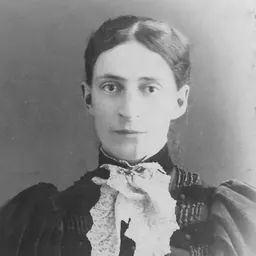

Contemporaries
People whose lives overlapped Julia, Lady Inglis's



Frequently asked questions
Who was Julia, Lady Inglis?
British diarist
When was Julia, Lady Inglis born?
Julia, Lady Inglis was born on 19 April 1833.
When did Julia, Lady Inglis die?
Julia, Lady Inglis died on 3 February 1904 in Beckenham.
What was Julia, Lady Inglis's occupation?
Julia, Lady Inglis was a diarist.
Sources & further reading
· Wikipedia: Julia, Lady Inglis
Cite this page
APA: Biography.guide. (2026). Julia, Lady Inglis. https://biography.guide/julia-lady-inglis/
MLA: "Julia, Lady Inglis." Biography.guide, https://biography.guide/julia-lady-inglis/.
Chicago: "Julia, Lady Inglis." Biography.guide. https://biography.guide/julia-lady-inglis/.
Data last updated: 2026-09-21 · Spot an error? Report a correction.
Portrait: Wikimedia Commons · author & licence
Page generated 2026-09-27 04:59 UTC