
About Jules Meysmans
Lived 1870 – 1943 (aged 72–73). Jules Meysmans was a Belgian esperantist and linguist.
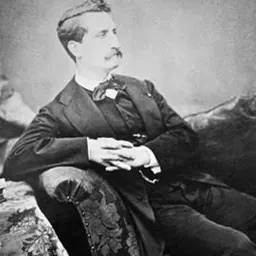
Jules Meysmans (14 May 1870 – 1943) was a Belgian stenographer and linguist, best known for coining the term interlinguistics. Meysmans invented his own shorthand system, one of several adaptations he made of existing systems. The founder of an institute for stenography, he was active in the international auxiliary language movement, supporting various projects throughout his life, including Volapük, Esperanto, Idiom Neutral, and Occidental.
Career
Meysmans was born on 14 May 1870
The same year, he invented the "Meysmans" method of shorthand, Meysmans' system achieved some success, and was used by the Archdiocese of Kinshasa. In 1897, he modified shorthand system, but later stopped teaching it. Meysmans was the founder of the National Institute of Stenography and Dactylography (French: ) in Brussels, and held courses for teaching shorthand in several cities in Belgium.
International auxiliary languages Meysmans was an active member of the international language movement, supporting several throughout his life. He first joined the Volapük movement, although he left it for Esperanto in 1890, teaching courses about the language in Ghent and Brussels. In 1907, Meysmans became the leader of the Brussels-based , an organisation that supported Idiom Neutral (a more niche language created in 1902 by Waldemar Rosenberger). A founding figure of the Neo-Romanticist school of language creation, Meysmans was particularly a proponent of Latin-based constructed languages. Indeed, Meysmans praised them in his contributions to Peano's journal Discussiones, which existed to support the Academia pro Interlingua. a year later, Meysmans became the chair of the Academia. Eventually, he came to support Edgar de Wahl's Occidental, and joined the Explorative Committee for the International Auxiliary Language in 1929.
Meysmans was also the creator of several languages, including:
Lingua Internationale – published in 1906, using Latino sine flexione as its base Interlatino – published in the newspaper Revista Internationale in 1912, also based on Latino sine flexione He argued that constructed auxiliary languages could only become objects of study within the wider study of natural interlanguages, and that the use of auxiliary languages for international communication would be bounded by the same constraints as natural ones. After its creation, the term was used primarily among Idists and Occidentalists until 1931, when it was popularised by Danish linguist Otto Jespersen during a speech at the Second International Conference on Linguistics.
Don’t just read it —
keep it.
Full-length biographies made to live with: read them, listen on the way to work, watch them tonight.
- E-book
- Audio
- Video
Instant download · yours to keep · every purchase keeps this site free
Important facts
People in Jules Meysmans's life
Named in this biography and alive at the same time

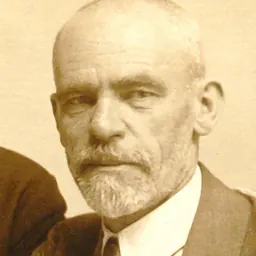

Related people
Same field, nearest in time
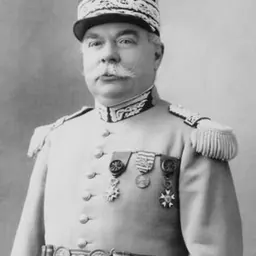



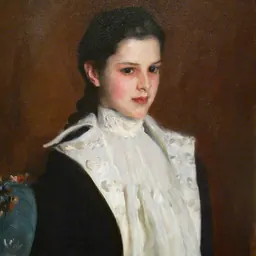
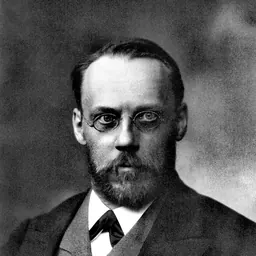
Contemporaries
People whose lives overlapped Jules Meysmans's





Frequently asked questions
Who was Jules Meysmans?
Belgian linguist and Esperantist
When was Jules Meysmans born?
Jules Meysmans was born on 14 May 1870 in Jodoigne.
When did Jules Meysmans die?
Jules Meysmans died in 1943.
What was Jules Meysmans's occupation?
Jules Meysmans was an esperantist and linguist.
What nationality was Jules Meysmans?
Jules Meysmans was Belgian.
Sources & further reading
Cite this page
APA: Biography.guide. (2026). Jules Meysmans. https://biography.guide/jules-meysmans/
MLA: "Jules Meysmans." Biography.guide, https://biography.guide/jules-meysmans/.
Chicago: "Jules Meysmans." Biography.guide. https://biography.guide/jules-meysmans/.
Data last updated: 2026-09-20 · Spot an error? Report a correction.
Page generated 2026-09-27 05:12 UTC