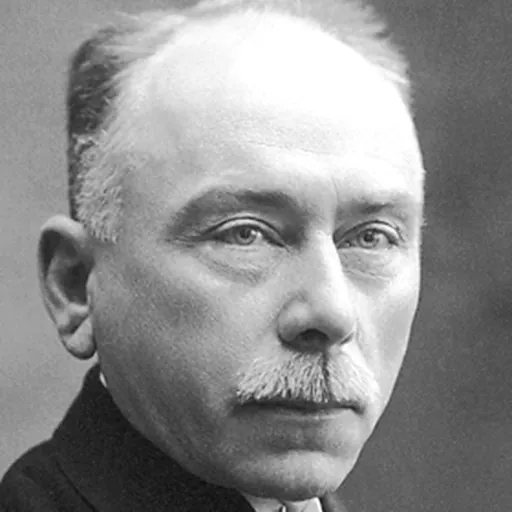
About Jules Bordet
Lived 1870 – 1961 (aged 90). Jules Bordet was a Belgian biologist, immunologist, politician, university teacher, dermatologist and physician.
Jules Jean Baptiste Vincent Bordet ( , ; 13 June 1870 – 6 April 1961) was a Belgian immunologist and microbiologist. The bacterial genus Bordetella is named after him. The Nobel Prize in Physiology or Medicine was awarded to him in 1919 for his discoveries relating to immunity.
Education and early life
Bordet was born at Soignies, Belgium. He graduated as Doctor of Medicine from the Free University of Brussels in 1892 and began his work at the Pasteur Institute in Paris in 1894, in the laboratory of Elie Metchnikoff, who had just discovered phagocytosis of bacteria by white blood cells, an expression of cellular immunity.
Career
In 1895 Bordet made his discovery that the bacteriolytic effect of acquired specific antibody is significantly enhanced in vivo by the presence of innate serum components which he termed alexine (but which are now known as complement). Four years later, in 1899, he described a similar destructive process involving complement, "hemolysis", in which foreign red blood cells are ruptured or "lysed" following exposure to immune serum. In 1900, he left Paris to found an institute in Brussels like Pasteur's, and continued to work extensively on the mechanisms involved in the action of complement. These studies became the basis for complement-fixation testing methods that enabled the development of serological tests for syphilis (specifically, the development of the Wassermann test by August von Wassermann). The same technique is used today in serologic testing for countless other diseases.
With Octave Gengou, he isolated Bordetella pertussis in pure culture in 1906 and posited it as the cause of whooping cough. He became Professor of Bacteriology at the Université libre de Bruxelles in 1907.
Awards and honours In March 1916, he was elected a Foreign Member of the Royal Society and in 1930, delivered their Croonian Lecture. In this lecture, Bordet also concluded that bacteriophages, the bacteria-killing "invisible viruses" discovered by Felix d'Herelle did not exist and that bacteria destroyed themselves using a process of autolysis. This theory collapsed in 1941 with the publication by Ruska of the first electron microscope pictures of bacteriophages. The Nobel Prize in Physiology or Medicine was awarded to him in 1919 for his discoveries relating to immunity.
Don’t just read it —
keep it.
Full-length biographies made to live with: read them, listen on the way to work, watch them tonight.
- E-book
- Audio
- Video
Instant download · yours to keep · every purchase keeps this site free
Important facts
People in Jules Bordet's life
Named in this biography and alive at the same time


Related people
Same field, nearest in time


Contemporaries
People whose lives overlapped Jules Bordet's


Frequently asked questions
Who was Jules Bordet?
Belgian immunologist and microbiologist (1870-1961)
When was Jules Bordet born?
Jules Bordet was born on 13 June 1870 in Soignies.
When did Jules Bordet die?
Jules Bordet died on 6 April 1961 in Brussels.
What was Jules Bordet's occupation?
Jules Bordet was a biologist, immunologist, politician, university teacher, dermatologist and physician.
What nationality was Jules Bordet?
Jules Bordet was Belgian.
Sources & further reading
Cite this page
APA: Biography.guide. (2026). Jules Bordet. https://biography.guide/jules-bordet/
MLA: "Jules Bordet." Biography.guide, https://biography.guide/jules-bordet/.
Chicago: "Jules Bordet." Biography.guide. https://biography.guide/jules-bordet/.
Data last updated: 2026-09-22 · Spot an error? Report a correction.
Portrait: Wikimedia Commons · author & licence
Page generated 2026-09-27 05:03 UTC