
About Judy Seigel
Lived 1930 – 2017 (aged 86–87). Judy Seigel was an American artist, photographer and activist.
Judy Seigel (1930–2017) was an American painter and photographer, writer and editor, and feminist activist in New York City. She began her career as an award-winning graphic artist at an ad agency, and a free-lance illustrator. Her impressionistic paintings resembled experimental photographs, and she became a photographer while photographing political t-shirts for her first book.
Called "a legend in alternative photographic processes" by Christopher James, Seigel taught photography at the Pratt Institute for fourteen years.
Seigel was the founding editor of both Women Artists News and The World Journal of Post-Factory Photography. She also published two books: Mutiny and the Mainstream (1992), and [Read My T-Shirt] for President... A True History of the Political Front – and Back (2005), and provided illustrations for a third, Sight Lines (1998).
Seigel was an activist for the preservation of her neighborhood, Greenwich Village. She was also an advocate of women's art, and a prolific writer of letters to the editors of The New York Times, The Villager, and Newsday.
Early life and education The daughter of Hortense and Gershon Aronson, Judith Lee Aronson was born in Brooklyn, New York City, on July 20, 1930. Her family moved to Scarsdale, where she graduated from high school in 1947. She went to Northwestern University and the Art Institute of Chicago, and met Morton Seigel in 1947.
Career Seigel lived most of her life in New York City, where she worked as an advertising firm illustrator and painter. Eventually she also became a photographer, writer, editor, and feminist activist.
Entering the world of New York advertising, Seigel was a graphic artist, working as a staff illustrator at a New York ad agency, then free-lancing children's books. Known for her experimental techniques, she earned places in three annual awards of the field: the Graphis Annual (The International Annual of Advertising and Editorial Graphics), the Society of Illustrators Annual Exhibition, and the Art Directors Club Award.
From 1959 to early 1965, the Seigels moved to Switzerland where Morton earned a medical degree. There, Judy worked as a freelance illustrator to support Morton and their two children. and Christina Anderson said she was "a leading expert in the field". Seigel taught photography at Pratt for fourteen years. Seigel's printing process was described as working down one wall, with trays beside the enlarger for different strengths of developer. An under-counter tray served as an emergency counter, and opposite the enlarger was a table with a glass surface and a light for solarizing. Seigel's print, Delacorte Fountain, East River (NYC), 1983–1991, is displayed on artnet.com. More of her artwork is included in a posthumous tribute published on The Forward.
Seigel's 1977 solo painting exhibit at the Ward Nasse Gallery and 1985 Metal and Paint photo show at the Port Washington Library drew favorable commentaries.
Of Metal and Paint, Malcom Preston wrote that Seigel herself called her work "a hybrid between painting and photography". Paradiso described Seigel, as "...hooked on darkroom experimentation, who took scrupulous notes, but could never quite control, or recreate, her discoveries", using beakers and a triple beam balance like a scientist. Gwen Allen quoted arts critic Cynthia Navaretta: "The magazine functioned as 'an information exchange for artists' and 'a vehicle for artists to talk about art—[we] see ourselves as an advocate and voice for artists, and specifically women artists." Reviewer Ed Buffalo wrote, "Post-Factory Photography is certainly the best underground do-it-yourself alternative-process photography magazine on the planet, containing no end of arcane information. The magazine quickly becomes an indispensable reference for anyone interested in alternative processes." Reviewer Jodi Allen said, "As the factory-made materials of modern photography fade from view, hand-applied media, new and old, take the field. The World Journal of Post-Factory Photography brings you 48 pages of information, inspiration, and news about this world-wide movement, from facts and formulas to personalities and history."
Sil Horowitz reported in the PSA Journal that The World Journal of Post-Factory Photography was a new periodical about "alternative photography", noting that soon all chemical-based media may become "alternative". He listed articles on "Gum Control – an Introduction", as well as "basic gum bichromate (excellently explained and illustrated), a comparison of Van Dyke brown formulas, a piece on 'Drawing on the Right Side of the Computer'...book reviews, a comprehensive examination of 'Sense & Sensitometry,' and several pages listing sources of materials required for alternative photography".
Seigel's two books were also favorably reviewed. Ann Lee Morgan described Mutiny and the Mainstream as Talk That Changed Art, 1975–1992 as a "way to get inside of artists' heads... Sophistication, intelligence, pretense, honesty, ambition, elegance, paranoia, professionalism, humor, and anger all bubble along here in a great stew, the stock of which is devotion to art..."
[Read My T-Shirt] for President... A True History of the Political Front – and Back, consisted of photographs of "people in T-shirts with different texts, concentrating on political messages after taking part in the protests at the 2004 Republican National Convention". Activism
Art and feminism Some of Seigel's activism took the form of letters to the editors of New York newspapers. For example, she disputed the claim that selling art on the streets was a constitutional matter. Seigel called it "schlock as free speech" and "the right to clog streets".
Seigel wrote about the obscenity of the ways women are portrayed. She published an essay in Women Artist News critical of the University of Arizona's offering for sale some prints of nude photographs of women: "It's hardly news that a large and lucrative market exists for material of this type. It is news when an institution of higher learning moves to cash in on it." Seigel also sent letters to the editors of The Villager critical of Don Imus, who "still thinks it's 'fun' and 'cool' to call women 'hos' ...We can't necessarily blame Imus for being a moron, but we can blame his enablers, who are the real 'hos'".
Critical of The New York Times article about a female professor's objection to Goya's Naked Maja being shown in the classroom, Seigel rebutted the interpretation that the objection was about "simply the arousal of male fantasy". Rather, it was about "the stereotype of woman as whore". She added, "In the case of the Maja, whether or not the lady is a whore, she's naked female flesh on the wall, one of a long line of naked women in a culture in which, whatever movies show us, people in power still wear clothes."
Seigel objected to a New York Times story on Senator D'Mato's opposition to Medicaid payments for abortions: "No amount of good Senator D'Amato might do could compensate for the damage of forced child bearing, particularly, if one can imagine it, after rape or incest, particularly for those at the level of Medicaid eligibility."
Community activism The Villager reported that Seigel was "a passionate advocate for the preservation of Greenwich Village", whose "relentless neighborhood advocacy and artistic endeavors were chronicled in The Villager". Her letters to the editor also advocated waterfront preservation.
In 1992, Seigel wrote, "We in the Village failed to stop the Port Authority from breaking environmental protection laws and city codes when it erected two ventilation towers at the end of Morton Street." She described the structures as "ill-conceived, badly engineered and unnecessary (as independent consultants proved, to the concern of no one in city government)". Seigel documented the problems, "with a camera, writing letters, staging protests, appealing to the Morton Street Block Association and... speaking at a Community Board 2 meeting".
Late in her life, Seigel experienced short-term memory loss, diagnosed in 2010 as related to Alzheimer's. She died in her sleep on May 19, 2017.
Publications
Selected articles
Books
Don’t just read it —
keep it.
Full-length biographies made to live with: read them, listen on the way to work, watch them tonight.
- E-book
- Audio
- Video
Instant download · yours to keep · every purchase keeps this site free
Important facts
People in Judy Seigel's life
Named in this biography and alive at the same time

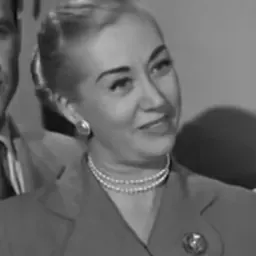
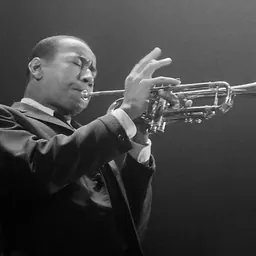



Related people
Same field, nearest in time




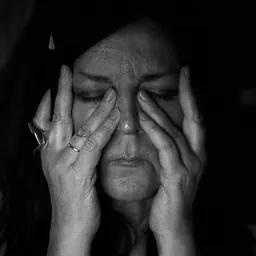
Contemporaries
People whose lives overlapped Judy Seigel's


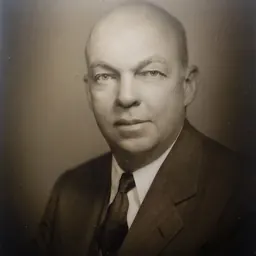

Frequently asked questions
Who was Judy Seigel?
American artist, photographer, and activist (1930-2017)
When was Judy Seigel born?
Judy Seigel was born in 1930.
When did Judy Seigel die?
Judy Seigel died on 10 May 2017 in Greenwich Village.
What was Judy Seigel's occupation?
Judy Seigel was an artist, photographer and activist.
What nationality was Judy Seigel?
Judy Seigel was American.
Sources & further reading
Cite this page
APA: Biography.guide. (2026). Judy Seigel. https://biography.guide/judy-seigel/
MLA: "Judy Seigel." Biography.guide, https://biography.guide/judy-seigel/.
Chicago: "Judy Seigel." Biography.guide. https://biography.guide/judy-seigel/.
Data last updated: 2026-09-20 · Spot an error? Report a correction.
Page generated 2026-09-27 05:29 UTC