
About Juanita Broaddrick
Born 1942. Juanita Broaddrick is an American businessperson, nurse and nursing home.
Allegations against Bill Clinton
1978: Her account Broaddrick, who was known as Juanita Hickey at the time, first met Clinton when he made a visit to her nursing home during his 1978 gubernatorial campaign. Clinton was the Arkansas Attorney General at the time. Broaddrick wanted to volunteer for the campaign, and says Clinton invited her to stop by the campaign office in Little Rock. She said she contacted the office a few weeks later while in the area for a nursing home conference and that Clinton said he would not be in the campaign office that day and suggested they meet at the coffee shop at the Camelot Hotel (now the DoubleTree hotel) in the city instead. After his arrival, however, he allegedly requested that they instead have coffee in her room to avoid a crowd of reporters in the lobby and Broaddrick agreed. David Broaddrick, however, has said he noticed her injured lip, and she told him that Clinton had raped her when he asked about it. Three other friends confirmed that Broaddrick had told them about the incident at the time: Susan Lewis; Louis Ma; and Jean Darden, Norma Rogers' sister.
Subsequent developments Juanita Hickey divorced Gary Hickey around 1979 and married David Broaddrick around 1981.
In 1984, Broaddrick's nursing facility was adjudged the best in the state, which brought a congratulatory official letter from the governor. On the bottom was a handwritten note from Clinton, saying, "I admire you very much." Jean Darden, in whom Broaddrick had confided about the incident, also attended the meeting and said she saw Broaddrick talking to Clinton in the hallway. Broaddrick refused to discuss the incident, saying "it was just a horrible horrible thing," and that she "wouldn't relive it for anything." The investigators told her she would likely be subpoenaed if she would not talk to them. Broaddrick said she would deny everything, saying "you can't get to him, and I'm not going to ruin my good name to do it ... there's just absolutely no way anyone can get to him, he's just too vicious." Broaddrick was subpoenaed in the Jones suit soon after and submitted an affidavit denying that Clinton had made "any sexual advances". This, along with the discrepancy between the letter and Broaddrick's affidavit, attracted the attention of independent counsel Kenneth Starr, who was investigating Clinton for obstruction of justice. After being approached by the FBI, Broaddrick consulted her son, a lawyer, who told her she could not lie to federal investigators. However, Broaddrick also alleged that her denial was only to avoid testifying about the ordeal publicly.
When asked about Broaddrick's claims at a news conference on February 24, 1999, Clinton said: "Well, my counsel has made a statement about the ... issue, and I have nothing to add to it." As The New York Times summarized it in 1999, "There is no physical evidence to verify it. No one else was present during the alleged encounter in a Little Rock hotel room nearly 21 years ago. The hotel has since closed. And Mrs. Broaddrick denied the encounter in an affidavit in January 1998 in the Paula Jones case, in which she was known only as 'Jane Doe No. 5'. Through all those years, she refused to come forward. When pressed by the Jones lawyers, she denied the allegation. And now, she has recanted that denial."
Broaddrick said that after the assault, Clinton told her not to worry about pregnancy because childhood mumps had rendered him sterile. Clinton would go on to father one child, Chelsea Clinton, who was born in 1980.
In March 1999, shortly after the allegations publicly aired, 56% of Americans believed the allegations were false, while a third believed that Broaddrick's allegation of rape was at least possibly true. Similarly, 66% of the public felt that the media should stop pursuing the story, while 29% felt the press should continue to investigate the allegation.
The public and media had "scandal fatigue" from the repeated sexual misconduct allegations against Clinton and, after his impeachment and acquittal, many felt the allegation had nowhere to go. Many reporters had encountered the story while it was being disseminated by Republican activists and felt they had already looked into it. Jack Nelson, Washington bureau chief of the Los Angeles Times, said "This is a story that's been knocked down and discredited so many times ... veryone's taken a slice of it, and after looking at it, everyone's knocked it down. The woman has changed her story about whether it happened. It just wasn't credible." Michael Isikoff's book, Uncovering Clinton, said that Clinton's lawyers figured that he might well have had consensual, extramarital sex with Broaddrick, but they did not believe he would have raped her, The suit was dismissed by U.S. District Court Judge Henry H. Kennedy Jr. in March 2001. The judge ruled that the Privacy Act did not apply in this case and that Broaddrick had failed to show evidence that the U.S. Department of Justice had improperly released documents about her.
During that time Broaddrick's business was audited by the IRS, which she claimed was retaliation: "I do not believe this was coincidence," Broaddrick declared, "I do not think our number just came up."
As Hillary Clinton's campaign in the 2000 United States Senate election in New York unfolded, Broaddrick published an open letter to her, denouncing her alleged role in covering for her husband's alleged attack.
The Broaddricks divorced in 2004. David Broaddrick had opposed her going public with her rape story in 1999. Juanita Broaddrick said she also developed a fear of enclosed spaces as a result of what happened. having done well as a businesswoman. She continues to live in Van Buren, on a 23-acre ranch.
Many conservative commentators who were typically quite skeptical of sexual assault claims without firm evidence, found Broaddrick's allegations quite believable. As Katie J. M. Baker of BuzzFeed News lamented, "In theory, partisan politics shouldn't play a role in determining whether an alleged rape victim deserves to be heard."
The now-retired NBC reporter who broadcast her story, Lisa Myers, said: "No one can objectively look at Juanita's story and not be troubled. One of the things that makes her so credible is who she is—open, straightforward, seemingly guileless." because he was running against Hillary Clinton. As the election progressed, she increasingly aligned herself with conservative actions and views.
On October 8, 2016, in the wake of controversy over the Donald Trump Access Hollywood tape, Trump retweeted Broaddrick's tweets in which she calls Bill Clinton a "rapist" and calls Hillary Clinton's actions "horrific". On October 9 Broaddrick appeared on a panel with Trump, Paula Jones, and Kathleen Willey (a fourth woman at the panel, Kathy Shelton, had an unrelated grievance against Hillary Clinton) an hour before the second debate between Trump and Clinton in the general election portion of the United States presidential election debates, 2016. Broaddrick and the others were also in the audience during the debate, as was Bill Clinton, although debate organizers kept them in separate areas. The Trump campaign said it had paid for Broaddrick's travel to the debate. MeToo and further commentary in 2017–2018 In 2017, in the wake of Harvey Weinstein sexual abuse allegations, Broaddrick criticized 1990s Bill Clinton paramour Monica Lewinsky for aligning herself with the #MeToo movement, saying, "I have always felt sad for you, but where were you when we needed you?" Broaddrick added, "I always felt she was a victim. I only wish she had spoken up in '99 when I was going through so much persecution after my interview on NBC Dateline."
Other discussions of the allegations against Clinton also appeared, including those from Broaddrick. Matthews wrote that "America's ongoing national reckoning with sexual assault and sexual harassment by powerful men now has liberals and Democrats reconsidering the legacy of one of the party's most important figures of the past quarter-century: President Bill Clinton."
Michelle Goldberg wrote an op-ed in The New York Times entitled "I Believe Juanita", where she said, "In this #MeToo moment, when we're reassessing decades of male misbehavior and turning open secrets into exposes, we should look clearly at the credible evidence that Juanita Broaddrick told the truth when she accused Clinton of raping her. But revisiting the Clinton scandals in light of today's politics is complicated as well as painful."
Following the sexual assault allegations made against Alabama Senate candidate Roy Moore, Broaddrick said, "All victims matter. It doesn't matter if you're a Democrat or a Republican ... We all have the right to be believed."
In 2017, Broaddrick said, of women who had accused Trump of sexually assaulting them, "I felt sorry for them. I felt like they had a right to be heard. But I also felt at the same time that they should bear investigation, scrutiny and vetting. I think it's only fair for all parties involved."
In January 2018, Broaddrick self-published a memoir, co-authored by Nick Lulli, with the title You'd Better Put Some Ice On That: How I Survived Being Raped By Bill Clinton.
Following the September 2018 allegations against Supreme Court Justice Brett Kavanaugh during his confirmation process, Broaddrick stated the allegations made by Kavanaugh accuser Christine Blasey Ford were "sketchy" and "vague".
In a 2019 article for The Atlantic, Amanda FitzSimons wrote that Broaddrick had said regarding E. Jean Carroll, who publicly accused Donald Trump of rape, that Carroll had "just wanted attention... When you’ve been raped, you have a persona about you—it’s almost like you can sense it. I don’t have ESP, but you can almost feel their feelings if these things really happened to them."
Political activism
Since the 2016 election, Broaddrick has been increasingly politically active in support of Donald Trump,
Don’t just read it —
keep it.
Full-length biographies made to live with: read them, listen on the way to work, watch them tonight.
- E-book
- Audio
- Video
Instant download · yours to keep · every purchase keeps this site free
Important facts
People in Juanita Broaddrick's life
Named in this biography and alive at the same time



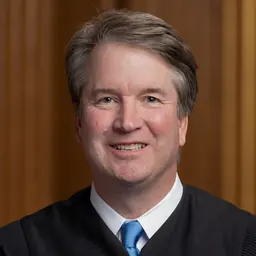
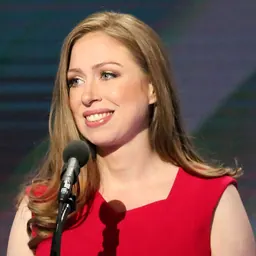



Related people
Same field, nearest in time


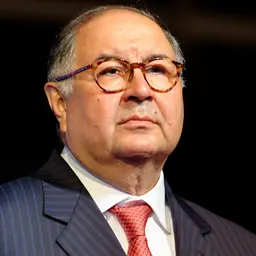

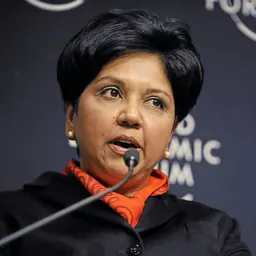
Contemporaries
People whose lives overlapped Juanita Broaddrick's



Frequently asked questions
Who is Juanita Broaddrick?
American nursing home administrator
When was Juanita Broaddrick born?
Juanita Broaddrick was born on 13 December 1942 in United States.
What is Juanita Broaddrick's occupation?
Juanita Broaddrick is a businessperson, nurse and nursing home.
What nationality is Juanita Broaddrick?
Juanita Broaddrick is American.
Sources & further reading
· Wikipedia: Juanita Broaddrick
Cite this page
APA: Biography.guide. (2026). Juanita Broaddrick. https://biography.guide/juanita-broaddrick/
MLA: "Juanita Broaddrick." Biography.guide, https://biography.guide/juanita-broaddrick/.
Chicago: "Juanita Broaddrick." Biography.guide. https://biography.guide/juanita-broaddrick/.
Data last updated: 2026-09-22 · Spot an error? Report a correction.
Page generated 2026-09-27 05:08 UTC