
Juan Gualberto Gómez
Afro-Cuban revolutionary leader in the Cuban War of Independence
About Juan Gualberto Gómez
Lived 1854 – 1933 (aged 78). Juan Gualberto Gómez was a Cuban journalist and politician.
Juan Gualberto Gómez Ferrer (July 12, 1854 – March 5, 1933) was a Cuban revolutionary leader in the Cuban War of Independence against Spain. He was a "close collaborator of Martí's," and alongside him helped plan the uprising and unite the island's black population behind the rebellion. He was an activist for independence and a journalist who worked on and later founded several pivotal anti-royalist and pro-racial equality newspapers. He authored numerous works on liberty and racial justice in Latin America as well.
In his later years, he was a "journalist-politician." He defended the revolution against racism and U.S. imperialism and upheld Martí's legacy in print (often under the pseudonym "G") as he served the Cuban state; he was a part of the Committee of Consultations that drafted and amended the Constitution of 1901, and was a representative and senator in the Cuban legislature. He is best remembered as "the most conspicuous"
Early life and travels Gómez was born on the hacienda "Golden Fleece," a sugar plantation owned by Catalina Gómez. His parents, Fermin Gómez (Yeye) and Serafina Ferrer (Fina) were African slaves but managed to buy the freedom of their child, Juan, before birth, in accordance to the law of the time. His status as a free man allowed him to learn to read and write. Because of his literacy skills, rare for Afro-Cubans growing up on plantations in this era of chattel slavery, his parents sent him to school at , in (English: Our Lady of the Forsaken) in Havana, despite the financial sacrifice it meant.
In 1868, the Ten Years' War broke out. A climate of violence and intimidation prevailed, and after the young Gómez got caught up in a brawl between royalists and independence groups at the Teatro Villanueva, his parents decided to send him to France—with financial help from plantation owner Catalina Gómez—to study the craft of building horse carriages, one of the few trades open to blacks and mestizos in the colonial period. His successes as an apprentice led him to study at engineering school.
In July 1872, Francisco Vicente Aguilera and Gen. Manuel de Quesada arrived in Paris to raise funds for Cuban independence. Needing a translator, Gómez was hired, making his first professional connection. But the political situation in France became more difficult, following the defeat of the Second French Empire in the Franco-Prussian War and subsequent violence of the proletarian "Paris Commune" amid the rocky founding of the Third French Republic, and soon he faced a difficult economic situation as well. In 1874, his parents experienced economic hardships and informed Gómez they couldn't continue to finance his stay in Paris and advised him to return to Cuba. Gómez, not wanting to return, found low-paying jobs at newspapers as a reporter. Eventually, he suspended his studies to work as a journalist in the Revue et Gazette des Theatres, which was the beginning of his journalistic career.
Initially out of financial necessity, then political convictions, Gómez wrote news items and editorials, eventually engaging directly in politics. By 1877, his political personality was solidly formed as a journalist, debater, and public speaker. In 1878, he went to Mexico where he met the abolitionist Nicolas Azcarate, a Cuban exile, and learned of the defeat of the independence forces in Cuba and the end of the Ten Years' War with the Pact of Zanjón. Given the new political situation, many exiles returned to Cuba and Gómez made the move home, going back to Havana in late 1878.
The independence struggle
Once back in Havana, Gómez met José Martí in 1878, beginning a long friendship founded on shared ideals that united the revolutionary action of both. In that year, he and Martí began conspiring together in preparation for a new uprising; both men were appointed secretary of various revolutionary groups in Havana. Also In 1879, Gómez started the pro-racial justice newspaper The Brotherhood, but its publication was interrupted when he was deported to Spain along with other plotters of the Little War. After arriving in Spain, he spent ten years in Madrid, and wrote for many publications, including Tribuna, El Pueblo, El Progreso and other journals, such as Abolitionism.
After Juan Gualberto Gómez returned to Cuba in 1890, Martí hatched the plot for the opening moves of the revolt and assigned Gómez his deputy to prepare for the upcoming uprising in the La Habana province Martí gave the order for armed uprising on February 24, 1895, and Gómez helped lead the failed uprising of Ibarra, Matanzas. The rebellion had yet to gain much momentum in early 1895. "The Province of Puerto Principe, for example, remained so quiet that the Spanish waited until June to declare martial law there." He was sentenced to 20 years imprisonment in the dungeons of Ceuta and Valencia but only spent three years in prison. After being released, Gómez moved to New York City where he continued to work with fellow revolutionaries. In December 1898, he accompanied Major General Calixto García to Washington, D.C. as a member of the commission sent to negotiate for the funds necessary for the Cuban Liberation Army and recognition of the rebels.
During the second U.S. military intervention (1906–1909) he was a member of the Committee of Consultations, the Advisory Committee charged with amending the Cuban constitution, He held seats in the Cuban House of Representatives (1914–1917) and Senate (1917–1925), from the province of Havana. He always campaigned to defend Afro-Cubans from discrimination, oppression, and violence. against blacks who would plunge Cuba into a Haiti-type slave revolt and "Africanize" the island if not suppressed. (See also: Ostend Manifesto). Since his formative years were spent involved in, then fleeing from, the Ten Years' War, Juan Gualberto knew that one of the most important issues that Cubans had to resolve in order to unite and earn their independence from Spain was the problem of racism on the island. It was not enough to have abolished slavery, pro-independence groups also must abolish prejudice and conspicuous public discrimination if they wanted to unite Afro-Cubans behind the cause of independence.
Upon his 1877 return to Havana, Juan Gualberto began his life as a grassroots activist in earnest, fighting not only for Cuban independence, but racial equality. In April 1879, his newspaper The Brotherhood debuted with the banner "General Journal for the defense of the colored race in Cuba." Through The Brotherhood he presented examples and pleas against the abuses and discrimination suffered by blacks and mulattos. In one 1888 article, it reminded its readers that "yesterday we were slaves, today we are free, we want to participate in life, claim our rights, we want consideration and respect." Through the advocacy of groups like the "Committee of Veterans and Association of the Colored Race," black veterans of the Cuban Liberation Army, decorated war heroes and inconspicuous rank and file troops alike, invoked their status as freedom fighters and citizen-soldiers in demanding voting rights, anti-discrimination measures, and civil service jobs in the new government. Defending the Committee of Veterans, Juan Gualberto urged opponents to yield to their demands for compensation and just treatment, "so that we do not forget the sacrifices of the petitioners in the very recent revolutionary past, a time when skin color was of no importance, but quality and individual virtues were of great importance."
"Gómez had become the most notable Afro-Cuban leader in the island by the 1890s, when he presided over the Directorio Central de Sociedades de la Raza de Color (Central Directorate of Societies of the Colored Race) and began publishing the newspaper La Igualidad." edicts "outlawing restrictions on interracial marriage" Unfortunately, edicts from Spanish authorities on the island ending state-sponsored segregation had little real impact, with many towns and villages only opening public parks to blacks in subdivided "separate but equal" areas, and numerous businesses and storefronts were still labeled "whites only." "As a result, most politically active Afro-Cubans remained committed" to breaking away from the Spanish government. political discontent among blacks and mulattos peaked. "Following years of agitation and political upsets, it was clear that black Cubans could not depend on the existing party apparatus. As a result, prominent Afro-Cubans banded together to form the first black political party in Cuba, the Partido Independiente de Color (PIC),"
Advocacy in the early days of the republic After Cuba was declared a republic May 20, 1901, Juan Gualberto Gómez, writing under the pseudonym "G," was a skillful fighter against Tomás Estrada Palma, Cuba's first president, and the Platt Amendment, which he thought turned Cuba into almost a colony of the United States. His articles attacking chronic graft and subservient, pro-annexation politicians kneeling before U.S. power and influence highlighted the righteousness of those who stayed true to José Martí's legacy.
Death Bust of Juan Gualberto Gómez at the Juan Gualberto Gómez Airport. Juan Gualberto Gómez died March 5, 1933, at 78 years old. In his honor, the Union of Journalists of Cuba established the annual prize that bears his name.
The Varadero international airport (VRA) is named the Juan Gualberto Gómez Airport in his honor.
Don’t just read it —
keep it.
Full-length biographies made to live with: read them, listen on the way to work, watch them tonight.
- E-book
- Audio
- Video
Instant download · yours to keep · every purchase keeps this site free
Important facts
People in Juan Gualberto Gómez's life
Named in this biography and alive at the same time
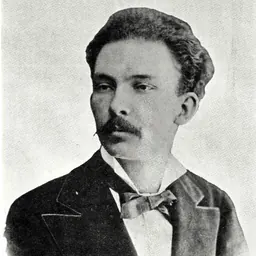



Related people
Same field, nearest in time
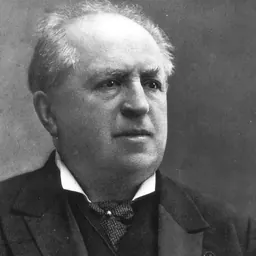
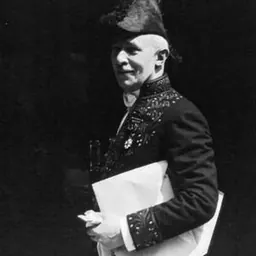
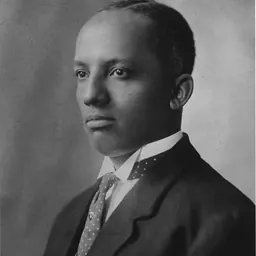

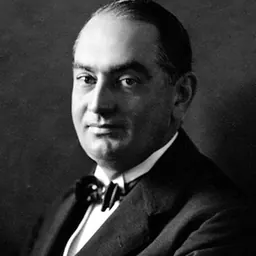
Contemporaries
People whose lives overlapped Juan Gualberto Gómez's

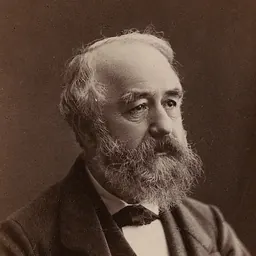
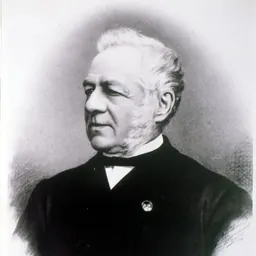
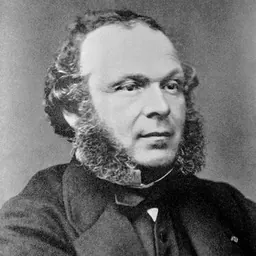
Frequently asked questions
Who was Juan Gualberto Gómez?
Afro-Cuban revolutionary leader in the Cuban War of Independence (1854-1933)
When was Juan Gualberto Gómez born?
Juan Gualberto Gómez was born on 12 July 1854 in Matanzas Province.
When did Juan Gualberto Gómez die?
Juan Gualberto Gómez died on 5 March 1933 in Havana.
What was Juan Gualberto Gómez's occupation?
Juan Gualberto Gómez was a journalist and politician.
What nationality was Juan Gualberto Gómez?
Juan Gualberto Gómez was Cuban.
Sources & further reading
· Wikipedia: Juan Gualberto Gómez
· DBpedia: Juan Gualberto Gómez
Cite this page
APA: Biography.guide. (2026). Juan Gualberto Gómez. https://biography.guide/juan-gualberto-gomez/
MLA: "Juan Gualberto Gómez." Biography.guide, https://biography.guide/juan-gualberto-gomez/.
Chicago: "Juan Gualberto Gómez." Biography.guide. https://biography.guide/juan-gualberto-gomez/.
Data last updated: 2026-09-26 · Spot an error? Report a correction.
Page generated 2026-09-27 05:15 UTC