
Juan de Fuca
Explorer for Spain from Kefalonia, Ionian Islands
About Juan de Fuca
Lived 1536 – 1602 (aged 65–66). Juan de Fuca was an Italian explorer, navigator, seafarer and discoverer.
Juan de Fuca (10 June 1536 23 July 1602) was a Greek sailor and explorer under the patronage of PhilipII of Spain. He is best known for his claim to have explored the Strait of Aniánnow known as the Strait of Juan de Fucabetween Vancouver Island (now part of British Columbia, Canada) and the Olympic Peninsula (now part of northwestern Washington state in the United States).
Name "Juan de Fuca" is a hispanicization of the Greek name or Phokas , latinized as . However, his exact name is somewhat uncertain. Some sources state that his actual name was Apostolos Valerianos . It is possible that he was baptized as Apostolos and later adopted the name Ioannis or Juan because is not a common Spanish name. It is known that his father and grandfather bore the name Focas, so it seems likely that Valerianos was a nickname or epithet borrowed from the village where he grew up on Cephalonia.
Family and early life De Fuca's grandfather Emmanouil Fokas fled Constantinople when it fell to Ottoman forces in 1453, accompanied by his brother Andronikos . The two settled first in the Peloponnese, where Andronikos remained, but in 1470 Emmanouil moved to the island of Cephalonia. Ioannis's father Iakovos established himself in the village of Valerianos on the island and came to be known as "the Valeriano Fokas" (, Fokas ho Valerianos) to distinguish him from his brothers.
Early career De Fuca's early voyages were to the Far East, and he claimed to have arrived in New Spain in 1587 when, off Cabo San Lucas in Baja California, the English privateer Thomas Cavendish seized his galleon Santa Ana and deposited him ashore. De Fuca was a well-traveled seaman, perfecting his skill as a pilot in the Spanish fleet. He claimed that King Philip II of Spain recognized him for his excellence and made him pilot of the Spanish navy in the West Indies (a title he held for forty years), but there is no record in any surviving Spanish archives of his name or position or of his visit to the royal court. Before he made his famous trip up the northwest coast of the North American continent, he sailed to China, the Philippines and Mexico. The Strait of Juan de Fuca between the United States of America and Canada was named for him by British Captain Charles Barkley because it was at the same latitude that Juan de Fuca described as the location of the Strait of Anián.
Voyages to the north
According to de Fuca's account, he undertook two voyages of exploration on the orders of the Viceroy of New Spain, Luis de Velasco, marqués de Salinas, both of which were intended to find the fabled Strait of Anián, believed to be a Northwest Passage, a sea route linking the Atlantic and Pacific oceans. The one voyage saw 200 soldiers and three small ships under the overall command of a Spanish captain (with de Fuca as pilot and master) assigned the task of finding the Strait of Anián and fortifying it against the English. This expedition failed when, allegedly due to the captain's malfeasance, the soldiers mutinied and returned home to California. During the voyage, De Fuca also noted a "high pinnacle or spired rock", which may have been Fuca Pillar, a tall, almost rectangular rock on the western shore of Cape Flattery at the northwestern extremity of the Olympic Peninsula, in what is now the U.S. state of Washington, beside the Strait of Juan de Fuca – although De Fuca noted it being on the other side of the strait. (although Cook actually sailed past the Strait of Juan de Fuca without entering it, and did stop at Nootka Sound on the west coast of Vancouver Island). With later English exploration and settlement of the area, however, De Fuca's claims seemed much more credible.
In 1859, an American researcher, with the help of the U.S. Consul in the Ionian Islands, was able to demonstrate not only that De Fuca had lived but also that his family and history were well-known on the islands.
Legacy When the English captain Charles William Barkley, sailing the Imperial Eagle in 1787, (re)discovered the strait De Fuca had described, he renamed it the Strait of Juan de Fuca. The Juan de Fuca Ridge and the Juan de Fuca Plate, a tectonic plate underlying much of the coastline he explored, are in turn named for the Strait of Juan de Fuca. Juan de Fuca Provincial Park on Vancouver Island's West Coast is also named for the strait, as is the hiking trail of the same name.
Don’t just read it —
keep it.
Full-length biographies made to live with: read them, listen on the way to work, watch them tonight.
- E-book
- Audio
- Video
Instant download · yours to keep · every purchase keeps this site free
Important facts
People in Juan de Fuca's life
Named in this biography and alive at the same time
Related people
Same field, nearest in time

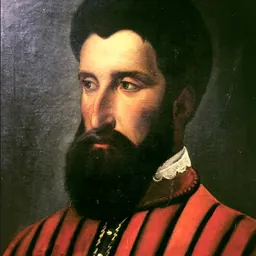

Contemporaries
People whose lives overlapped Juan de Fuca's
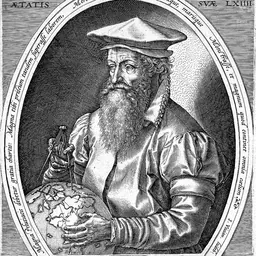

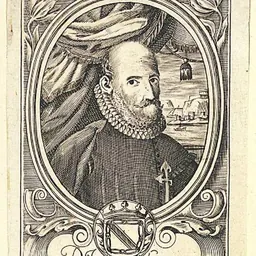

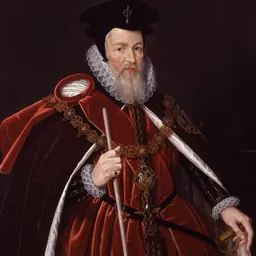

Frequently asked questions
Who was Juan de Fuca?
explorer for Spain from Kefalonia, Ionian Islands
When was Juan de Fuca born?
Juan de Fuca was born in 1536 in Cephalonia.
When did Juan de Fuca die?
Juan de Fuca died in 1602 in Cephalonia.
What was Juan de Fuca's occupation?
Juan de Fuca was an explorer, navigator, seafarer and discoverer.
What nationality was Juan de Fuca?
Juan de Fuca was Italian.
Sources & further reading
Cite this page
APA: Biography.guide. (2026). Juan de Fuca. https://biography.guide/juan-de-fuca/
MLA: "Juan de Fuca." Biography.guide, https://biography.guide/juan-de-fuca/.
Chicago: "Juan de Fuca." Biography.guide. https://biography.guide/juan-de-fuca/.
Data last updated: 2026-09-20 · Spot an error? Report a correction.
Page generated 2026-09-27 05:19 UTC