
About Juan Bravo
Lived 1483 – 1521 (aged 37–38). Juan Bravo was a politician, revolutionary and military affairs.
Juan Bravo de Lagunas y Mendoza (c. 1483, Atienza–24 April 1521, Villalar de los Comuneros) was a Castilian Nobleman and one of the leaders of the rebel Comuneros, the local councils that rebelled against Emperor Charles V in the Castilian "Revolt of the Comuneros". He lived and worked in north-central Spain.
Biography Juan Bravo was born around 1483, in the city of Atienza in Spain. His father was Gonzalo Ortega Bravo de Laguna, the director of the fort, and his mother was María de Mendoza, daughter of the Count of Montagudo. Juan Bravo was the nephew of Juan de Ortega Bravo de Laguna, the bishop of the parishes of Ciudad Rodrigo, Calahorra and Coria and was the second cousin of Luisa de Medrano and the first cousin of her mother Magdalena Bravo de Lagunas y Cienfuegos. In 1504, Juan Bravo was already living in the city of Segovia in central Spain, and a year later he married Catalina del Rio, the only daughter of Diego del Rio, a member of the Council of Segovia, and Isabel de Herrera. They had three children: Gonzalo Bravo del Río, Luis Bravo and María de Mendoza. Bravo married María Coronel in his hometown of Segovia in 1519. Maria was the daughter of Inigo López Coronel, a member of the Segovia Council and a rich merchant and the great-granddaughter of the converted Jew Abraham Senor Coronel. They had two sons from this marriage, Andrea Bravo de Mendoza and Juan Bravo de Mendoza. Inigo López Coronel bequeathed all his property to his son-in-law Juan Bravo, on the condition that Maria and Juan's children inherit them.
Political and Military Career Juan Bravo began his political career in June 1516, in La Rioja. He was one of the commanders appointed by Cardinal Cisneros, then regent of the kingdom, to establish an armed body that would exclusively serve the crown. The opposition of the high nobility caused the project to be cancelled, and it is said that the failure of the project pushed Bravo to oppose the new king. He was buried there but with the approval of the authorities, his body was removed from his grave and returned to Segovia at the beginning of June. Civil riots broke out in Segovia. The families of Catalina del Rio, of Maria Coronel as well as his political supporters tried to turn the funeral into a solemn tribute to someone who is considered the protector of the community. The royal authorities found it difficult to contain the angry reaction of the crowd, and finally suppressed it with a heavy hand. Appears in the Battle of Villar by Manuel Piccolo Lopes (1887) The Juan Bravo Theater in Segovia, founded in 1917 and named after him It is also mentioned in the poem by the Argentine poet Raul González Toñón The Living History Beneath the Immortal Loma (1934) A monument was erected in his memory in the old city of Segovia (1921)
This monument is commemorated in a painting by Lionel Lindsay, from the first half of the twentieth century.
Don’t just read it —
keep it.
Full-length biographies made to live with: read them, listen on the way to work, watch them tonight.
- E-book
- Audio
- Video
Instant download · yours to keep · every purchase keeps this site free
Important facts
People in Juan Bravo's life
Named in this biography and alive at the same time


Related people
Same field, nearest in time

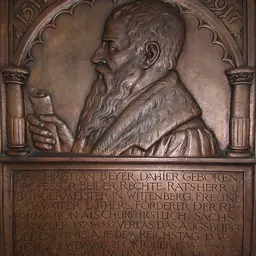
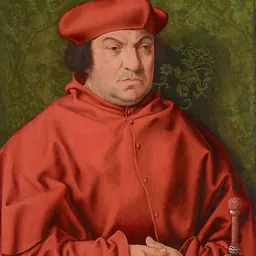

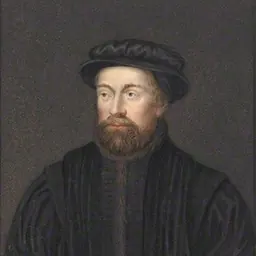
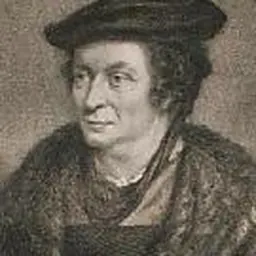
Contemporaries
People whose lives overlapped Juan Bravo's


Frequently asked questions
Who was Juan Bravo?
Castilian rebel
When was Juan Bravo born?
Juan Bravo was born in 1483 in Atienza.
When did Juan Bravo die?
Juan Bravo died on 24 April 1521 in Villalar de los Comuneros.
What was Juan Bravo's occupation?
Juan Bravo was a politician, revolutionary and military affairs.
What nationality was Juan Bravo?
Juan Bravo's recorded nationality: Crown of Castile.
Sources & further reading
Cite this page
APA: Biography.guide. (2026). Juan Bravo. https://biography.guide/juan-bravo/
MLA: "Juan Bravo." Biography.guide, https://biography.guide/juan-bravo/.
Chicago: "Juan Bravo." Biography.guide. https://biography.guide/juan-bravo/.
Data last updated: 2026-09-20 · Spot an error? Report a correction.
Page generated 2026-09-27 05:32 UTC