
About Juan Aldama
Lived 1774 – 1811 (aged 37). Juan Aldama was a Mexican military personnel.
Juan José Marcos Gaspar Antonio de Aldama y González (3 January 1774 – 26 June 1811) commonly known simply as Juan Aldama was a Mexican rebel leader, military officer and alongside Miguel Hidalgo and Ignacio Allende, one of the core instigators of the Mexican War of Independence. A criollo captain in the provincial militia of New Spain, he helped organize the Querétaro conspiracy, personally warned Hidalgo and Allende of its discovery, participated in the Grito de Dolores, and commanded the Insurgent Army's earliest campaigns before his capture and execution by royalist forces.
Early life and military career Juan José Marcos Gaspar Antonio de Aldama y González was born on 3 January 1774 in San Miguel el Grande (today San Miguel de Allende), Guanajuato, in the heart of the wealthy Bajío region to a prosperous criollo family of hacendados with social ties extending to both Guanajuato and Querétaro. Like many ambitious criollos of his generation, Aldama sough social advancement and status through the rigid caste system of New Spain by way of military service. following the 1795 reorganization of New Spain's provincial militias, he entered the Regimiento de Dragones Provinciales de la Reina, a cavalry unit based in his hometown of San Miguel el Grande. He began as lieutenant and had been promoted to captain by 1808. By 1810, he was a widower and father of two daughters. Pérez rode urgently in horseback from Querétaro covering the distance in a grueling overnight. He arrived in San Miguel in early 15 September but found that Allende was not there. He instead located Aldama and they rode together through the night to the town of Dolores. Arriving around 2 in the morning on 16 September.
Military leadership in the Insurgent Army When the insurgent column reached San Miguel el Grande, the Regimiento de Dragones remained loyal to their captains Aldama and Allende and largely joined the revolt, Valladolid was occupied with less bloodshed on 17 October. on 22 October at Acámbaro, the insurgents formalized leadership, Hidalgo was proclaimed Generalísimo, Allende as Capitán general was made second in command, while Aldama as Teniente general, ranked third.
Aldama contributed to early successes, including the pivotal victory at Monte de las Cruces that cleared the road for the advance to Mexico City. However, the leadership debated whether to assault the capital. Professional military officers urged pressing forward and storming Mexico City while the insurgents held the advantage. Hidalgo, however, decided against an assault on the capital, fearing massive civilian casualties and looting and ordered a retreat toward Guadalajara. Subsequent royalist victories at Aculco and the recapture of Guanajuato exposed the insurgents’ organizational weaknesses. The decisive defeat came against forces of Félix María Calleja at the Battle of Calderón Bridge as internal tensions between Hidalgo’s charismatic appeal to the rural masses and the more disciplined, professional outlook of officers continue to increase. At the Pabellón hacienda, the military chiefs effectively removed Hidalgo from supreme command and learned of the news that Viceroy Francisco Javier Venegas was willing to granted them a pardon on the condition that they handed over their weapons and surrender. Despite the situation they were facing, the insurgents replied defiantly with Aldama being one of the most insistent on continuing northwards, even arranging his brother Ignacio's appointment as emissary to the U.S.
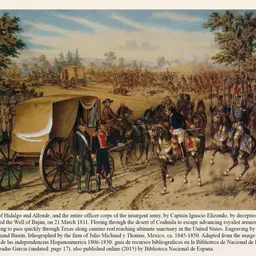
On 21 March 1811, the insurgent column numbering roughly 900–1,000 men was ambushed and captured with little resistance at Wells of Baján near Monclova, Coahuila. Royalist captain, Ignacio Elizondo, who had earlier feigned sympathy for the insurgents, sprang the trap with approximately 150 royalist soldiers.
The leaders were taken to Chihuahua for trial by royalist court-martial. On 26 June 1811, Aldama was executed by firing squad, alongside Allende, José Mariano Jiménez and Manuel de Santa María. Hidalgo was executed at a later date after being defrocked. The heads of Hidalgo, Aldama, Allende and Jiménez were severed and sent to Guanajuato, where they were displayed in iron cages at the four corners of the Alhóndiga de Granaditas as a public warning.
Aldama’s body was initially buried in Chihuahua. After the heads were removed following independence, his skull was eventually transferred via Guanajuato’s San Sebastián church and Mexico City’s Metropolitan Cathedral to the mausoleum of the Columna de la Independencia in 1925, where it rests with those of other independence figures.
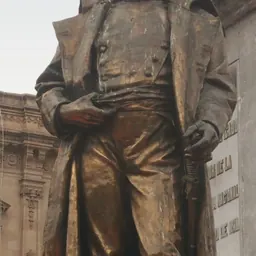
Legacy Aldama is considered a national hero of Mexico. He is commemorated yearly during Mexico's patriotic holidays. Streets, schools, and public monuments across Mexico, specially in Guanajuato bear his name. Some of this include:
The municipality of Juan Aldama, Zacatecas The municipality of Villaldama, Nuevo León. The municipality of Aldama, Tamaulipas. The municipality of Aldama, Chihuahua. The municipality of Villa Aldama, Veracruz. The village of Juan Aldama, "El Tigre", Sinaloa outside of Culiacán. The street Juan Aldama in Mexicali, Baja California in the Colonia Independencia. The city of León de Los Aldamas in Guanajuato and the municipality of Los Aldamas in Nuevo León honor brothers Juan and Ignacio collectively.
Don’t just read it —
keep it.
Full-length biographies made to live with: read them, listen on the way to work, watch them tonight.
- E-book
- Audio
- Video
Instant download · yours to keep · every purchase keeps this site free
Important facts
People in Juan Aldama's life
Named in this biography and alive at the same time


Related people
Same field, nearest in time


Contemporaries
People whose lives overlapped Juan Aldama's




Frequently asked questions
Who was Juan Aldama?
Mexican revolutionary rebel soldier
When was Juan Aldama born?
Juan Aldama was born on 3 January 1774 in San Miguel de Allende.
When did Juan Aldama die?
Juan Aldama died on 26 June 1811 in Chihuahua City.
What was Juan Aldama's occupation?
Juan Aldama was a military personnel.
What nationality was Juan Aldama?
Juan Aldama was Mexican.
Sources & further reading
Cite this page
APA: Biography.guide. (2026). Juan Aldama. https://biography.guide/juan-aldama/
MLA: "Juan Aldama." Biography.guide, https://biography.guide/juan-aldama/.
Chicago: "Juan Aldama." Biography.guide. https://biography.guide/juan-aldama/.
Data last updated: 2026-09-20 · Spot an error? Report a correction.
Page generated 2026-09-27 05:25 UTC