
Josephus Nelson Larned
American librarian, newspaper editor, and author.
About Josephus Nelson Larned
Lived 1836 – 1913 (aged 77). Josephus Nelson Larned was an American librarian, editor, journalist and historian.
Josephus Nelson Larned (May 11, 1836 – August 15, 1913) was an American newspaper editor, author, librarian, and historian. As superintendent of the Young Men's Association Library, he presided over its transformation into what is now the Buffalo & Erie County Public Library.
Early life
Larned was born in Chatham, Ontario, Canada, the son of Henry Sherwood Larned and Mary Ann Nelson. His family moved to Buffalo, New York, when he was twelve and he was educated in public schools there until he was sixteen. After his schooling, he worked as a bookkeeper for a ship chandler and a clerk for two transportation companies. In 1857, he moved west to Iowa, but did not enjoy it there and returned to Buffalo later that year. He was attracted to newspaper work and began working for the Buffalo Republic.
Buffalo Express
Two years later, in 1859, Larned joined another newspaper, the Buffalo Express, where he worked for the next thirteen years. Starting in 1866, he had a financial interest in the newspaper as well. Larned produced political editorials for the Express and his opinions were generally Republican and pro-Union.
Larned left the Express in 1872.
Education and politics Larned was elected Superintendent of Education in Buffalo in 1871 and served two terms. He pressed significant changes, including increased teacher education, availability of technical and vocational training, the teaching of German to serve immigrant populations, and the independence of education from politics. He was unable to make most of his changes and was frustrated with political interference, writing in one of his annual reports "I know of no other important city in the country in which the government of the schools is not separated from the general organization of municipal government and committed to a board of education."
In 1876, he published his first book, Talks About Labor; Concerning the Evolution of Justice Between the Laborers and the Capitalists. That year he also unsuccessfully ran for the Republican nomination for the New York State Assembly's 3rd district. They soon founded a subscription library. In 1877, Larned was hired as superintendent of the library.
Larned soon discovered that the collection was in desperate need of cataloging and organization, due to the rapid growth of the collection and the fact that the previous catalog was seven years old. Traveling to libraries in the region to research classification systems, he met Melvil Dewey and learned about his new Dewey Decimal System. Larned's library was the first outside Dewey's Amherst College to adopt the system, which is now universal in public libraries in the US. Adopting the new system and presenting his experiences introduced him to other professionals and the new American Library Association, which he later served as president of for the 1893–1894 term. Larned impressed his new colleagues and Dewey later said he was one of the country's best librarians. His interest in cataloging continued. He later developed a system for classifying newspaper clippings and pamphlets and an alternative system for classifying books, but these were not adopted by libraries.
In 1886, to avoid confusion with the Young Men's Christian Association, the institution was renamed the Buffalo Library. The next year, the Library's new building, designed by architect Cyrus L. W. Eidlitz, opened.
Larned was focused on the quality of the collection, advocating standards of quality and against purchasing what he thought were inferior publications, such as "unwholesome newspapers". "Our tools are not books, but good books," he said in an ALA address. He cooperated with other libraries in a system devised by Charles Ammi Cutter to share lists of new books accompanied by quotations from book reviews.
Larned adopted new innovations that made his library more accessible to library patrons. He had open stacks which allowed patrons to browse the collection themselves, prominently displayed new books, organized a lecture series, and opened the library to non-subscribers on Sunday afternoons. He organized a system for providing quick answers to frequently asked reference questions that became the genesis of his book History for Ready Reference (1895). Children were a particular focus of his outreach. He distributed free library tickets to children, opened one of the first library children's rooms in the US in 1896, and compiled a bibliography of children's literature.
Larned's push for accessibility, coupled with a financial crisis for the Library when the Young Men's Association lost a state tax exemption, culminated in 1897 with the Buffalo Library becoming a free public library. Once the library was under the control of the city of Buffalo, however, Larned, who disliked political interference, clashed with the Library Board and soon resigned, to the disappointment of the city and the library profession.
Retirement
Larned had an active retirement after leaving the Buffalo Library, writing, traveling, and lecturing. He continted to be active in librarianship, writing articles for the Library Journal and creating an annotated bibliography of American history, completing it in 1902. He wrote for a series of articles criticizing government corruption and socialism in the Atlantic Monthly and published the two volume history Seventy Centuries of the Life of Mankind (1907). He was active in world peace causes and was the first president of the Buffalo branch of the American Peace Society. He died in Orchard Park, New York in 1913.
Works
Don’t just read it —
keep it.
Full-length biographies made to live with: read them, listen on the way to work, watch them tonight.
- E-book
- Audio
- Video
Instant download · yours to keep · every purchase keeps this site free
Important facts
People in Josephus Nelson Larned's life
Named in this biography and alive at the same time

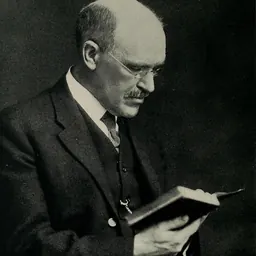
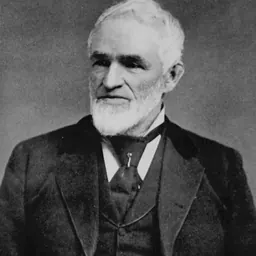

Related people
Same field, nearest in time

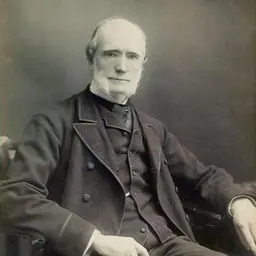
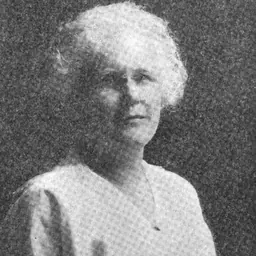
Contemporaries
People whose lives overlapped Josephus Nelson Larned's



Frequently asked questions
Who was Josephus Nelson Larned?
American librarian, newspaper editor, and author. (1836–1913)
When was Josephus Nelson Larned born?
Josephus Nelson Larned was born on 11 May 1836 in Chatham-Kent.
When did Josephus Nelson Larned die?
Josephus Nelson Larned died on 15 August 1913 in Orchard Park.
What was Josephus Nelson Larned's occupation?
Josephus Nelson Larned was a librarian, editor, journalist and historian.
What nationality was Josephus Nelson Larned?
Josephus Nelson Larned was American.
Sources & further reading
· Wikipedia: Josephus Nelson Larned
· DBpedia: Josephus Nelson Larned
Cite this page
APA: Biography.guide. (2026). Josephus Nelson Larned. https://biography.guide/josephus-nelson-larned/
MLA: "Josephus Nelson Larned." Biography.guide, https://biography.guide/josephus-nelson-larned/.
Chicago: "Josephus Nelson Larned." Biography.guide. https://biography.guide/josephus-nelson-larned/.
Data last updated: 2026-09-26 · Spot an error? Report a correction.
Page generated 2026-09-27 05:16 UTC