
About Josephine Beall Willson Bruce
Lived 1853 – 1923 (aged 69). Josephine Beall Willson Bruce was an American suffragist, socialite, philanthropist and teacher.
Josephine Beall Willson Bruce (October 29, 1853 – February 15, 1923) was a women's rights activist in the late 1890s and early 1900s. She spent a majority of her time working for the National Organization of Afro-American Women. She was a prominent socialite in Washington, D.C., throughout most of her life where she lived with her husband, United States Senator Blanche Bruce. In addition to these accomplishments, she was the first Black teacher in the public school system in Cleveland, and she eventually became a highly regarded educator at Tuskegee University in Alabama.
Early life Josephine Beall Willson was born in Philadelphia on October 29, 1853, to Dr. Joseph Willson and Elizabeth Harnett Willson, the first of five children for the pair. Her family spent no more than a year in Philadelphia, moving to Cleveland in 1854. The family prioritized education and sent Josephine to Cleveland Central High School, where she graduated in 1871. After graduation, she took several teaching courses which then gave her the opportunity to teach at the Mayflower school, making her the first African-American teacher in the public school system of Cleveland, Ohio.
Personal life In 1878 she married Senator Blanche Bruce, with whom she honeymooned in Europe for four months. Upon their return to the United States, they settled in Washington, D.C. Bruce had her only child, Roscoe Conkling Bruce, in 1879. He was named after Republican Senator Roscoe Conkling. She delayed the christening of her son until he could be taken to Cleveland, so that the same rector who had performed her marriage could christen her child. after which she competently managed the family's money and land on her own. At the invitation of Booker T. Washington, she served as the principal at Tuskegee University from 1899 to 1902. Her transition to Tuskegee was made more difficult by the rural background of most students there, in contrast to her pedagogic experiences in the more cosmopolitan North. Some criticized Bruce as a wealthy woman taking a job that might have been filled by a less privileged woman more sympathetic to the needs of Tuskegee students.
Bruce's son Roscoe graduated from Harvard University in 1902, later becoming the head of the academic department at Tuskegee University. Josephine Bruce then moved to Mississippi for a short time to live with her family, only to return to Washington, D.C., to run for the presidency of the NACW in 1906. She died of a heart attack in her sleep on February 15, 1923, in Kimball, West Virginia. The African-American newspaper Washington Bee noted that Bruce "pays and receives calls from those of her select set with unvarying regard for etiquette". She was said to be fashionable and a great beauty.
Bruce and her husband were often criticized by members of the black community, who claimed the Bruces spent more time with whites than blacks. She accordingly became associated with the National Organization of Afro-American Women (NACW), running for the vice presidency of the organization in 1896. Despite her work for the organization, she lost the election, possibly because of her fair complexion. She helped inspire the career of Mary Church Terrell by inviting the younger woman to stay with her in Washington. Tuskegee University, where Josephine Bruce served as "Lady Principal" Bruce also worked alongside black female teachers to strengthen the newly created National Association for the Advancement of Colored People (NAACP). Bruce was also involved with the World Purity Federation
Despite Bruce's heavy involvement with the NACW, members of the NACW accuses Mary Church Terrell, Bruce's friend and president of the NACW, of handpicking Bruce to be her successor.
Effects of Class Josephine Bruce and her husband were part of an newly emerging elite African-American class that saw itself as separate from and unconcerned with the larger African-American community. Members of this aspiring elite “defended the thesis that the social equality of all Negroes was a concept destructive to racial progress”. Professional men such as scholars and office holders, despite obstacles, became more similar to the white community.
Many African Americans thought the Bruces were “not good enough for whites and too good for their own race” while linking the creation of the upper class in Xenia, Ohio with the residents' higher education levels.
Colored Women's Clubs
This article was published in August 1915 in The Crisis, the official magazine of the National Association for the Advancement of Colored People. Writing as Mrs. B. K. Bruce, Josephine traced the origin of the national club movement among colored women to Josephine St. Pierre Ruffin's call for a meeting among suffragette women. Consecutive conventions after that led the National Federation of Colored Women and the National League of Colored Women to merge, forming the National Association of Colored Women. She called the organization a “social service not alone for colored people but for humanity”. Over 400 delegates attended these conventions, she said, coming "from the East the West, the North and the South".
Don’t just read it —
keep it.
Full-length biographies made to live with: read them, listen on the way to work, watch them tonight.
- E-book
- Audio
- Video
Instant download · yours to keep · every purchase keeps this site free
Important facts
Family & relationships
People in Josephine Beall Willson Bruce's life
Named in this biography and alive at the same time
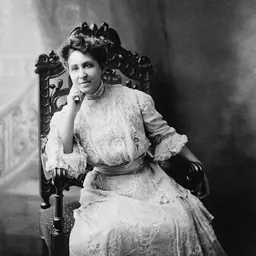
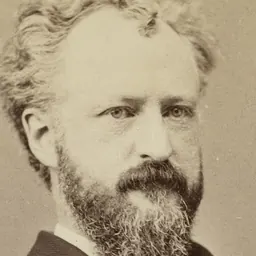
Related people
Same field, nearest in time


Contemporaries
People whose lives overlapped Josephine Beall Willson Bruce's



Frequently asked questions
Who was Josephine Beall Willson Bruce?
American activist (1853–1923)
When was Josephine Beall Willson Bruce born?
Josephine Beall Willson Bruce was born on 29 October 1853 in Philadelphia.
When did Josephine Beall Willson Bruce die?
Josephine Beall Willson Bruce died on 15 February 1923 in Kimball.
What was Josephine Beall Willson Bruce's occupation?
Josephine Beall Willson Bruce was a suffragist, socialite, philanthropist and teacher.
What nationality was Josephine Beall Willson Bruce?
Josephine Beall Willson Bruce was American.
Sources & further reading
· Wikipedia: Josephine Beall Willson Bruce
· DBpedia: Josephine Beall Willson Bruce
Cite this page
APA: Biography.guide. (2026). Josephine Beall Willson Bruce. https://biography.guide/josephine-beall-willson-bruce/
MLA: "Josephine Beall Willson Bruce." Biography.guide, https://biography.guide/josephine-beall-willson-bruce/.
Chicago: "Josephine Beall Willson Bruce." Biography.guide. https://biography.guide/josephine-beall-willson-bruce/.
Data last updated: 2026-09-20 · Spot an error? Report a correction.
Page generated 2026-09-27 05:24 UTC