
Joseph Weizenbaum
German-American computer scientist
About Joseph Weizenbaum
Lived 1923 – 2008 (aged 85). Joseph Weizenbaum was a German and American computer scientist, non-fiction writer, university teacher, artificial intelligence researcher, philosopher and teacher.
Joseph Weizenbaum (8 January 1923 – 5 March 2008) was a German-American computer scientist and a professor at the Massachusetts Institute of Technology. He is the namesake of the Weizenbaum Award and the Weizenbaum Institute.
Life and career Born in Berlin, Germany, to Jewish parents, he escaped Nazi Germany in January 1936, immigrating with his family to the United States. He started studying mathematics in 1941 at Wayne State University, in Detroit, Michigan. In 1942, he interrupted his studies to serve in the U.S. Army Air Corps as a meteorologist, having been turned down for cryptology work because of his "enemy alien" status. After the war, in 1946, he returned to Wayne State, obtaining his B.S. in Mathematics in 1948, and his M.S. in 1950. In addition to working at MIT, Weizenbaum held academic appointments at Harvard, Stanford, the University of Bremen, and other universities.
Psychology simulation at MIT In 1966, he published a comparatively simple program called ELIZA, named after the ingénue in George Bernard Shaw's Pygmalion, which could chat to the user. ELIZA was written in the SLIP programming language of Weizenbaum's own creation. The program applied pattern matching rules to statements to figure out its replies. (Programs like this are now called chatbots.) Driven by a script named DOCTOR, it was capable of engaging humans in a conversation which bore a striking resemblance to one with an empathetic psychologist. Weizenbaum modeled its conversational style after Carl Rogers, who introduced the use of open-ended questions to encourage patients to communicate more effectively with therapists. He was shocked that his program was taken seriously by many users, who would open their hearts to it. Many hailed the program as a forerunner of thinking machines, a misguided interpretation that Weizenbaum's later writing would attempt to correct.
Apprehensions about computers and artificial intelligence He started to think philosophically about the implications of artificial intelligence and later became one of its leading critics. In an interview with MIT's The Tech, Weizenbaum elaborated on his fears, expanding them beyond the realm of mere artificial intelligence, explaining that his fears for society and the future of society were largely because of the computer itself. His belief was that the computer, at its most base level, is a fundamentally conservative force and that despite being a technological innovation, it would end up hindering social progress. Weizenbaum used his experience working with Bank of America as justification for his reasoning, saying that the computer allowed banks to deal with an ever-expanding number of checks in play that otherwise would have forced drastic changes to banking organization such as decentralization. As such, although the computer allowed the industry to become more efficient, it prevented a fundamental re-haul of the system.
Weizenbaum also worried about the negative effects computers would have with regards to the military, calling the computer "a child of the military."
Position on the military When asked about his belief that a computer science professional would more often than not end up working with defense, Weizenbaum detailed his position on the effect of rhetoric, specifically euphemism, on public viewpoints. He believed that the terms "the military" and "defense" did not accurately represent the organizations and their actions. He made it clear that he did not think of himself as a pacifist, believing that there are certainly times where arms are necessary, but by referring to defense as killing people, humanity as a whole would be less inclined to embrace violent reactions so quickly.
Personal life Weizenbaum had five children: one son from his first marriage and four daughters from his second.
In 1996, Weizenbaum moved to Berlin and lived in the vicinity of his childhood neighborhood.
Weizenbaum was buried at the Weißensee Jewish cemetery in Berlin. A memorial service was held in Berlin on 18 March 2008.
Legacy A German documentary film about Weizenbaum, entitled Weizenbaum. Rebel at Work., was released in 2007 and later dubbed into English. The documentary film Plug & Pray on Weizenbaum and the ethics of artificial intelligence was released in 2010.
The interdisciplinary German Internet Institute (Weizenbaum Institute for the Networked Society) was named after Joseph Weizenbaum.
Works
"ELIZA — A Computer Program for the Study of Natural Language Communication between Man and Machine," Communications of the Association for Computing Machinery 9 (1966): 36-45.
Islands in the Cyberstream: Seeking Havens of Reason in a Programmed Society, Sacramento: Litwin Books, 2015 Foreword to Renewal of the Social Organism by Rudolf Steiner, Anthroposophic Press, 1985 (cloth) (pbk.)
Don’t just read it —
keep it.
Full-length biographies made to live with: read them, listen on the way to work, watch them tonight.
- E-book
- Audio
- Video
Instant download · yours to keep · every purchase keeps this site free
Important facts
People in Joseph Weizenbaum's life
Named in this biography and alive at the same time




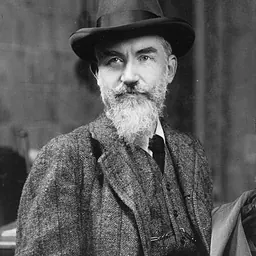
Related people
Same field, nearest in time

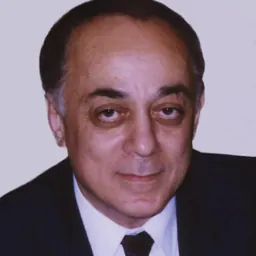
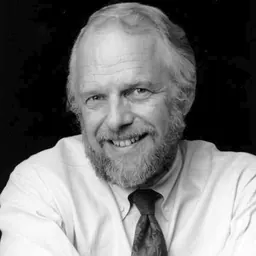

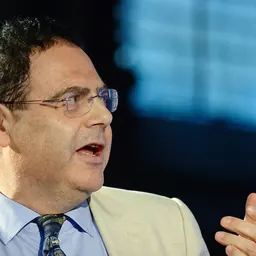

Contemporaries
People whose lives overlapped Joseph Weizenbaum's

Frequently asked questions
Who was Joseph Weizenbaum?
German-American computer scientist (1923–2008)
When was Joseph Weizenbaum born?
Joseph Weizenbaum was born on 8 January 1923 in Berlin.
When did Joseph Weizenbaum die?
Joseph Weizenbaum died on 5 March 2008 in Ludwigsfelde, Gröben.
What was Joseph Weizenbaum's occupation?
Joseph Weizenbaum was a computer scientist, non-fiction writer, university teacher, artificial intelligence researcher, philosopher and teacher.
What nationality was Joseph Weizenbaum?
Joseph Weizenbaum was German and American.
Sources & further reading
· Wikipedia: Joseph Weizenbaum
Cite this page
APA: Biography.guide. (2026). Joseph Weizenbaum. https://biography.guide/joseph-weizenbaum/
MLA: "Joseph Weizenbaum." Biography.guide, https://biography.guide/joseph-weizenbaum/.
Chicago: "Joseph Weizenbaum." Biography.guide. https://biography.guide/joseph-weizenbaum/.
Data last updated: 2026-09-20 · Spot an error? Report a correction.
Page generated 2026-09-27 05:34 UTC