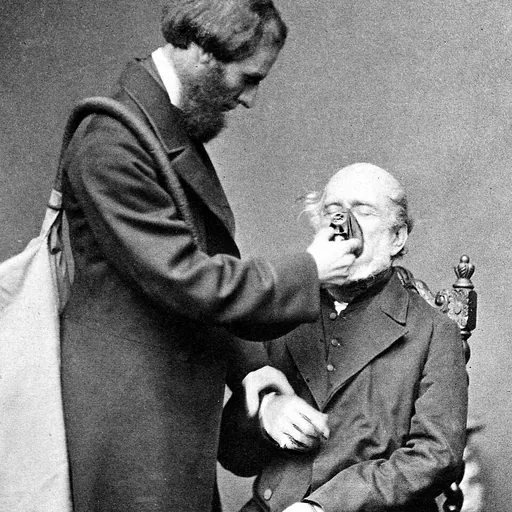
About Joseph Thomas Clover
Lived 1825 – 1882 (aged 57). Joseph Thomas Clover was a British physician.
Joseph Thomas Clover (born 28 February 1825; baptised 7 May 1825 – 27 September 1882) to John Wright Clover, a draper and shopkeeper, and Elizabeth Mary Ann Clover (née Peterson) John Wright Clover's second wife (married at Aylsham on 11 June 1821). He was educated at the Gray Friars' Priory School, Norwich.
Clover enrolled to study medicine at University College Hospital in 1844, where Joseph Lister (innovator of antisepsis) was a fellow student.
He then worked as a general practitioner in 1853. Clover's choice of speciality helped to fill the vacancy created by the death of John Snow in 1858.
Clover was probably present
Important cases Because of his expertise in anaesthesia, Clover was often sought out when important figures required surgery. He gave chloroform to Napoleon III, the deposed French Emperor, on 2 January 1873, at Chislehurst, Kent, and again on 6 January, for a procedure to break up a bladder stone. The Emperor died on 9 January. Clover was a signatory to his autopsy report, together with five other physicians.
Clover gave chloroform to Alexandra, Princess of Wales, in 1867, for the removal of a splint from a rheumatic knee, and Sir Erasmus Wilson. A vaporiser was no longer necessary, but the bag was large and cumbersome.
A dose of 20 minims (1.18 millilitres) of chloroform per 1000 cubic inches (16.38 litres) of air would provide a concentration of chloroform vapour of 2.25%. 30 minims (1.77ml) would give 3.37%, and 40 minims (2.36ml) would give 4.5%, which Clover believed was the maximum safe concentration. It became a common practice at hospitals to initiate all anaesthetic treatments with a mild flow of nitrous oxide and then gradually increase the anaesthesia with a stronger ether or chloroform. Clover's gas-ether inhaler was designed to supply the patient with nitrous oxide and ether at the same time, with the exact mixture being controlled by the operator of the device. It remained in use by many hospitals until the 1930s.
Clover's crutch Clover's crutch was a device for maintaining the patient in the lithotomy position. In 1949, the Royal College of Surgeons established the annual Joseph Clover Lecture in recognition of his contribution to anaesthesia. It was given annually until 1958 and every two years thereafter.
A memorial plaque on the site of his clinic at 3 Cavendish Place, Marylebone, was unveiled on 2 March 1994.
Don’t just read it —
keep it.
Full-length biographies made to live with: read them, listen on the way to work, watch them tonight.
- E-book
- Audio
- Video
Instant download · yours to keep · every purchase keeps this site free
Important facts
People in Joseph Thomas Clover's life
Named in this biography and alive at the same time


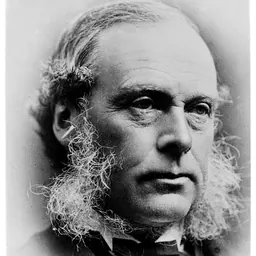
Related people
Same field, nearest in time
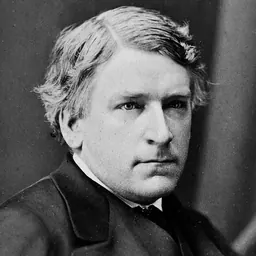



Contemporaries
People whose lives overlapped Joseph Thomas Clover's





Frequently asked questions
Who was Joseph Thomas Clover?
English doctor and pioneer of anaesthesia
When was Joseph Thomas Clover born?
Joseph Thomas Clover was born on 28 February 1825 in Aylsham.
When did Joseph Thomas Clover die?
Joseph Thomas Clover died on 27 September 1882 in Marylebone.
What was Joseph Thomas Clover's occupation?
Joseph Thomas Clover was a physician.
What nationality was Joseph Thomas Clover?
Joseph Thomas Clover was British.
Sources & further reading
· Wikipedia: Joseph Thomas Clover
· DBpedia: Joseph Thomas Clover
Cite this page
APA: Biography.guide. (2026). Joseph Thomas Clover. https://biography.guide/joseph-thomas-clover/
MLA: "Joseph Thomas Clover." Biography.guide, https://biography.guide/joseph-thomas-clover/.
Chicago: "Joseph Thomas Clover." Biography.guide. https://biography.guide/joseph-thomas-clover/.
Data last updated: 2026-09-21 · Spot an error? Report a correction.
Portrait: Wikimedia Commons · author & licence
Page generated 2026-09-27 04:59 UTC