
Joseph René Vilatte
French naturalized American Christian leader active in France and the United States
About Joseph René Vilatte
Lived 1854 – 1929 (aged 75). Joseph René Vilatte was a French and American anglican priest and bishop.
Early life and conversion to Catholicism
Vilatte was born in Paris, France, on January 24, 1855. Peter Anson, in Bishops at large, says that Vilatte's parents were members of the independent church and that he was probably baptized by a layman. Boyd, however, claims that Vilatte was validly baptized and educated by parents who held Gallican beliefs. Some accounts say that Vilatte was born Catholic.
Vilatte lost his parents at a "tender age". Raised in a Parisian orphanage operated by the Brothers of the Christian Schools where he was conditionally baptized, he received the sacrament of confirmation in Notre Dame de Paris cathedral.
Not yet sixteen, Vilatte served during the Franco-Prussian War in the battalion of the National Guard militia commanded by Jules-Henri-Marius Bergeret, a future member of the Comité de vigilance de Montmartre. He worked as a catechist in a small school near Ottawa and led services. He spent one year in the House of the Christian Brothers at Namur. Chiniquy was dubbed the apostle of temperance. Anthony Cross wrote, in Père Hyacinthe Loyson, the (1879–1893) and the Anglican Reform Mission, that "some made a living by attacking the Roman Church and the Society of Jesus in particular"; he included Chiniquy among a number of excommunicated Catholic priests, such as former Barnabite friar Alessandro Gavazzi, who "became anti-Catholic 'no popery' propagandists" and "received ready support from Protestants." "Even some Protestants became indignant", according to Roby, at how for five years "Chiniquy conducted an unremitting campaign" of "unrestrained attacks on the Catholic Church, its dogmas, sacraments, moral doctrine, and devotional practices".
According to Ernest Margrander, in the Schaff–Herzog Encyclopedia of Religious Knowledge, Vilatte was unable to continue his seminary studies and transferred to The Presbyterian College, Montreal. Two years' study convinced him of both papal additions to a primitive Catholic faith and defective Protestant interpretation of its traditional teachings. But he stayed only six months. He preached against the Catholic Church and distributed Chiniquy's tracts there and in nearby Fort Howard, Marinette, and other parts of Wisconsin. According to Cross, "Loyson was too profoundly Catholic to associate with such extremists."
"It was", Cross emphasizes, the Anglo-Continental Society "which master-minded the extraordinary venture in Paris which resulted in the founding" of the . It was ceded to the archdiocese of Utrecht in 1893, Marx and Blied did not known if the two also met during Loyson's second, 1893–1894, American tour. The Belgian settlement was spread out over parts of Brown, Door, Kewaunee counties. It stretched from the city of Green Bay, the county seat of Brown County, to the city of Sturgeon Bay, the county seat of Door County. Brown's successor, Bishop Charles Chapman Grafton wrote:
A spiritualist church was also built in 1888 and became a frequently visited stop on a traveling mediums circuit. It is located within of the Precious Blood mission. Although it was admitted in 1888 as an "unorganized mission", the Precious Blood mission was reclassified for the first time as an "organized mission" in 1889, with Vilatte designated as the missionary priest taking charge, years earlier, on July 4, 1885; that year, 1889, the Old Catholic Mission supported two priests, one brother and two students.
Kirkfleet wrote that Vilatte's "'revised' religion spread rapidly in the peninsula" and obtained a foothold even in Green Bay.
According to Jean Ducat, in , Vilatte tried to discredit Adele Brise and her work in Robinsonville (Champion), but the Belgian colonists and priests continued to trust in the "providential work" such as the first free school in the area. Ducat wrote that the Shrine of Our Lady of Good Help became a place of Christian pilgrimage the importance of which grew steadily and contributed to maintaining the Catholic religion in a region plagued by heresy. Brise's reputed mystical visions became, over 150 years later, the first and only Marian apparition in the United States approved bya Catholic diocesan bishop.
In 1890, Vilatte proposed to Grafton to be consecrated as a "bishop-abbot" to the American Old Catholics and as a suffragan bishop to Grafton; Marx and Blied wrote that "Vilatte wanted to function as a priest", so, "Katzer added that the Holy See would judge his orders and prescribe what theological studies he should make."
Grafton consulted with Williams as to what he should do. Acting under Williams' advice, Grafton wrote to the Archbishop Johannes Heykamp of Utrecht that he would transfer Vilatte, if Heykamp so wished, from his jurisdiction to that of Heykamp. In this way the would be relieved of Vilatte and not responsible for having any connection with him. Grafton pointed out to Heykamp that all the property of the mission belonged to the Episcopal Diocese of Fond du Lac and was legally held by it. In case of his accepting Vilatte, Vilatte would be obliged to leave this work and Grafton would appoint a replacement. Vilatte witnessed the complete abandonment by his first congregation. In April, the Door County Advocate reported Vilatte visited Sturgeon Bay on April 25, 1887, to obtain a suitable location for the establishment of a college of his order. Although months earlier Vilatte said "construction will be commenced in June", by the end of May, the Door County Advocate reported, only that, he had "signified his willingness to establish a seminary in this city provided our people see fit to donate the required real estate", and that, a benefactor, who "will give the society other material aid if it is necessary to secure the institution for this city", donated of land.
In July, land "which has been purchased by the donations of our citizens" for the college, was transferred and work was to start on buildings in September. The next day the city council permitted "himself and family" to reside in a vacant school building; he was to operate a school in that building until his seminary was completed. In October, he began visiting cities along the East Coast of the United States "in quest of funds with which to erect the proposed seminary". He was away for several months. But a week after his return from touring the East Coast of the United States, Vilatte shocked Sturgeon Bay. His "contemplated seminary" would not be established there but elsewhere, wrote The Independent, in an article titled "Can this be true?" which exasperated that, "he reasons given for this change are so extraordinary that we are not prepared to accept the statements made without further testimony." Vilatte wrote to Chris Leonhardt, President of the Business Men's Association, the group which facilitated the land purchase and aided him, that,
His letter was seen as a deleterious depiction of their community. The Independent editorialized:
Emma de Beaumont, wife of Father Ernest, the Episcopal priest who assisted Vilatte since 1887, wrote to the Door County Advocate that, regardless whatever Vilatte had said, nothing had been done "toward building a college elsewhere" since Brown's death "upset whatever may have been the plan".
This project was never carried out and the land was returned to the donors. According to Curtiss, the name of the place where the mission was located was called Dykesville, Red River (or ), and Duvall at various times. Dykesville, the first placename, was from the nearest settlement at the time the mission was established; Red River from the name of the brook where a battle between Indians and white settlers stained the brook red; and Duvall, the current placename, was from the settlement that later emerged in the vicinity of the church. He later received a gift of over 100 antique theology books, "many of them are more than two centuries old", from Heykamp and Jacobus Johannes van Thiel, of the Old Catholic seminary in Amersfoort.
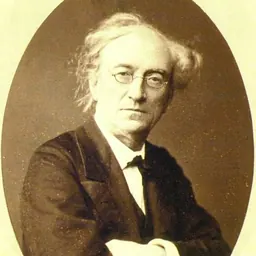
Grafton attempted to remove Vilatte from the St. Mary's mission in 1891. See Brandreth translation into English from Parisot text; he notes "there exists no evidence that this is a genuine document and, indeed, its phraseology at several points argues against its genuineness". Sokolovsky "appears to have granted him some form of recognition", according to Brandreth. Margrander wrote that Sokolovsky intervened, approved Vilatte's confession of faith and his official acts, and referred him to the Holy Synod of the Russian Orthodox Church. Harding also corresponded with Russian General Alexander Kireev. John Basil wrote, in , that Kireev knew Yuri Samarin, Ivan Aksakov and Fyodor Tyutchev and shared their views on Orthodoxy. His works attacked nihilism, which he "considered to be a corrosive agent derived from West European religious decay and carried into Russia by revolutionaries" and were about "Orthodoxy in its relation with Catholicism, the internal development of the Roman Papacy, which he saw as a corrupt tyranny, and the place of the Slavs in world affairs." "It is important to be aware of Kireev's roots in the Slavophile tradition, because his views on Russian political and ecclesiastical life can be understood only in this context", according to Basil. She was his source for "information about Russian affairs, particularly in respect of the union of the Eastern Orthodox Church and the Old Catholics of the West." Benjamin Disraeli scoffed her as "the MP for Russia" in England. Grafton thought they were deceived by Vilatte statements as to his relation to Grafton and the extent of his work. and, Vilatte was also excommunicated as a bishop by Ignatius Peter IV in 1898 thereby confirming his consecration occurred.
For its part, the Episcopal Church, on March 21, 1892, having already degraded from the priesthood and excommunicated Vilatte, stated in its General Convention of the same year that it did not recognize his consecration as it took place in a Miaphysite church which does not accept the dogmas of the Council of Chalcedon. Vilatte "did not give up without a struggle" and "umerous letters from him are in the archives of St. Norbert Abbey, some of them of a threatening nature, all giving indirect testimony to the fact that the early Norbertines were successful in stemming the tide of [...] doctrines and religious practices which were disturbing the peace of the Catholic Belgians on the peninsula." The missionaries succeeded, according to Kirkfleet, by "appealing to the native Catholic instinct of the Belgians rather than by refuting the doctrines of the apostate." Vilatte was not invited. Barrows wrote, in The World's Parliament of Religions, that people sought unsuccessfully to use the parliament for propaganda. Later that year, the first convention of the American Catholic Church (1894) (ACC1894) appointed Vilatte as its ecclesiastical head "without arbitrary powers". Constantine Klukowski wrote, in History of St. Mary of the Angels Catholic Church, Green Bay, Wisconsin, 1898–1954, that the 1894 Green Bay city directory lists Vilatte's cathedral "as 'American Catholic and its officials as: Vilatte, archbishop metropolitan and primate; , vicar general; Stephen Kaminski, consultor; and, Brother Nicholas, church manager. Asa result, he did not take a solemn vow of abjuration and was not reconciled with the Church at that time. Soon, according to the September 1, 1897 Milwaukee Journal, a Milwaukee German language newspaper printed a letter from Messmer warning people that women were soliciting funds using Messmer's and Katzer's names without authorization. They were seen and reported; when police arrived, "the priest who accompanied the sisters was called before the chief and questioned and cautioned as to obtaining money by any misrepresentations", according to the Milwaukee Journal. Vilatte felt the incident may have "left some wrong impressions" as they solicited funds, for developing the of forest, near Emery, Wisconsin; as Vilatte noted, all within of a logging road.
"These sisters were in Milwaukee last week soliciting aid for the asylum, and in some quarters were denounced as frauds", he said. Then, similar to how the Sturgeon Bay seminary scandal began in 1887, he added, "we shall begin active operations within the next month" although "plans for the buildings have not been entirely completed as yet". He envisioned, "he purpose of the church is to found a monastery" as an "agricultural brotherhood of the Old Catholic Church" with a seminary, and an orphanage to bring children "up to agricultural pursuits". A real estate agent working for the Wisconsin Central Railway added that, during his negotiations with Vilatte he visited his "large and flourishing congregation" in Green Bay. The agent said they purchased "fine agricultural land" covered with hardwood forest. Less than six months later, his diocese lost possession of its foreclosed cathedral.
Consecrations
Vilatte's "unilateral arrogation of status as an Old Catholic prelate did not, [...] reflect objective fact", according to Laurence Orzell, in Polish American Studies. The "European Old Catholics neither sanctioned his consecration nor approved of his attempt to spread Old Catholicism to America." After successive annual conferences of the priests and delegates from parishes, a proposal to elect a Polish suffragan bishop was approved, and in 1897 the convention chose Kaminski from Buffalo, New York. According to Wacław Kruszka in , Kaminski did not attend any college, but learned how to play the organ from a local organist. He was organist at the independent Sweetest Heart of Mary Church in Detroit, Michigan (which Vilatte consecrated in 1893 The dedication ceremonies were marred by a riot, caused by protesters in the streets, that included a stabbing and shooting.
In 1895, Kaminski and a faction of his adherents occupied the Polish parish church of St. Paul, a Catholic church of the Diocese of Omaha in South Omaha, Nebraska, where he conducted devotion "in his own way". It was rumored he started the fire that burned the church, at the end of that month, to a pile of rubble and ashes; Kaminski's faction damaged fire hydrants so there was no way to extinguish the fire. Kaminski was arrested. "As long as the conflict continued, the parish most often divorced itself from the jurisdiction of the accused bishop and stood independent of him, which did not mean that the parish did not consider itself belonging to the Catholic Church symbolized by the Pope. In the division with the bishops, the parish kept very strictly to the rules of the norm of religious life, finding in it a further support for the rightness of their cause." Return to the previous state of affairs, exist in isolation and then vanish, or create "a self-determined religious movement" are the three alternative results, according to Kubiak. According to Kruszka, Kaminski once counted under his jurisdiction a parish in Buffalo, a parish in Chicopee, Massachusetts, and a parish in Baltimore, Maryland.
Kaminski failed to persuade Gul to raise him to the episcopate. Vilatte demanded money for the consecration but Kaminski did not have enough to give.
For both Kaminski and Kozlowski, according to Kubiak, "their movements became isolated in the Polonia community, not so much because of the propaganda of the , but rather because of the public opinion negative assessment of the associations of Polonia toward the dissenters." the basis for Polish discord, to facilitate the Russification of the Catholic Church.
From 1898 to 1911 he edited and published a weekly Polish newspaper Warta, an organ of his independent church.
He died in Buffalo on September 19, 1911.
Paolo Miraglia
Paolo Vescovo Miraglia-Gulotti was a priest from Ucria, Sicily, who in 1895 was sent into Piacenza, in Northern Italy, to preach the May sermons in honor of Mary; there he was embroiled in a series of either scandals or conspiracies. He opened his , Chiesa Italiana Internationale Paulina Irby wrote, in National Review that it began in a former stable of an old palazzo with church furnishing principally provided by Mazzini's niece. His congregation had just that church, and "is spoken of contemptuously as the congregation of Signor Abbate's stable", she wrote, as the Abbate family own the palazzo.
On April 15, 1896, Miraglia, who resided in Piacenza but was a priest of the Catholic Diocese of Patti was excommunicated for, what was called, his "incredible, audacious, and obstinant scandals which long troubled the Catholic Diocese of Piacenza". That year, Nevin introduced in The Churchman the "modern Savonarola", Nevin wrote "he has placed himself under wise guidance, and will not be apt to do anything rashly or ignorantly" but failed to include any specifics. The following week, The Churchman only hinted at the secular side of that movement by publishing a story from Milan's Corriere della Sera which wrote: "The struggle is now not only religious, but civic. The partisans of the bishop will hear of no truce with the partisans of Miraglia, and whenever they can, remove them from the employments that they hold." Within a year, on August 31, 1897, he attended the 4th International Old Catholic Congress in Vienna.
By 1900, two reformation groups in Italy elected bishops for their churches: one group in Arrone elected Campello as its bishop and the other group in Piacenza elected Miraglia as its bishop. Campello was licensed in 1883 by Bishop Abram Newkirk Littlejohn, of the Episcopal Diocese of Long Island, to work as a priest "wherever there may be lawful opportunity" for Campello's reformation efforts in Italy, The refused to consecrate Campello in 1901, according to Oeyen, "because of his limited number of baptisms and marriages and his close relationships with Anglicans, Methodists, and Waldenses". According to Smit "the orders of in general, and specifically those of [...] Miraglia, and of all those consecrated by them, are not recognized, and all connections with these persons is formally denied" by the . In 1901, Tony André Florence, in a report about the liberal movement in Italy presented to the International Council of Unitarian and Other Liberal Religious Thinkers and Workers in London, wrote that Miraglia's "desire to be at the head of a personal movement, after separating him from the Old Catholics whose ideas were akin to his, threw him suddenly into a false path." His consecration by Vilatte "lost him the sympathy of many, and his profession of faith completed their disappointment". Florence wrote that Miraglia's "reformatory movement, therefore, is now in suspense", after he was obliged to refuge abroad.
While the Anglo-Continental Society reported, in The Times, that although the "discreditable incident" of Miraglia "having arrogated to himself the dignity" of bishop-elect and his consecration happened, the work of the "real bishop-elect", Campello, was going on independently, with headquarters at Rome. It is unclear if the two juxtaposed groups were concurrent factions of one movement.
In 1904, the refused to recognize Miraglia's consecration as valid when he presented himself to the sixth International Old Catholic Congress in Olten, Switzerland.
Already a convicted fugitive who evaded Italian justice, Miraglia was then involved with religious associations in France.
Vilatte and Miraglia united in a joint effort, and except for the brief interval, , when Vilatte unsuccessfully attempted to organize a religious association in France, their work had chiefly been in the Midwestern United States. Two days before his deportation, the New York Times reported that Miraglia, "self-appointed head" of the Catholic Independent Church of Rome, was detained on Ellis Island "on the charge that he is an undesirable citizen" after being apprehended in Springfield, Massachusetts. He admitted that "while in Piacenza and Parma he served several terms and was heavily fined for libel, and while a professor at the Patti University he forged the signatures of aculty to fake diplomas, which he sold to deficient students." On February 15, 1915, The Evening World reported that he was "charged with obtaining alms under false pretenses", after the Bureau of Charities went to his mission and "found only an empty shack", and arrested along with two of his alleged accomplices by detectives. While in court, a Deputy United States Marshal arrested him "on the charge of writing vicious letters" to a woman.
Others
Over the next few years Vilatte, according to Joanne Pearson in Wicca and the Christian Heritage, "carried on travelling and consecrating, truly a 'wandering bishop'". Margrander explains that this third episcopal consecration, of Marsh-Edwards, conferred by Vilatte is noteworthy because the bishop-elect was not celibate; Vilatte's precedent was followed by Gul in consecrating Arnold Mathew several years later. appeared some time in 1921 and was used to attract blacks to the Communist movement. The "took great pains to demonstrate his legitimacy". Natsoulas wrote that it "was important to its mission that the new church be founded on solid grounds" and quoted McGuire's words that "he Negro everywhere must control his own ecclesiastical organization" yet hold the Apostolic traditions. By the end of 1923 the was no longer an "independent political organization" as it merged with the Workers Party of America; was an infamous impostor with worldwide notoriety. He represented himself, at different times, as D Benedetto, Comte Benedetto Donkin, Lord , Benedict Donkin, the cousin of the Earl of Minto, the son of the Duke of Devon. "In the world's long roll of impostors a prominent place must always be found for 'the Right Rev. Edward Rufane Benedict Donkin, Bishop of Santa Croce, and Vicar Apostolic of the Independent Roman Catholic Church'", begins his obituary in Adelaide's The Chronicle, who committed "a series of frauds" resulting in several imprisonments. Vilatte ordained Donkin. Years later, in 1904, while he represented himself as an Old Catholic Church bishop, Donkin started "what [was] purported to be an Old Catholic Benedictine Oratory" in a house previously "occupied by genuine Benedictines" and "opened almost entirely on credit". By August, "the bubble burst", Warren Fisher, who guaranteed the furnishings, discovered he had been swindled. Donkin "represented that he had been appointed by the Old Catholic Conference as their bishop at Oxford at a salary of £400 a year and that he produced what purported to be the official record of his appointment." Donkin induced him "to guarantee the bill for the furnishing of the Oratory" with a forged check and Fisher was left to pay his guarantee. Fisher then wrote to Vilatte, he responded, and Fisher forwarded his letter to Truth which published it.
Vilatte wrote that when Donkin came to him in 1896, "he posed as 'The Rev Fr Dominic, OSA, Church of England Missioner, St Augustine's Priory, London,' and as such he was asked by the Protestant Episcopal clergy of Milwaukee to preach in their cathedral." And, as Vilatte wrote, "I was completely blinded and did ordain him to the priesthood" but "bout eighteen months afterwards his true character was discovered, and I deposed and degraded him". Vilatte explained that a member of his clergy, who he noted was also "humbugged and swindled", introduced him to the impostor, the alias Lord Cortenay, son of the Duke of Devon; that "he 'took in' the clergy of Milwaukee"; that "Donkin never belonged to any 'community' in our Church"; but, Vilatte did not explain why he ordained Donkin, who he thought was a cleric. Vilatte wrote that later Donkin "posed as a Bishop in Cleveland." Years earlier, in 1890–1891, while Lyne was on his tour of North America raising funds for his work in England,
Pearson argues that "concern with ancient, indigenous religions emerging and operating independently of the Church of Rome characterises the heterodox Christian churches of the in England, Wales and France" and "was a theme that was to influence the development of Druidry and Wicca."
In 1909, after Lyne's death, two surviving Anglican monks, Asaph Harris and Gildas Taylor, were ordained, in Winnipeg, Manitoba, Canada, where Vilatte was staying during a visit of his missions in that part of North America. Charles Wood, 2nd Viscount Halifax, wanted Grafton to install Carlyle as abbot of the monastic community living as guests on Halifax's estate in Painsthorpe. Anson wrote, in The American Benedictine Review, that after Parrish left, it "appears that his followers were replaced or displaced by a group of young men who had been formed into a Benedictine brotherhood" by Brothers in Waukegan, Illinois, located outside Grafton's Diocese of Fond du Lac.
A "rented-house was named St. Dunstan's Abbey" with Grafton self-appointed as "their absentee Abbot"; Anson thought "it may have been Kozlowski."
Brothers was consecrated by Bishop Rudolph de Landas Berghes in 1916 and later deposed by him, for what "appears to have been" to Brandreth, "on the grounds that at the time of the consecration he had not, in fact, received the Orders of deacon and priest."
The report includes part of an 1898 letter from Grafton, about Vilatte's character, published in Diocese of Fond du Lac, a newspaper. Grafton warned about Basil in that letter: Another co-worker whom he ordained priest under the title of Father Basil, is a renegade from England, having formerly been connected with the Reformed Episcopal hurch, and who fled to America, being accused as his bishop wrote me, of criminal conduct with boys. His name is George Reader, and the authorities of Scotland Yard wrote concerning him, that, while they did not give information to private parties, they would do so to the chief of police of any of our cities.
Des Houx
In 1904, diplomatic relations between the French Third Republic and the Holy See were broken.
In 1905, all Churches were separated from the State and authorized to form self-supporting corporations for public worship. Those religious associations were designations given to certain "moral persons" or associations which, by the 1905 French law on the Separation of the Churches and the State, the French Third Republic, wished to incorporate in each diocese and parish to receive as proprietors church properties and revenues, with responsibility of taking care of them. All buildings used for public worship were made over to the religious associations; in the absence of religious associations, buildings remain at the disposal of the clergy and worshipers, but an administrative act must be secured from the prefect or the mayor.
By his August 10, 1906, encyclical, , Pope Pius X stated that the law threatened to intrude lay authority into the natural operation of the ecclesiastical organization;
The Catholic ecclesiastical authorities had forbidden the only kind of corporation which the State recognized as authorized to collect funds for purposes of worship or have the right of ownership for purposes of worship. The State considered previously legally-recognized churches, as no longer existing; and, in cases where no religious associations were incorporated, took over the property of the churches and turned the property over by decree to the charitable establishments of the respective municipality; in such cases, the Church lost this property forever.
By January 1907, des Houx wanted to create a schismatic Church in Paris and recruited Vilatte, At des Houx's insistence, Vilatte returned to Paris early in 1907.
Vilatte together with a few laymen founded a religious association in the Church Notre-Dame-de-Lorette, Paris that filed a demand to receive the church and its possessions. In the meantime he resided in the former Barnabite convent. Miraglia was associated with this organization. It was in close fellowship with the but a distinct organization. Although some churches had been previously registered, the was not reported in Religious Bodies, 1906 edition. It claimed 12 organizations served by 14 ministers, with a membership of 4,700 with 11 church edifices and four parsonages. The organizations held church service mostly in foreign languages; principally Polish and Russian with others using Portuguese, Lithuanian, and English.
After Vilatte's death, only one denomination derived from Vilatte was included in Religious Bodies, 1926 edition, in the report's Old Catholic Churches group. Religious Bodies explained that, by then, "none of these American bodies or leaders are connected with or recognized by the Old Catholic Churches of any part of continental Europe, nor are their Orders or Apostolic Successions derived directly, if at all, from European Old Catholic Churches" and added a "caution against misinterpretation" of the term "Old Catholic Churches". It identified the and "its numerous derivatives" as one of three subsets of denominations in the Old Catholic Churches group. According to Religious Bodies, these entities are no longer either connected with Old Catholic Churches of continental Europe, which "repudiated all responsibility for or connection with" bishops who derived their consecrations from the consecration of Mathew, or with the Syriac Orthodox Church of Antioch.
"Of the many bishops that have been consecrated in this group, [...] most have assumed other names and titles and founded separate churches for themselves by civil incorporation. For most of these no statistics are published, for the reason that the Census Bureau collects its statistics directly from congregations rather than from the officers of corporations." So, "direct comparisons between the bodies as reported at the two censuses are impossible, [...] because of numerous organic changes", according to the United States Census Bureau.
Reconciliation and death
The printed that Vilatte returned to France in 1922 with some amount of money. What is certain, according to Appolis, is that money assisted in the election of the socialist Cartel des Gauches during the 1924 French legislative election. Vilatte had friends in the new majority. Vilatte wrote: I, Rene Joseph Vilatte, declare that I express my most sincere regret for having taught many errors and for having attacked and presented under a false light the Holy Roman Church. Without reserve I retract all such teaching. I believe in and profess the Holy Roman Church, and I submit entirely and unconditionally to her authority, recognizing and confessing that it is the one true Church of Christ, outside of which there is no salvation.
In submitting myself, I regret and repent having received Holy Orders and having conferred them on others contrary to the teaching and laws of the Holy Roman Church, in which I hope, by the grace of God, soon to be received.
In issuing this formal declaration by which I deplore the past, I ask pardon of God for the scandals I have given and I promise to repair them by the good example of my new life, and I invite all those who have followed my errors to imitate my example. I make this declaration freely and spontaneously to repair the evil which I have done and the scandal I have given.
An extensive underground of secret organisations flourished in the ensuing religious anarchy following the dechristianisation of France during the French Revolution, to such an extent that the 19th century could be characterised as, rife with superstition, with occult cults, with counter religions. All had existed before 1789; now the difficulties of orthodox religion gave them a chance to flourish – no longer underground, but visibly, at all levels of society. (Pearson noted Marian devotions in France grew rapidly in the 19th century, as did religious orders, particularly for females.) Roman Catholic approved Marian apparitions were recorded in Paris, La Salette, Lourdes, and Pontmain. Nearly 400 female orders were established by 1880, with 135,000 female religious in 1878.
René Guénon called Bricaud, in Theosophy, an occultist and wrote that Bricaud's presence among the (ECF) operatives "is an example of the relations that exist between a throng of groups that at first glance one might believe to be complete strangers to one another". According to Guénon, the "seems to have had only an ephemeral existence" but was unambiguously linked to Theosophists. He quoted Annie Besant, from The Theosophist, who described "the little known movement called the Old Catholic" as a "living, Christian, Church." The English edition of Guénon notes that, in Russia, the term Living Church "was meant to denote a 'modernist' organization set up with aid of the Bolshevik government in order to compete with the Orthodox Church, the intended implication being that the Orthodox Church, by contrast, must be considered a 'dead Church'. Doubtless", Guénon's editor thought, "Besant had precisely the same intention regarding the Roman Catholic Church." Neither the or are found in the Register.
Order of the Crown of Thorns
Louis-François Girardot and Vilatte originated a pair of groups. The two separately founded orders had the same name but different origins and were combined, although it is not clear what that meant. The San Luigi organization says that the orders were inspired by the , founded by King Louis IX of France, and also that "it is not asserted that there is a continuous and historically verifiable link between the present-day Order and these bodies."
There are two separate foundation stories for the ; one in 1883, the other in 1891. These foundation stories were not believed by some during Vilatte's lifetime; Guénon wrote that "dignitaries of this Church have a mania for titles of nobility as others have for fantastic decorations; thus [... Vilatte] invented the 'Order of the Crown of Thorns'."
1883 foundation story
The was reputedly founded in 1883. According to the San Luigi organization, after the French protectorate of Tunisia was established in 1881, France sought to colonize the Ottoman Empire's Fezzan province as part of the Scramble for Africa. A small group of monks settled in Ghadames in 1883. The organization says that there is no documentation about their past.
Nevertheless, the monks called their monastery the Abbey-Principality of San Luigi and they claimed sovereignty, as a theocracy, over the surrounding secular territory. Disease was endemic; attempts to convert the local Muslim population to Catholicism were rejected; and in less than a year, on August 2, 1884, the monastery was sacked and at least one monk was murdered. Five monks, including what the organization calls their third abbot, José Mendoza, survived and were exiled. Mendoza was somehow elected by less than the canonically required twelve monks. Without mentioning the Sahara and Sahel situated between Ghadames and the Sudd, the organization says that the monks traveled across the Sudd and arrived in the Kingdom of Bunyoro-Kitara on March 15, 1885.
There, the organization says, Omukama Kabarega of Bunyoro granted territory to the monks to settle and establish a monastery. The organization says that Kabarega conferred a title, Mukungu of the Chieftainship of the Ancient Abbey-Principality of San Luigi, upon Mendoza. In 1888, all the monks died from an epidemic, except Mendoza, who then abandoned the monastery in Bunyoro and returned to Europe. The organization says that "legalization by a French government official established the recognition of the Abbey-Principality by the French state" when Seine-Port Mayor Eugène Clairet was involved in a transfer of titles from Mendoza to Girardot. On May 7, 1899, again with Clairet's involvement, Girardot transferred those Mendoza titles to Vilatte.
The organization says that the monastery, of at least seven monks, "was constitutionally independent as a theocratic state" and a "colonising power" under which "the local population had no political rights whatsoever" and "were to be subjugated under the absolute rule" of the monastery. The organization believes itself to be the legitimate de jure government-in-exile of its former territory in the Fezzan. "The Abbey-Principality aims ultimately to secure the territorial restoration of the original Abbey-Principality in Libya, but is aware that political and related considerations are likely to preclude this objective for the time being". The asserts that because "none of the Eastern Orthodox Patriarchal Sees possess any type of direct Sovereignty, [...] the decorations instituted by them may not be deemed as equivalent to those bestowed by the Roman Pontiff not only in his Spiritual Capacity but also in his temporal position as Sovereign of the Vatican City State." "Protection is an attribute of Sovereignty, which none of these Sees actually posses", according to the . Documents and blank diplomas of decorations of various orders were seized which included a number of blanks printed in Arabic and others bearing what purported to be, the signatures of living and dead prominent French statesmen. Five men were placed on trial, excluding Valensi, who was judged to be not mentally competent. The investigation was begun after a client became suspicious of the authenticity of the signatures on the diploma of the Tunisian order of Nichan Iftikhar that he purchased and reported the whole affair. Vilatte responded to a article about the diploma by saying that the article discredited him by incorrectly identifying him as the signatory. He denied having any thing to do with the published diploma, Valensi, or with the . He said that his had nothing in common with the diploma from the Principality of San Luigi. Vilatte said that his religious name was Mar Timothéus I and not Marie Timothée.
In 1913 printed an article about the Valensi affair based on Maurice Pujo's , which connected it to organized crime. Pujo listed another Vilatte-affiliated group, the Grand Prix Humanitarian of France and the Colonies, networked with a Georges Brassard conglomerate which included the make-believe Free State of Counani. According to seized documents, Valensi was Chancellor to the Consul-General in Paris for the make-believe state. The self-styled orders are described as "originating from private initiatives and aiming at replacing the legitimate forms of chivalric awards". The statement points out that, they "take their name from" extinct Orders or "which had been planned but were never realized or... which are truly fictitious and have no historical precedent at all."
While they "style themselves as autonomous", these "private initiatives" qualify their names, according to the statement, with terms to "increase the confusion of those who are not aware of the true history of Orders of Knighthood and of their juridical condition." For example, "these alleged Orders claim for themselves ... such titles as ... Chivalric... Sovereign, Nobiliary, Religious..." "Among these private initiatives, which in no way are approved of or recognized by the Holy See, one can find alleged Orders such as" The Crown of Thorns and Lion of the Black Cross. Anson wrote that "stories went around Paris", after his 1925 recantation, that the pope was "prepared to allow Vilatte's ordination to the priesthood , but that he had refused the papal offer, being convinced that he was a bishop as well as a priest." "No formal pronouncement on the validity of his orders was ever made by the Roman authorities." According to Marx and Blied, Merry del Val's opinion was that Vilatte was a genuine bishop. But Merry del Val "maintained that throughout his episcopal career Vilatte had so 'commercialized' ordinations and consecrations, that he himself was not able to regard them [those which Vilatte conferred] as valid."
Works or publications
Most works by Vilatte are not readily accessible. Based on WorldCat searches, some are only a single holding at one library.
Don’t just read it —
keep it.
Full-length biographies made to live with: read them, listen on the way to work, watch them tonight.
- E-book
- Audio
- Video
Instant download · yours to keep · every purchase keeps this site free
Important facts
People in Joseph René Vilatte's life
Named in this biography and alive at the same time


Related people
Same field, nearest in time


Contemporaries
People whose lives overlapped Joseph René Vilatte's




Frequently asked questions
Who was Joseph René Vilatte?
French naturalized American Christian leader active in France and the United States
When was Joseph René Vilatte born?
Joseph René Vilatte was born on 24 January 1854 in Paris.
When did Joseph René Vilatte die?
Joseph René Vilatte died on 8 July 1929 in Versailles.
What was Joseph René Vilatte's occupation?
Joseph René Vilatte was an anglican priest and bishop.
What nationality was Joseph René Vilatte?
Joseph René Vilatte was French and American.
Sources & further reading
· Wikipedia: Joseph René Vilatte
Cite this page
APA: Biography.guide. (2026). Joseph René Vilatte. https://biography.guide/joseph-rene-vilatte/
MLA: "Joseph René Vilatte." Biography.guide, https://biography.guide/joseph-rene-vilatte/.
Chicago: "Joseph René Vilatte." Biography.guide. https://biography.guide/joseph-rene-vilatte/.
Data last updated: 2026-09-20 · Spot an error? Report a correction.
Page generated 2026-09-27 05:19 UTC