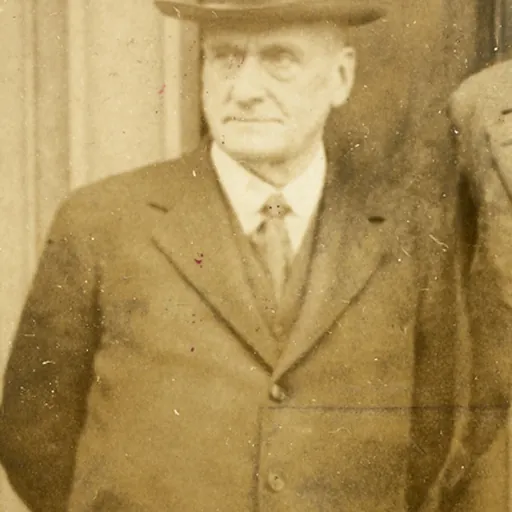
About Joseph R. Fisher
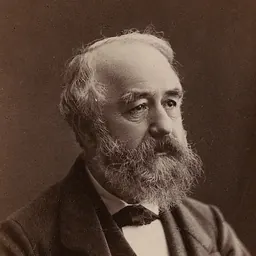
Lived 1855 – 1939 (aged 83–84). Joseph R. Fisher was a writer, editor and barrister.
Joseph Robert Fisher (1855 – 26 October 1939) was a barrister, a newspaper editor, and an author from Ulster. Fisher alternated his career between working as a journalist at London daily newspapers, legal practice at the English Bar, editing Belfast's liberal unionist daily newspaper, and authoring books on subjects such as Irish and European politics and press law. Fisher's most prominent role was his appointment as the Unionist commissioner on the Irish Boundary Commission, the body established under the 1921 Anglo-Irish Treaty to decide on the delineation of the border between the Irish Free State and Northern Ireland.
Early life and career Fisher was born in Raffrey, County Down, Ireland in 1855, a younger son of clergyman Ringland Fisher, minister of the local Presbyterian church. He was educated at Royal Belfast Academical Institution, Belfast, and Queen's University, Galway, graduating with a B.A. in 1876. Fisher was foreign editor of the London Daily Chronicle until 1881 and assistant editor of the London Evening Standard thereafter. He was called to the Bar at a relatively late age in 1888, and practised until 1900, when he returned to Belfast. In early 1900, Fisher became editor of the Northern Whig, a liberal unionist daily paper, and remained in that position until the First World War.
Irish Boundary Commission
Joseph R. Fisher (second from left) at the Irish Boundary Commission's first sitting in Ireland, 11 December 1924. The Government of Ireland Act 1920 was intended to produce a lasting solution to the demands of Irish nationalist leaders for political autonomy, known as "Home Rule", by giving Ireland limited regional self-government within the United Kingdom of Great Britain and Ireland. The Act provided for separate self-governing parliaments for Northern Ireland and Southern Ireland, with both remaining within the United Kingdom and both parliaments being subordinate to the Westminster parliament. The parliament and governmental institutions for Northern Ireland were soon established, but the overwhelming majority of MPs returned in the election in the 26 counties gave their allegiance to Dáil Éireann, unrecognised by the British government, thus rendering "Southern Ireland" moot as a political entity and leading to an intensification of the Irish War of Independence.
The Anglo-Irish Treaty that ended the war in January 1922 and the laws that implemented the treaty established a new Irish Free State in place of "Southern Ireland" and allowed Northern Ireland to opt out of the new Free State. The Houses of the Parliament of Northern Ireland duly did so on 7 December 1922, the day after the establishment of the Irish Free State, thus partitioning Ireland.
The Anglo-Irish Treaty stated that if Northern Ireland elected not to join the Free State, the interim border between the two states would be the existing boundary between Northern Ireland and Southern Ireland: the county boundaries between the six North-Eastern counties and the rest of the island. Article 12 of the Treaty contained a provision establishing a boundary commission that would determine the permanent boundary. The Treaty further stipulated that the commission was to have three members. The governments of the United Kingdom, of the Irish Free State and of Northern Ireland were to nominate one member each to the commission.
The leaders in the Free State, both supporting and opposing the treaty, assumed that the commission would award largely-nationalist areas such as County Fermanagh, County Tyrone, South Londonderry, South Armagh and South Down, and the City of Derry to the Free State and that the remnant of Northern Ireland would not be economically viable and would eventually opt for union with the rest of the island. The Ulster Unionist government of Northern Ireland, however, refused to appoint the commissioner required of it, wishing to concede "not one inch" of the territory of the six parliamentary counties that had seceded.
The Labour government in Great Britain and the Irish Free State government legislated to allow the British government to impose a representative on behalf of the Unionists. Fisher had a reputation of being a staunch but liberal unionist, That was seen as a grave embarrassment in Dublin. Irish government ministers suspected Fisher of being the source, Fisher being a Unionist newspaperman.
The press leak, whether or not by Fisher, effectively ended the Commission's work.
The Conservative government that had replaced Ramsay MacDonald's short Labour-Liberal coalition wanted to avoid Irish disputes.
The December agreement resolved the financial obligations of the Treaty in exchange for leaving the border unchanged. Early that evening, Fisher and Feetham were briefed by the three prime ministers together with Winston Churchill, as Chancellor of the Exchequer. The two remaining commissioners expressed their view of the problems that would result from a failure to adjust what they saw as the border's more absurd anomalies, particularly Protestant east Donegal (for which "Derry was the market town"); Pettigo and Belleek, County Fermanagh (both of which straddled the border); and the Drummully and Clones areas of County Monaghan, parts of which were accessible by road only from Northern Ireland. The politicians requested of the commissioners that the report be "burned or buried". The inter-governmental discussion about suppressing the report, and the report itself remained a secret until 1969.
Later life Aged 70 at the end of the Commission's work, Fisher retired to London; his address was in barristers' chambers in Essex Court, Middle Temple. He died, unmarried, on 26 October 1939 at 12 Lancaster Drive, Hampstead, close to the Swiss Cottage Tube station.
Books and other publications "Law of the Press" (in part; with J. A. Strahan) (1891). London: William Clowes and Sons. "Finland and the Tsars" (1899). London: Edward Arnold. "The End of the Irish Parliament" (1911). London: Edward Arnold. "Finland" in The Encyclopædia Britannica (11th ed.), 1911 (in part; with Peter Alexeivitch Kropotkin and John Scott Keltie)
Don’t just read it —
keep it.
Full-length biographies made to live with: read them, listen on the way to work, watch them tonight.
- E-book
- Audio
- Video
Instant download · yours to keep · every purchase keeps this site free
Important facts
People in Joseph R. Fisher's life
Named in this biography and alive at the same time



Related people
Same field, nearest in time


Contemporaries
People whose lives overlapped Joseph R. Fisher's




Frequently asked questions
Who was Joseph R. Fisher?
Northern Irish lawyer and newspaper editor
When was Joseph R. Fisher born?
Joseph R. Fisher was born in 1855 in County Down.
When did Joseph R. Fisher die?
Joseph R. Fisher died on 26 October 1939 in Hampstead.
What was Joseph R. Fisher's occupation?
Joseph R. Fisher was a writer, editor and barrister.
Sources & further reading
· DBpedia: Joseph R. Fisher (author)
Cite this page
APA: Biography.guide. (2026). Joseph R. Fisher. https://biography.guide/joseph-r-fisher/
MLA: "Joseph R. Fisher." Biography.guide, https://biography.guide/joseph-r-fisher/.
Chicago: "Joseph R. Fisher." Biography.guide. https://biography.guide/joseph-r-fisher/.
Data last updated: 2026-09-23 · Spot an error? Report a correction.
Portrait: Wikimedia Commons · author & licence
Page generated 2026-09-27 05:07 UTC