
Joseph Plunkett
Irish nationalist, poet, journalist and 1916 Easter Rising leader
About Joseph Plunkett
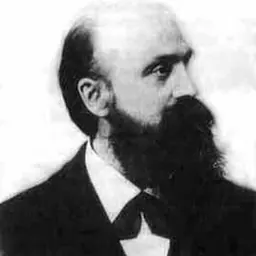
Lived 1887 – 1916 (aged 28). Joseph Plunkett was a British poet, esperantist, journalist and politician.
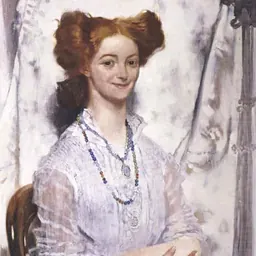
Joseph Mary Plunkett (; 21 November 1887 – 4 May 1916) was an Irish republican, poet and journalist. As a leader of the 1916 Easter Rising, he was one of the seven signatories to the Proclamation of the Irish Republic. Plunkett married Grace Gifford in 1916, seven hours before his execution.
Background Joseph Plunkett was born on 21 November 1887 at 26 Upper Fitzwilliam Street in one of Dublin's most affluent districts. Both his parents came from wealthy backgrounds, and his father, George Noble Plunkett, had been made a papal count.
Plunkett contracted tuberculosis (TB) at a young age and spent part of his youth in the warmer climates of the Mediterranean and North Africa. He spent time in Algiers, where he studied Arabic literature and language and composed poetry in Arabic. He was educated at the Catholic University School (CUS) and by the Jesuits at Belvedere College in Dublin and later at Stonyhurst College, in Lancashire, England, where he acquired some military knowledge from the Officers' Training Corps. Throughout his life, Joseph Plunkett took an active interest in Irish heritage and the Irish language, and also studied Esperanto. Plunkett was one of the founders of the Irish Esperanto Association in 1907. He joined the Gaelic League and began studying with Thomas MacDonagh, with whom he formed a lifelong friendship. The two were both poets with an interest in theatre, and both were early members of the Irish Volunteers, joining their provisional committee. Plunkett's interest in Irish nationalism spread throughout his family, notably to his younger brothers George and John, as well as his father, who allowed his property in Kimmage, south Dublin, to be used as a training camp for young men who wished to escape conscription in Britain during the First World War.
IRB involvement
Sometime in 1915, Plunkett joined the Irish Republican Brotherhood and soon afterward was sent to Germany to meet with Roger Casement, who was negotiating with the German government on behalf of Ireland. Casement's role as emissary was self-appointed, and, as he was not a member of the IRB, that organisation's leadership wished to have one of their own contact Germany to negotiate German aid for an uprising the following year. He was seeking (but not limiting himself to) a shipment of arms. Casement, on the other hand, spent most of his energies recruiting Irish prisoners of war in Germany to form a brigade to fight instead for Ireland. Some nationalists in Ireland saw this as a fruitless endeavour and preferred to seek weapons. Plunkett successfully got a promise of a German arms shipment to coincide with the Rising.
According to Ernest Blythe, Plunkett's republicanism did not prevent him from suggesting, at a briefing of Irish Volunteer organisers in January 1915, that in certain circumstances it would be in Irish interests for a German Catholic prince to be crowned king of Ireland, nor did anyone present object. During the Easter Rising, Plunkett and Patrick Pearse argued in a conversation with Desmond Fitzgerald that it would be beneficial for Prince Joachim of Prussia to be crowned king.
Easter Rising Plunkett was one of the original members of the IRB Military Committee that was responsible for planning the Easter Rising, and it was largely his plan that was followed. Shortly before the rising was to begin, Plunkett was hospitalised following a turn for the worse in his health. He had an operation on tubercular glands in his neck days before Easter and had to struggle out of bed to take part in what was to follow. Still bandaged, he took his place in the General Post Office with several other of the rising's leaders such as Patrick Pearse and Tom Clarke, though his health prevented him from being active.
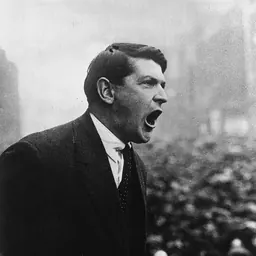
His aide de camp was the then 25-year-old Michael Collins.
The main railway station in Waterford City is named after him—as was Joseph Plunkett Tower in Ballymun, a block of flats, which has since been demolished. Plunkett barracks in the Curragh Camp, County Kildare, is also named after him.
In popular culture The Irish ballad "Grace", written by Seán and Frank O'Meara, is a monologue of Plunkett expressing his love to Grace and his love for the cause of Irish independence in the small hours before his execution. The ballad has been notably covered by The Wolfe Tones, Jim McCann, and Rod Stewart.
American composer Florence Turner-Maley used Plunkett's text in her song "I See Him Everywhere".
His religious poem "I See His Blood upon the Rose" is well-known in Ireland.
Plunkett was portrayed by London actor, Frank Bourke for a documentary mini series, 1916 The Easter Seven.
Don’t just read it —
keep it.
Full-length biographies made to live with: read them, listen on the way to work, watch them tonight.
- E-book
- Audio
- Video
Instant download · yours to keep · every purchase keeps this site free
Important facts
more
Joe PlunkettPeople in Joseph Plunkett's life
Named in this biography and alive at the same time





Related people
Same field, nearest in time

Contemporaries
People whose lives overlapped Joseph Plunkett's


Frequently asked questions
Who was Joseph Plunkett?
Irish nationalist, poet, journalist and 1916 Easter Rising leader
When was Joseph Plunkett born?
Joseph Plunkett was born on 21 November 1887 in Dublin.
When did Joseph Plunkett die?
Joseph Plunkett died on 4 May 1916 in Kilmainham Gaol.
What was Joseph Plunkett's occupation?
Joseph Plunkett was a poet, esperantist, journalist and politician.
What nationality was Joseph Plunkett?
Joseph Plunkett was British.
Sources & further reading
Cite this page
APA: Biography.guide. (2026). Joseph Plunkett. https://biography.guide/joseph-plunkett/
MLA: "Joseph Plunkett." Biography.guide, https://biography.guide/joseph-plunkett/.
Chicago: "Joseph Plunkett." Biography.guide. https://biography.guide/joseph-plunkett/.
Data last updated: 2026-09-26 · Spot an error? Report a correction.
Page generated 2026-09-27 05:13 UTC