
Joseph Nanven Garba
Nigerian general, diplomat and politician
About Joseph Nanven Garba
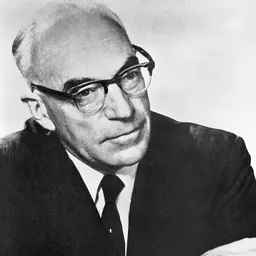
Lived 1943 – 2002 (aged 58). Joseph Nanven Garba was a Nigerian diplomat, military personnel, writer, politician, minister and military officer.
Joseph Nanven Garba (17 July 1943 – 1 June 2002) was a Nigerian general, diplomat, and politician who served as president of the United Nations General Assembly from 1989 to 1990. He served as federal commissioner for external affairs from 1975 to 1978, commandant of the Nigerian Defence Academy from 1978 to 1979 and commander of the Brigade of Guards from 1968 to 1975.
Early life and military career Born in Langtang, Nigeria, Garba was educated at Sacred Heart School, Shendam from 1952 to 1957. His early military career began at the Nigerian Military School in Zaria in 1957, where he studied until 1961. In 1961 he enlisted in the Nigerian Army and was sent to the Mons Officer Cadet School in Aldershot, England, before being commissioned as an infantry officer in 1962. Garba rose through the ranks quickly: amongst his many military command posts were platoon commander of 44th Battalion in 1963, company commander from 1963 to 64, and mortar platoon commander in 1964. He participated in the United Nations Military Observer Mission in India/Pakistan (UNIPOM) from 1965 to 1966 before being made commander of the Brigade of Guards in 1968. He studied at Staff College, Camberley, England, in 1973.
Participation in the Nigerian Counter Coup of July 1966 Garba, then a Captain with the Federal Guards in Lagos, was one of the many officers of northern Nigerian origin (including Lieutenant Colonel Murtala Muhammed, Major Theophilus Danjuma, Lieutenant Muhammadu Buhari, Lieutenant Ibrahim Babangida, Lieutenant Ibrahim Bako, 2nd Lieutenant Sani Abacha among others), who staged what became known as the Nigerian counter-coup of 1966 because of grievances they felt towards the administration of General Aguiyi Ironsi's government which quelled the 15 January 1966 coup.
Participation in the 1975 Military Coup Garba first came to national attention in Nigeria when, on 29 July 1975, he announced the coup d'état against the leader of the country, General Yakubu Gowon.
Garba was a close ally of Gowon. The coup was led by junior military officers unhappy at the lack of progress General Gowon had made in moving the country towards democratic rule, and Garba's role as an insider is credited with ensuring that the coup was bloodless.
Diplomatic career Following the coup, Garba made a shift from the military to politics and diplomacy. In 1975 he was appointed Nigeria's foreign minister (Federal Commissioner for External Affairs) by Murtala Mohammed, and continued in this role under Olusẹgun Ọbasanjọ after the former was assassinated in 1976. Garba was the head of the Nigerian delegation to the United Nations General Assembly from 1975, culminating in his appointment as President of the United Nations Security Council in January 1978.
In 1978, as Ọbasanjọ was preparing to hand rule of Nigeria over to civilians, Garba was reassigned to the role of Commandant of the Nigerian Defence Academy. He held this position until 1980, when he left to study at the National Defence College in New Delhi, India. Following this, Garba studied as a fellow at Harvard Kennedy School at Harvard University, where he obtained a Master's degree in Public Administration. Garba remained president for the sixteenth, seventeenth, and eighteenth special sessions of the assembly, on Apartheid, drug abuse, and international economic co-operation respectively.
Later life In 1979, Garba was awarded the title of Commander of the Order of the Federal Republic, and made a Grand Officer of the Ordre National Du Bénin ("National Order of Benin"). He wrote a number of books, including Revolution in Nigeria: Another View (1982), Diplomatic Soldiering (1987), and Fractured History: Elite Shifts and Policy Changes in Nigeria (1995), and was awarded an honorary doctoral degree from the State University of New York in 1991. A key focus of the project was the restructuring of the security forces for a new and post-apartheid South Africa. The findings and results of the project were published in two volumes in 1993 and 1994. On 26–28 January 1994, in Harare, Zimbabwe, he brought together for the first time military commanders from South Africa and their counterparts from the ANC and the southern Africa region, as well as international security experts for a conference on restructuring South Africa’s security forces. His input, role and engagement with some senior South African military and police commanders in South Africa, including Lt. General Pierre Steyn, General J.J. Geldenhuys, Major-General Bantu Holomisa and Lt. General Sebastian J. Smit, Major-General George Fivas, and commanders from the neighboring countries would prove instrumental to the smooth transition of the South African military in the post-apartheid era. referring to Garba's strong belief in and advocacy of Pan-Africanism.
Publications
Garba, Joseph Nanven (1993). The Honour To Serve: reflections On Nigeria’s Presidency of the 44th U.N. General Assembly. Ibadan: Heinemann Educational Books (Nigeria). Garba, Joseph Nanven (1993). Towards Sustainable Peace and Security in Southern Africa. New York, N.Y.: Institute of International Education. Garba, Joseph Nanven (1994). Restructuring the security forces for a new South Africa, New York, N.Y.: Institute of International Education
Don’t just read it —
keep it.
Full-length biographies made to live with: read them, listen on the way to work, watch them tonight.
- E-book
- Audio
- Video
Instant download · yours to keep · every purchase keeps this site free
Important facts
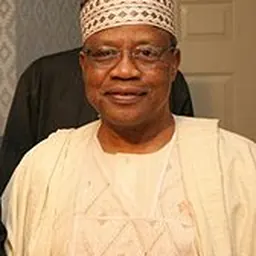
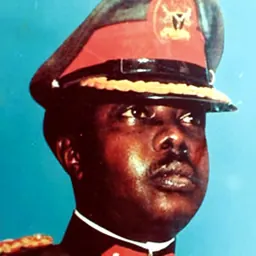
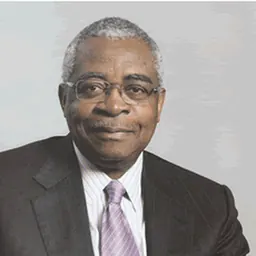
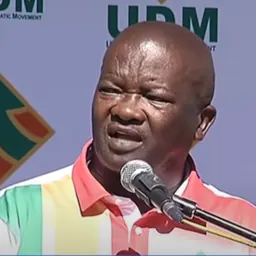
People in Joseph Nanven Garba's life
Named in this biography and alive at the same time



Related people
Same field, nearest in time

Contemporaries
People whose lives overlapped Joseph Nanven Garba's


Frequently asked questions
Who was Joseph Nanven Garba?
Nigerian general, diplomat and politician (1943–2002)
When was Joseph Nanven Garba born?
Joseph Nanven Garba was born on 17 July 1943 in Langtang.
When did Joseph Nanven Garba die?
Joseph Nanven Garba died on 1 June 2002 in Abuja.
What was Joseph Nanven Garba's occupation?
Joseph Nanven Garba was a diplomat, military personnel, writer, politician, minister and military officer.
What nationality was Joseph Nanven Garba?
Joseph Nanven Garba was Nigerian.
Sources & further reading
· Wikipedia: Joseph Nanven Garba
· DBpedia: Joseph Nanven Garba
Cite this page
APA: Biography.guide. (2026). Joseph Nanven Garba. https://biography.guide/joseph-nanven-garba/
MLA: "Joseph Nanven Garba." Biography.guide, https://biography.guide/joseph-nanven-garba/.
Chicago: "Joseph Nanven Garba." Biography.guide. https://biography.guide/joseph-nanven-garba/.
Data last updated: 2026-09-20 · Spot an error? Report a correction.
Page generated 2026-09-27 05:31 UTC