
About Joseph Middeleer
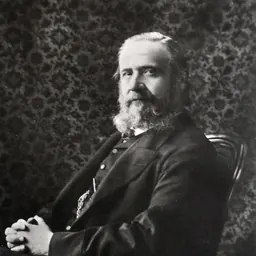
Lived 1865 – 1939 (aged 73–74). Joseph Middeleer was a Belgian painter.
Joseph Middeleer (Ixelles, 1865 – Assebroek, 1934 or 1939) was a Belgian painter and aquarellist known for his genre scenes, figures, landscapes and still lifes. He was an academically trained artist whose style and themes reflected initially the retro genre style of Belgian Romantic-historical painting. He also dealt with social realist themes and in the 1890s he painted a number of symbolist works.
Life Joseph Middeleer was born in Elsene or Ixelles near Brussels. He studied at the Académie Royale des Beaux-Arts of Brussels. He also attended the private art studio of Franz Meerts, a painter of genre scenes.
Middeleer joined the Cercle des aquarellistes et des aquafortistes belges (Circle of aquarellists and etchers), which had been founded in 1883. His work was praised for the fact that the restored frescos could not be distinguished from the original works. He also added two new frescos in the style of the old frescos.
Middeleer participated in the salons of L'Art idéaliste starting from 1896. Around this time Middeleer also started painting symbolist paintings such as Inspiration Enchanting angels. These works are also close to those of the Pre-Raphaelites. He also participated in the so-called 'Gestes Esthétiques' between 1892 and 1897 together with, among others, Fernand Khnopff. These symbolist art salons were initiated by the Frenchman Joseph Péladan. Péladan regarded art to be of divine origin. Middeleer was influenced by this line of thought as is evident from the prominent presence of the Christ figure on several of his drawings. A well-known symbolic painting by Middeleer is The demoniac that is sometimes compared to Fernand Khnopff's Sleeping Medusa.
Middeleer illustrated the three-volume publication L'art flamand written by Jules Dujardin, published in 1896. Middeleer made 1,500 pen drawings illustrating art works of the old masters for this publication on the history of Flemish art.
He accompanied his master Franz Meerts to Florence in Italy, to assist him in copying the large Portinari Altarpiece of Hugo van der Goes. The copy had been commissioned by the Belgian government. In 1904 Middeleer moved to the countryside of Assebroek near Bruges.
Joseph Middeleer died in Assebroek in 1934 or 1939.
Work Joseph Middeleer is known for his genre scenes, figures, landscapes and still lifes. He was an academically trained artist whose style and themes reflected initially the retro genre style of Belgian Romantic-historical painting, with its preference for genre scenes placed in a 16-17th century environment. He initially also dealt with social realist themes and in the 1890s he painted a number of symbolist works. In his later life he painted idyllic city views and landscapes often from Bruges or its environment.
Don’t just read it —
keep it.
Full-length biographies made to live with: read them, listen on the way to work, watch them tonight.
- E-book
- Audio
- Video
Instant download · yours to keep · every purchase keeps this site free
Important facts
People in Joseph Middeleer's life
Named in this biography and alive at the same time

Related people
Same field, nearest in time



Contemporaries
People whose lives overlapped Joseph Middeleer's



Frequently asked questions
Who was Joseph Middeleer?
Belgian painter (1865-1934)
When was Joseph Middeleer born?
Joseph Middeleer was born on 12 February 1865.
When did Joseph Middeleer die?
Joseph Middeleer died in 1939 in Assebroek.
What was Joseph Middeleer's occupation?
Joseph Middeleer was a painter.
What nationality was Joseph Middeleer?
Joseph Middeleer was Belgian.
Sources & further reading
Cite this page
APA: Biography.guide. (2026). Joseph Middeleer. https://biography.guide/joseph-middeleer/
MLA: "Joseph Middeleer." Biography.guide, https://biography.guide/joseph-middeleer/.
Chicago: "Joseph Middeleer." Biography.guide. https://biography.guide/joseph-middeleer/.
Data last updated: 2026-09-20 · Spot an error? Report a correction.
Page generated 2026-09-27 05:07 UTC