
About Joseph Lade Pawsey
Lived 1908 – 1962 (aged 54). Joseph Lade Pawsey was an Australian astronomer, known for Ionospheric physics and Milky Way.
Joseph Lade Pawsey (14 May 1908 – 30 November 1962) was an Australian scientist, radiophysicist and radio astronomer.
Education Pawsey was born in Ararat, Victoria to a family of farmers. At the age of 14 he was awarded a government scholarship to study at Wesley College, Melbourne, followed by a scholarship to study at the University of Melbourne. In 1929, he earned his Bachelor of Science degree from the university, followed by a Master of Science in Natural Philosophy in 1931.
Pawsey was then awarded an Exhibition Research Scholarship to study at Sidney Sussex College at the University of Cambridge, where he worked under the direction of J.A. Ratcliffe. He studied the effects of the ionosphere on radio propagation and his discovery of the presence of irregularities in the Kennelly-Heaviside Layer proved vital to the later development of this branch of ionospheric physics. In 1935, he was awarded a PhD from Cambridge and in September of that year he married Greta Lenore Nicoll, a 32-year-old Canadian.
Pawsey then became a research physicist at EMI until 1939.
Career In February 1940, Pawsey returned to Australia to work at the recently formed Division of Radiophysics in CSIR (later renamed CSIRO). One group he led developed a microwave set for the Royal Australian Navy while another group under his direction investigated the 'super-refraction' of radio waves in the Earth's atmosphere. In addition to confirming that the Sun was a source of radio noise their data also showed that the temperature in some regions of the Sun were as high as one million degrees. This temperature was far higher than was thought possible at the time. Work by the physicist David Forbes Martyn showed that temperatures peak in the Sun's corona at one million degrees. The observations with the Collaroy antenna not only marked the beginning of radio astronomy in Australia, but also the first time radio astronomy had provided important information on a problem in traditional optical astronomy.
International authorities gave much credit to his leadership. In 1963, in his introduction to the Utrecht Symposium on the Solar Spectrum, Professor M.G.J. Minnaert remarked:The history of solar radio-spectroscopy is mainly the history of Australian work on this subject. At each meeting of the IAU, at each important symposium on radio-astronomy, highly competent specialists such as Wild, Smerd and Christianson, headed by the dynamic personality of ... Pawsey, were able to announce spectacular progress.
In 1952, Pawsey became president of the Radio Astronomy Commission of the International Astronomical Union, serving until 1958. From 1960 until 1961 he was president of the Australian Branch of the Institute of Physics. He was appointed as director of the US National Radio Astronomy Observatory in 1962, but he died in Sydney of a brain tumour before he took office.
The crater Pawsey on the Moon is named after him. Also named after him is the Pawsey Supercomputing Centre, the home of petascale supercomputing facilities and expertise to support international Square Kilometre Array research and other high-end science (based at Technology Park in the Perth suburb of Kensington).
Awards and honours Thomas Ranken Lyle Medal, 1953. Fellow, Royal Society, 1954. Matthew Flinders Medal and Lecture, 1957 Royal Society Hughes Medal, 1960. Foundation Fellow of the Australian Academy of Science, 1954.Fellow, Australian Academy of Science (1954). Honorary DSc from the Australian National University, 1961. The Pawsey Medal of the Australian Academy of Science, awarded since 1967, commemorates his contributions to science in Australia. The Pawsey Memorial Lecture is delivered annually by a distinguished scientist.
Don’t just read it —
keep it.
Full-length biographies made to live with: read them, listen on the way to work, watch them tonight.
- E-book
- Audio
- Video
Instant download · yours to keep · every purchase keeps this site free
Important facts
People in Joseph Lade Pawsey's life
Named in this biography and alive at the same time


Related people
Same field, nearest in time
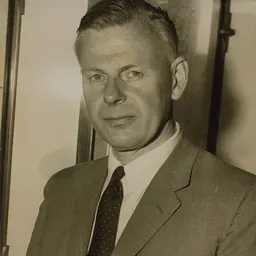
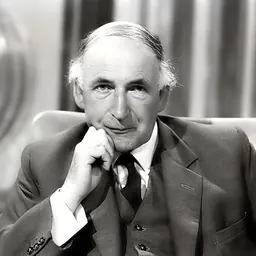



Contemporaries
People whose lives overlapped Joseph Lade Pawsey's


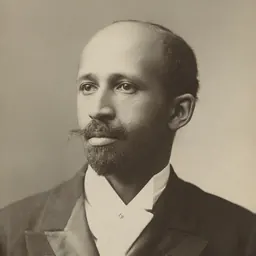
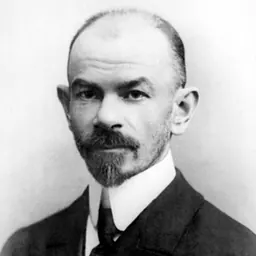
Frequently asked questions
Who was Joseph Lade Pawsey?
Australian scientist, radiophysicist and radio astronomer (1908–1962)
When was Joseph Lade Pawsey born?
Joseph Lade Pawsey was born on 14 May 1908 in Ararat.
When did Joseph Lade Pawsey die?
Joseph Lade Pawsey died on 30 November 1962 in Sydney.
What was Joseph Lade Pawsey's occupation?
Joseph Lade Pawsey was an astronomer.
What was Joseph Lade Pawsey known for?
Joseph Lade Pawsey was known for Ionospheric physics and Milky Way.
What nationality was Joseph Lade Pawsey?
Joseph Lade Pawsey was Australian.
Sources & further reading
· Wikipedia: Joseph Lade Pawsey
Cite this page
APA: Biography.guide. (2026). Joseph Lade Pawsey. https://biography.guide/joseph-lade-pawsey/
MLA: "Joseph Lade Pawsey." Biography.guide, https://biography.guide/joseph-lade-pawsey/.
Chicago: "Joseph Lade Pawsey." Biography.guide. https://biography.guide/joseph-lade-pawsey/.
Data last updated: 2026-09-26 · Spot an error? Report a correction.
Page generated 2026-09-27 05:14 UTC