
About Joseph Joel Hammond
Lived 1886 – 1918 (aged 31–32). Joseph Joel Hammond was a New Zealand aircraft pilot.
Joseph Joel Hammond (19 July 1886 – 22 September 1918) was a pioneering New Zealand aviator. On 17 January 1914 at Epsom showgrounds he took New Zealand's first military plane, a Blériot XI-2, for its first flight.
Early life Hammond was born in Feilding in the Manawatu District of the North Island of New Zealand, on 19 July 1886. He grew up on his family's farm at Rangitikei, where he attended Carnarvon and Parewanui Schools. He also attended Campbell Street School in Palmerston North, then, during 1899–1901, St Patrick's College, Wellington.
At the age of 18 he left New Zealand for Australia in late 1904. After briefly working on a sheep station, he travelled via Hawaii to work as a gold prospector on the Klondike in Canada. When gold mining proved unprofitable he trapped animals in Alaska before heading south and spending much of 1905 working on a cattle ranch near Phoenix in Arizona.
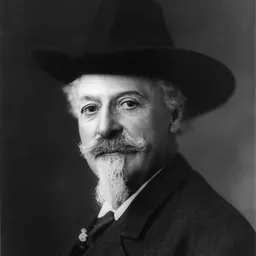
He left the United States on 20 November, returning to New Zealand for a brief holiday before he returned to the United States via Sydney, Fiji and Hawaii, arriving in Vancouver, Canada on 9 April 1908. He traveled south to the United States and eventually joined William F. Cody, aka Buffalo Bill's Wild West Show and exhibited his horsemanship. Cody's final European tour had ended in 1907 and, in 1908, he and Pawnee Bill, another showman, joined forces and created the "Buffalo Bill's Wild West and Pawnee Bill's Great Far East", popularly known as the "Two Bills" show. After six months with the "Two Bills" show, he left in 1908 and toured much of Europe, apparently using the East Sussex seaside town of Seaford as a base.
His new qualifications allowed him to obtain a position as a salesman and demonstration pilot with the British and Colonial Aeroplane Company (later known as the Bristol Aeroplane Company) which was manufacturing the Bristol Boxkite.
Flights in Australia
The company sent Hammond – accompanied by his wife, Sydney E. Smith, the company's manager, mechanic/pilot Leslie F. Macdonald and a staff of mechanics as well as two Boxkites – to Australia in an attempt to interest the Australian government in purchasing aircraft for military reconnaissance. Had they been successful, the intention was to establish a factory in Melbourne to build the planes. They disembarked from the R.M.S. Omrah in Fremantle on 13 December 1910 and transferred to Perth. After assembling machine No. 10 Hammond made the first aircraft flight in West Australia from Perth's Belmont Park Racecourse on 3 January 1911.
Hammond made the final of the seven flights he made in Perth on 12 January 1911, after which the aircraft was dismantled and shipped to Melbourne. This was the first of several aerial displays and flights for fee-paying passengers over in Sydney.
While official observers from the Australian Army had observed these demonstrations and were also taken for flights, in a further attempt to obtain orders from the military Hammond with a Captain Niechy as passenger flew on 3 May from Botany Bay at Sydney to a cavalry training camp at Liverpool. He landed in the presence of the governor general, Lord Dudley and Brigadier General J. M. Gordon. The following day he flew Lt Colonel Antill on an observation flight of the Liverpool camp.
During his five months in Australia Hammond flew over 65 flights, some of them with his wife as passenger. Leslie Macdonald gave further demonstration flights in Sydney before the Bristol tour finished on 9 May 1911.
While Hammond was not the first person to fly in Australia, prior to the arrival of the Bristol team the others had only made short hops or flew at very low heights. In comparison, the Boxkite flew higher, further, carried out display flying and took up passengers, all under the complete control of the pilot.
McDonald took a photographer from the Daily Telegraph for a 25-minute flight over Sydney on 6 May, making the first aerial photographs to be taken in Australia. By 19 May, 72 flights totalling 765 miles (1231 km) had been made by No. 10.
Machine No. 11, still in its crate, was sold to Parramatta dentist W.E. Hart, who was given flying lessons by Leslie McDonald. Hart subsequently used the aircraft to become the first Australian to gain an aviator's certificate.
When the Bristol team left for home, Hammond and his wife remained behind and travelled to New Zealand, where Hammond introduced his wife to family and friends. During the holiday Hammond was admitted to hospital, first with appendicitis, followed by a bout of pneumonia and then blood poisoning in the leg. It was six months before he was well enough to travel back to England. Hammond and his wife returned in May 1912 to England by way of Sydney, Vancouver and New York.
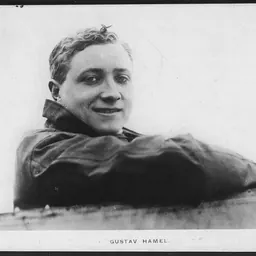
Flights in New Zealand Upon his return to England, Hammond continued working for the British and Colonial Aeroplane Co. until August 1912, when he took a position as an instructor at the Eastbourne Aviation Company's school. On 26 February 1913, Hammond joined the Royal Flying Corps Military Wing with the rank of 2nd lieutenant. Immediately afterwards former New Zealand premier Joseph Ward, who was present at the presentation, to the disquietude of his wife and daughter was taken for a flight in the machine by Gustav Hamel, followed in a later flight by Baron Desborough before it was disassembled for shipping.
Hammond was subsequently hired on 12 November 1913 to travel to New Zealand and demonstrate the Britannia. The airplane was shipped aboard the and arrived at Wellington, New Zealand, on 29 September without its propeller, which was still back in Hendon, England. Hammond had originally proposed to fly the aircraft to Auckland but was turned down, and instead the military shipped it by train. The propeller subsequently arrived in Wellington on 23 December 1913 on the SS Tainui but was not made available until 7 January 1914, when it was railed to Auckland and fitted to the aircraft.
Once the aircraft was ready Hammond flew a trial flight over Auckland on 18 January 1914 The following day Hammond, with the consent of the military, attempted to take a reporter for a flight, but he had to abort the takeoff and narrowly missed crashing the aircraft into a fence.
The next planned flight was to be over the city's Industrial, Agricultural and Mining exhibition on 29 January. However, on the evening of 28 January 1914, on the spur of the moment, he took Australian actress Esme McLennan of the Royal Pantomime Company on a 20-minute-long flight. McLennan's comments were published in the Poverty Bay Herald: It was like just nothing I've ever experienced before, and so it's quite hard to tell a real story about it. Mr Hammond is staying at the same hotel, and I expressed a wish to go up if ever he felt inclined to take a passenger. The aviator was not quite sure about the Britannia when it came to carrying a passenger, however, and he would make no promise. On Wednesday I went out with others of our party, after visiting the Exhibition, to see Mr Hammond fly. It was an absolute surprise to me when he said, 'I'll take a passenger; will you come?' I didn't wait to be asked twice, and at once got into the passenger's seat. I honestly didn't feel the least wee bit nervous. On the contrary, the feeling I was most conscious of was one of pleasurable excitement. And, do you know, the first feeling, once away, was how simple and safe it was. I'd somehow pictured aviators as having to be tied in, or having to hold on tight. On the Britannia I never even thought about being frightened, or of being anything else but comfortable and pleased. The machine left the ground so easily, and we mounted into the air so naturally, that it somehow seemed to inspire confidence. It is surprisingly difficult to analyse now what my sensations were. I only know that I was wonderfully elated, and that I just enjoyed every moment of it. From your volcanic cones I have often looked out over Auckland, and thought it the loveliest place in the world, but viewed from an aeroplane, at a height of nearly 2,000ft, it was like a glimpse of something almost unreal. The city itself looked big enough, but the houses, and the people seemed like those Gulliver must have met with on his famous travels. We were travelling faster than I have ever travelled in the fastest express trains, but there was not even the slightest vibration, nor was there any sensation that was other than entirely pleasant. When we can actually journey from one place to another without the fatigue of train travelling or the drawbacks of a sea voyage, how delightful it is going to be. When we descended it was all just equally simple, and apparently equally easy. Coming down the water chute two hours before, my friends had teased me because I was actually scared. Coming down to earth from the skies on the Britannia never gave me one nervous thought. We landed as skilfully and as easily as we went up. I'm sorry I can't describe by experience in more graphic terms, but I'm a woman, and I can best express myself when I use a woman's phrase, and simply say it was 'just lovely'. I was more elated while in the air than I think I've ever been about any first-night success at the theatre, and I really think I'm more excited about it now, when it's all over, than I was while actually in the air.
This unauthorised flight, and especially with an actress instead of a male dignitary, caused consternation among the male politicians and military officials. As a result, no further flights were permitted, and Hammond's contract was terminated for his lapse in protocol. While the aircraft remained on display for the rest of the exhibition, it was later sent back to Wellington and placed in storage in the autumn of 1914. The New Zealand Government offered it for service in World War One, and it returned to the UK in October 1914 with the 1NZEF First Echelon. A replica was built by David Comrie at his home in Dunedin and is now on display in the Air Force Museum of New Zealand at Wigram in Christchurch, New Zealand. The Bleriot is displayed as it would have looked on its exhibition flight, with Hammond in the front and Esme McLennan as his passenger.
World War I Hammond returned to England arriving in mid-August 1914 and was attached to the Royal Flying Corp as an instructor.
He was posted from 1 Reserve Aeroplane Squadron to France with the Expeditionary Force on 26 February 1915. Less than two months later, on 21 April, he returned to 1 RAS. He also spent another two weeks in France before a posting to 4 RAS in May 1915. Many onlookers assumed that Hammond had died in the crash, but he was later found having a shave in a barber's shop in Lincoln. During the maiden flight of the second prototype the following year, the aircraft stalled on takeoff and flipped over as it hit the ground, Hammond's life being saved by the size of the tail section.
Hammond's funeral was held in Indianapolis with thousands, including a firing squad of American and British aviation officers, attending the ceremony, at which the bishop of Indianapolis officiated. After Hammond's death she moved back home to live with her parents and did not remarry, dying at the age of 64 in Hailsham.
Legacy By the time of his death Hammond had "become almost a legendary hero" according to the editor of The Aeroplane.
A plaque unveiled on 15 April 2011 at Hammond Place, Mascot honours his 18 April 1911 flight over Sydney. The plaque reads:
Don’t just read it —
keep it.
Full-length biographies made to live with: read them, listen on the way to work, watch them tonight.
- E-book
- Audio
- Video
Instant download · yours to keep · every purchase keeps this site free
Important facts
People in Joseph Joel Hammond's life
Named in this biography and alive at the same time


Related people
Same field, nearest in time


Contemporaries
People whose lives overlapped Joseph Joel Hammond's





Frequently asked questions
Who was Joseph Joel Hammond?
New Zealand aviator (1886–1918)
When was Joseph Joel Hammond born?
Joseph Joel Hammond was born in 1886.
When did Joseph Joel Hammond die?
Joseph Joel Hammond died on 22 September 1918 in Indianapolis.
What was Joseph Joel Hammond's occupation?
Joseph Joel Hammond was an aircraft pilot.
What nationality was Joseph Joel Hammond?
Joseph Joel Hammond was New Zealand.
Sources & further reading
· Wikipedia: Joseph Joel Hammond
· DBpedia: Joseph Joel Hammond
Cite this page
APA: Biography.guide. (2026). Joseph Joel Hammond. https://biography.guide/joseph-joel-hammond/
MLA: "Joseph Joel Hammond." Biography.guide, https://biography.guide/joseph-joel-hammond/.
Chicago: "Joseph Joel Hammond." Biography.guide. https://biography.guide/joseph-joel-hammond/.
Data last updated: 2026-09-20 · Spot an error? Report a correction.
Page generated 2026-09-27 05:21 UTC