
About Joseph Joanovici
Lived 1905 – 1965 (aged 59). Joseph Joanovici was a businessperson, known for French Resistance and Nazi Germany.
Joseph Joanovici (also Ioinovici or Joinovici, 1905 –1965) was a Russian-born Romanian and French resident scrap metal merchant who supplied Nazi Germany and funded the French Resistance with the proceeds during the German occupation of France in World War II.
He made a fortune during the four years of the occupation, and spent it entertaining high-ranking officials. He sold the Germans metal, bribed Nazis officers, financed the Resistance, and may also have given information to Soviet intelligence.
Early life Joseph Joanovici was born on 20 February 1905 in Chișinău, then part of the Russian Empire, now the capital of Moldova. His parents were killed in the 1905 Chișinău pogrom. He married a fellow orphan named Eva and in 1925 emigrated to France, settling in a suburb of Paris.
He got his start in scrap metal at a low-level job in a business owned by his wife’s uncle. Although he was illiterate, and would remain so until late in life, Joanovici was adept at running a business and pushed the uncle out and took over with the help of his brother, Marcel. He began to supply the Nazi regime with metal, which made him a millionaire.
According to various sources, he also developed close ties with the French mafia. He had an appearance of artlessness that one commentator characterized as irresistible to those who crossed his path: "the kind of guy who could strike up a conversation with absolutely anyone at the seediest bar..'" Joanovici collaborated with Nazi Germany, while also supporting the Resistance. In 1941 he was arrested by the German authorities for selling defective materials to the Nazi-owned WIFO company. At his post-war trial, he characterized this and other transactions as acts of wartime sabotage against the Germans. He spent several months in captivity before he managed to bribe his way to his release.
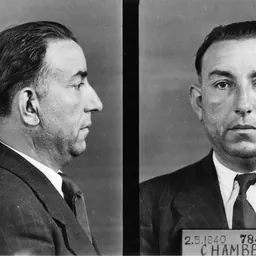
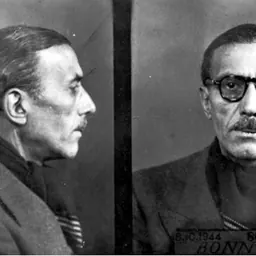
Around this time he also became associated with Henri Lafont, a leader of the Carlingue, the Bonny-Lafont Paris black market gang run from 93 rue Lauriston. This greatly increased his social standing in occupied Paris, and Lafont protected him from deportation. At dinner once, Lafont needled him: "After all, Joseph, you're nothing but a dirty yid!" Joanovici raised his flute of champagne and asked: "How much to not be one anymore? He was sometimes called an "honorary Aryan". When Henri Lafont co-founded the Brigade nord-africaine the Gestapo, despite its approval, offered little material support, so Joanovici provided it, including the uniforms. This unit later committed several massacres in Dordogne, and one of its officers, the former team captain of the national football team, was charged with war crimes. He also denounced the members of the French Gestapo known to him, triggering the arrest of Pierre Bonny and Henri Lafont on 31 August 1944 at a farm in Bazoches-sur-le-Betz (Loiret).
Joanovici was arrested and interrogated several times about his business dealings with the Nazis, then always released. , then the director of the DST, said he was protected by the préfecture de police On 5 March 1947 the DST tried to detain him at the Prefecture itself, inside accomplices helped him escape investigators and leave the country. A purge followed that reached all the way to prefect , who retired for health reasons.
Joanovici avoided arrest after the war, and testified against other collaborators, most notably Pierre Bonny and Henri Lafont, leaders of the Carlingue. For years, he had been financing a Resistance network inside the Paris Police Prefecture, named Honneur de la Police, and by the time the war was over, he was on such intimate terms with the police that he had his own office at the Prefecture and was awarded the Resistance Medal.
Other institutions were less fond of his wartime activities, with Roger Wybot, the head of French counter-intelligence, in particular seeking his arrest. Aided by employees of the Prefecture, he managed to avoid arrest by fleeing to the American-occupied zone of Germany. and charged with economic collaboration in July 1949, was tried without excessive enthusiasm and with contradictory findings: while he collaborated, he also armed the Resistance with the proceeds. "I didn't sell out to the Germans, since I was the one paying them!" he said, and also "What are is one supposed to do against the Germans? What I did was make a fortune." Joanovici was sentenced to five years in prison, but was freed in 1952. France tried to expel him, since he had presented himself variously as Soviet or Romanian, but no country would accept him. Sentenced to house arrest in Mende, he tried to rebuild his business. Joanovici was the first to dream up how to swindle VAT, which was still in its infancy. All that was needed was to ask the state to export old iron salvaged in France to other countries, which would mean the tax was reimbursed. In fact, the iron was not exported but offloaded for sale in France. This re-routing resulted in an embezzlement of 800 million francs.
Realizing that the tax authorities were after him, he went on the run in October 1957, arriving in Haifa via Geneva and Casablanca. Because of his past as a Nazi collaborator, he was expelled from Israel, becoming, with Robert Soblen and Meyer Lansky the first of the three Jews to whom Israel refused to apply the Law of return, giving Israeli citizenship to all Jews within its borders.
During his 1949 trial, at least 27 individuals testified that they were released from German captivity due to Joanovici's intervention. These testimonies, along with his support for the Honneur de la Police, his role in the capture of Bonny and Lafont, and his Resistance Medal, contributed to his exoneration on charges of intelligence with the enemy. He was, however, found guilty of economic collaboration, for which he was sentenced to five years in prison, as well as confiscation of his property. Since the annexation of his native Bessarabia by Romania during the war made his nationality uncertain, he avoided deportation. Furthermore, his poor health rendered him no longer suitable for a prison environment, so the decision was made to keep him under house arrest in a hotel room in the southern town of Mende. Using the telephone in his hotel room, he was able to rebuild his fortune in the scrap-metal trade and became a very visible philanthropist who enjoyed immense popularity in Mende.
Legacy Joanovici's dealings with both the occupying German forces and the French Resistance during the war led to a mixed legacy both during his lifetime and after his death. Both historical and fictional depictions of Joanovici vary immensely, creating a complicated modern image which philosopher Jeffrey Mehlman described as "an almost unfathomable bundle of contradictions". This adaptation was criticised for what was perceived as an over-sympathetic portrayal of Joanovici.
Between 2007 and 2012 a six-volume graphic novel by Fabien Nury and titled “” was published, dealing with his exploits during the war. An omnibus edition was released in 2015. An English translation was released in 2019 under the title "Once Upon a Time in France". 1996: Un héros très discret, film produced by Jacques Audiard, based on the novel by Jean-François Deniau. The character of Monsieur Jo, played by François Berléand, was inspired by Joseph Joanovici (foreign Jewish origin, double agent, controversial after the Libération...).
Don’t just read it —
keep it.
Full-length biographies made to live with: read them, listen on the way to work, watch them tonight.
- E-book
- Audio
- Video
Instant download · yours to keep · every purchase keeps this site free
Important facts
People in Joseph Joanovici's life
Named in this biography and alive at the same time



Related people
Same field, nearest in time
Contemporaries
People whose lives overlapped Joseph Joanovici's





Frequently asked questions
Who was Joseph Joanovici?
French businessman (1905–1965)
When was Joseph Joanovici born?
Joseph Joanovici was born on 20 February 1905 in Chișinău.
When did Joseph Joanovici die?
Joseph Joanovici died on 7 February 1965 in Clichy, Clichy-sous-Bois.
What was Joseph Joanovici's occupation?
Joseph Joanovici was a businessperson.
What was Joseph Joanovici known for?
Joseph Joanovici was known for French Resistance and Nazi Germany.
Sources & further reading
Cite this page
APA: Biography.guide. (2026). Joseph Joanovici. https://biography.guide/joseph-joanovici/
MLA: "Joseph Joanovici." Biography.guide, https://biography.guide/joseph-joanovici/.
Chicago: "Joseph Joanovici." Biography.guide. https://biography.guide/joseph-joanovici/.
Data last updated: 2026-09-22 · Spot an error? Report a correction.
Page generated 2026-09-27 05:17 UTC