
About Joseph F. Biroc
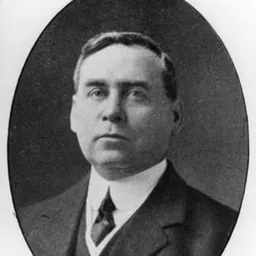
Lived 1903 – 1996 (aged 93). Joseph F. Biroc was an American cinematographer.
Joseph Francis Biroc, (February 12, 1903 – September 7, 1996) was an American cinematographer. Born in New York City, he entered the film industry in 1918 as a laboratory technician in Fort Lee, New Jersey, and moved to Los Angeles in 1927, where he worked as a camera operator at RKO Pictures. During World War II he served in the U.S. Army Signal Corps, filming the Liberation of Paris in August 1944. He later worked as a freelance cinematographer at various studios and frequently collaborated with the director Robert Aldrich.
In addition to his film work, which included It's a Wonderful Life (1946) and The Flight of the Phoenix (1965), Biroc worked on various television series, including Adventures of Superman.
Biroc won the Academy Award for Best Cinematography for The Towering Inferno (1974), which he shared with Fred J. Koenekamp, having previously been nominated for Hush...Hush, Sweet Charlotte (1964). He also won two Primetime Emmy Awards, one for the television film Brian's Song and one for the series Casablanca. He developed a passion for film in childhood. He recalled seeing his first film in 1910 on a vacant lot five blocks from his home, and said he knew from then that he wanted to spend his life making movies.
Career Early work and RKO At the age of fifteen, with his uncle's help, Biroc began his career as a film laboratory technician with Paragon Labs in Fort Lee, New Jersey, in 1918. The apprenticeship began a series of jobs at various laboratories, which was then a standard route for aspiring cinematographers.
He worked at Craftsman Labs in New York from 1920 to 1923, then briefly for Goldwyn Pictures in Culver City, California, in 1923. He then returned to New York and took a job as a film printer for Famous Players–Lasky, where he was soon promoted to assistant cameraman. After Famous Players–Lasky shut down in 1927, Biroc moved to Los Angeles to work for United Artists, before moving to RKO as a camera operator. At RKO he served as an assistant to the cinematographers Leo Tover, Robert De Grasse and Edward Cronjager, and worked on films including Cimarron (1931), Sylvia Scarlett (1935), A Woman Rebels (1936), Swing Time (1936), Shall We Dance (1937) and Five Came Back (1939), though he received no screen credit, as RKO rarely credited camera operators.
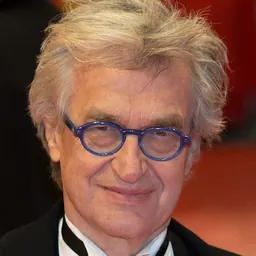
In 1952, Biroc began his association with the producer-director Robert Aldrich, starting with an episode of The Doctor and continuing with films such as World for Ransom (1954), Attack (1956), Hush...Hush, Sweet Charlotte (1964), for which he received his first Oscar nomination, The Flight of the Phoenix (1965) and The Longest Yard (1974). He also shot material for network television early on, including musical shorts featuring Duke Ellington, Nat King Cole and Louis Armstrong, which was unusual for cameramen at the time. and of his work with the director Wim Wenders on Hammett (1982), where he described his approach as basic lighting and photography in the manner of earlier decades.
Death Biroc died on September 7, 1996, in Woodland Hills, California, aged 93. He was survived by a sister, Agnes Kronmeyer of Cranford, New Jersey, and four grandchildren. 1975 Best Cinematography The Towering Inferno American Society of Cinematographers 1988 Lifetime Achievement Award
1972 Outstanding Cinematography for a Movie Made for Television Brian's Song
1977 Outstanding Cinematography for a Series The Moneychangers
Outstanding Cinematography for a Movie Made for Television A Family Upside Down
Washington: Behind Closed Doors 1979 Little Women 1980 Outstanding Cinematography for Limited Series or Movie Kenny Rogers as The Gambler 1983 Outstanding Cinematography for a Series Casablanca 1985 Outstanding Cinematography for Limited Series or Movie A Death in California Society of Camera Operators 1986 Lifetime Achievement Award Bibliography and further reading Biroc, Joseph. "Hollywood Launches 3-D Production". American Cinematographer (Hollywood), August 1952. Biroc, Joseph. "Photographing Washington: Behind Closed Doors". American Cinematographer (Hollywood), November 1977. American Cinematographer (Hollywood), July 1981. Focus on Film (London), no. 13, 1973. Patterson, R. "On Hammett". American Cinematographer (Hollywood), November 1982. Basinger, Jeanine. The It's a Wonderful Life Book. 1987. American Cinematographer (Hollywood), March 1989. Obituary. American Cinematographer (Hollywood), November 1996. Obituary. Cinefantastique (Forest Park), vol. 28, no. 6, 1996.
Don’t just read it —
keep it.
Full-length biographies made to live with: read them, listen on the way to work, watch them tonight.
- E-book
- Audio
- Video
Instant download · yours to keep · every purchase keeps this site free
Important facts
People in Joseph F. Biroc's life
Named in this biography and alive at the same time






Related people
Same field, nearest in time



Contemporaries
People whose lives overlapped Joseph F. Biroc's
Frequently asked questions
Who was Joseph F. Biroc?
American cinematographer (1903-1996)
When was Joseph F. Biroc born?
Joseph F. Biroc was born on 12 February 1903 in New York City.
When did Joseph F. Biroc die?
Joseph F. Biroc died on 7 September 1996 in Woodland Hills.
What was Joseph F. Biroc's occupation?
Joseph F. Biroc was a cinematographer.
What nationality was Joseph F. Biroc?
Joseph F. Biroc was American.
Sources & further reading
Cite this page
APA: Biography.guide. (2026). Joseph F. Biroc. https://biography.guide/joseph-f-biroc/
MLA: "Joseph F. Biroc." Biography.guide, https://biography.guide/joseph-f-biroc/.
Chicago: "Joseph F. Biroc." Biography.guide. https://biography.guide/joseph-f-biroc/.
Data last updated: 2026-09-22 · Spot an error? Report a correction.
Page generated 2026-09-27 05:17 UTC