
About Joseph Edward Davies
Lived 1876 – 1958 (aged 81). Joseph Edward Davies was an American diplomat, screenwriter and writer.
Early life Davies was born in 1876 in Watertown, Wisconsin to Welsh-born parents Edward and Rachel (Paynter) Davies. He attended the University of Wisconsin Law School from 1898 to 1901, where he graduated with honors. Upon graduation, he returned to Watertown and began a private practice. He served as a delegate to the Wisconsin Democratic Convention in 1902.
When Senator Paul O. Husting of Wisconsin died unexpectedly in 1917, President Wilson asked Davies to run for the open Wisconsin seat. Davies resigned from the FTC and launched his campaign for the special election that was held on 2 April 1918, but he lost to Republican Irvine Lenroot. It turned out to be a pivotal election which denied Democrats control of the U.S. Senate. In 1933, Rafael Trujillo hired Davies to try to settle the Dominican Republic's national debt.
Davies’ most famous case was when he defended former Ford Motor Company stockholders against a $30,000,000 lawsuit that the U.S. Treasury Department brought against them for back taxes. Davies proved his clients did not owe the government anything. In fact, they were due a $3,600,000 refund. The case—which took three years to litigate (from 1924 to 1927)—brought Davies the largest fee in the history of the D.C. bar, $2,000,000.
But his specialty was as an antitrust attorney. His corporate clients included Seagram's, National Dairy, Copley Press, Anglo-Swiss, Nestlé, and Fox Film. By 1937 his law firm was named: Davies, Richberg, Beebe, Busick and Richardson.
Family In 1901 Davies married Mary Emlen Knight. They had three daughters: Eleanor, Rahel, and Emlen. Mary was the daughter of Civil War Union Colonel John Henry Knight, a leading conservative Democrat and business associate of William Freeman Vilas and Jay Cooke. Davies and Mary divorced in 1935.
Davies married his second wife Marjorie Merriweather Post in December 1935. She was an heiress to the Postum Cereal Company (which later turned into General Foods). When Charles William Post died in 1914, Marjorie, as his only child, reportedly became the wealthiest woman in the United States. In the 1920s, she had a mansion named Mar-a-Lago built for her in Palm Beach, Florida; it was later sold by the Post Foundation to Donald Trump. She also owned Camp Topridge next to Upper Saint Regis Lake, New York in the Adirondack Mountains. When Joseph and Marjorie returned to the U.S. from his diplomatic posting in the Soviet Union, she oversaw construction of a dacha for him at Camp Topridge. The couple divorced in 1955.
Diplomatic career On 25 August 1936, President Roosevelt telephoned Davies at the Adirondack retreat and requested he come to Washington. When they met, Roosevelt said he had decided he would like Davies to serve as an ambassador, and asked whether Davies had a preference for a particular country. The latter replied, "Either to Russia or Germany", since they were "the most dynamic spots in Europe." The German post was not open, but the ambassadorship to the Soviet Union had recently become available (William Bullitt resigned in May) and so it was agreed Davies would go to Russia. He took the oath of office in November 1936, and Roosevelt signed Davies's ambassadorial commission on November 16, 1936. He, Marjorie, and daughter Eleanor sailed for Europe in early January 1937.
Davies' appointment as the second-ever Ambassador to the Soviet Union was in part based on his skills as a corporate lawyer who had handled international cases, his longtime friendship with FDR since the Woodrow Wilson administration, and his steadfast political loyalty to the President.
Before leaving for the Soviet Union, Davies was directed by FDR to "make every effort to get all the firsthand information, from personal observation where possible, bearing upon the strength of the regime, from a military and economic point of view; also seek to ascertain what the policy of their government would be in the event of European war."
Davies' predecessor, William Christian Bullitt Jr., had been an early admirer of the Soviet Union who gradually came to loathe Stalin's brutality and repression. By contrast, Davies remained unaffected by reports of the disappearance of thousands of Russians and foreigners in the Soviet Union throughout his stay as U.S. Ambassador. His dispatches from the Soviet Union were pragmatic, optimistic, and usually devoid of criticism of Stalin and his policies. While he briefly noted the USSR's "authoritarian" form of government, Davies praised the nation's boundless natural resources and the contentment of Soviet workers while "building socialism". He went on numerous tours of the country, where he inspected industrial and agricultural facilities. In one of his final memos from Moscow to Washington D.C., Davies assessed:
Communism holds no serious threat to the United States. Friendly relations in the future may be of great general value.
Davies attended the Trial of the Twenty One, one of the Stalinist purge trials of the late 1930s. He was convinced of the guilt of the accused. According to Davies, "the Kremlin's fears [regarding treason in the Army and Party] were well justified". His opinions were at odds with much of the Western press of the day, as well as those of his own staff, many of whom had been in the country far longer than Davies. The career diplomat Charles Bohlen, who served under Davies in Moscow, later wrote:
Mission to Moscow book Davies leveraged his diplomatic work in the Soviet Union to produce a popular book, Mission to Moscow. It was first published by Simon & Schuster in December 1941 and had thirteen reprintings. For the year 1942, the book ranked second in the U.S. in hardcover nonfiction sales. Sales were boosted when an excerpt appeared in the large-circulation Reader's Digest magazine in March 1942. In 1943, editions of the book started being printed every month in the recently introduced mass-market paperback format from Pocket Books. The movie, made during World War II, showed the Soviet Union under Joseph Stalin in a positive light. Completed in late April 1943, the film was, in the words of Robert Buckner, the film's producer, "an expedient lie for political purposes, glossily covering up important facts with full or partial knowledge of their false presentation. During the 1947 House Un-American Activities Committee hearings into the motion picture industry, Mission to Moscow was often cited as a movie demonstrating Communist propaganda in Hollywood.
Second Mission to Moscow Davies with Soviet leader Joseph Stalin during his second "Mission to Moscow," May 1943.
In May 1943, Roosevelt sent Davies on a second mission to Moscow. He was gone 27 days and travelled 25,779 miles, carrying a secret letter from the President to Stalin. Because of the war raging in Europe, Davies could not fly over Europe, and so flew from New York to Brazil, to Dakar; Luxor, Egypt; Baghdad, Iraq; Teheran, Iran; Kuibyshev, Russia; Stalingrad, Russia and on to Moscow. He returned to the States via Novosibirsk and Alaska.
FDR wanted to discuss matters with Stalin—one on one—and felt that setting up such a meeting could be done more easily through a mutual and trusted friend—Davies. In the letter, FDR asked for a visit between himself and Stalin where they could talk over matters without restraint. It would only include an interpreter and stenographer. Prime Minister Churchill and Foreign Minister Eden had often met with Stalin and Molotov. FDR and Secretary Hull had not. Stalin agreed to a meeting in Fairbanks, Alaska on July 15 or August 15. He asked that Davies stress to FDR that Hitler was massing his armies for an all-out drive and that they needed more of everything through Lend-Lease.
Davies was surprised to find much the same hostility and what he regarded as prejudice in the U.S. diplomatic corps in Moscow toward the Russians as when he was there in 1937–1938. He complained to them that public criticism of America's Soviet ally might be harmful to the war effort. United States – Medal for Merit, 1946 Soviet Union – Order of Lenin France – Grand Cross of the Legion of Honor, May 1950 Belgium – Grand Cordon de l'Ordre de Léopold, Feb 1940 Awards from the governments of Luxembourg; Greece; Yugoslavia; the Dominican Republic; Peru; Panama; and Mexico.
Don’t just read it —
keep it.
Full-length biographies made to live with: read them, listen on the way to work, watch them tonight.
- E-book
- Audio
- Video
Instant download · yours to keep · every purchase keeps this site free
Important facts
Family & relationships
People in Joseph Edward Davies's life
Named in this biography and alive at the same time



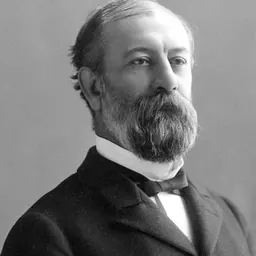
Related people
Same field, nearest in time
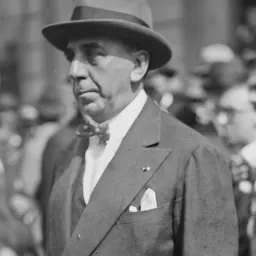

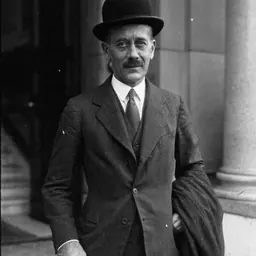
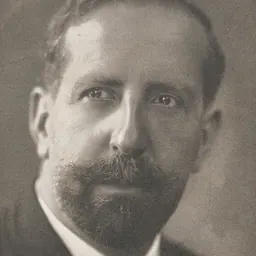
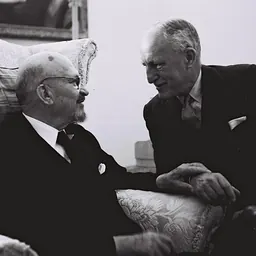
Contemporaries
People whose lives overlapped Joseph Edward Davies's

Frequently asked questions
Who was Joseph Edward Davies?
American diplomat (1876-1958)
When was Joseph Edward Davies born?
Joseph Edward Davies was born on 29 November 1876 in Watertown.
When did Joseph Edward Davies die?
Joseph Edward Davies died on 9 May 1958 in Washington, D.C..
What was Joseph Edward Davies's occupation?
Joseph Edward Davies was a diplomat, screenwriter and writer.
What nationality was Joseph Edward Davies?
Joseph Edward Davies was American.
Sources & further reading
· Wikipedia: Joseph Edward Davies
Cite this page
APA: Biography.guide. (2026). Joseph Edward Davies. https://biography.guide/joseph-edward-davies/
MLA: "Joseph Edward Davies." Biography.guide, https://biography.guide/joseph-edward-davies/.
Chicago: "Joseph Edward Davies." Biography.guide. https://biography.guide/joseph-edward-davies/.
Data last updated: 2026-09-27 · Spot an error? Report a correction.
Page generated 2026-09-27 05:16 UTC