
Joseph Calasanz
Spanish writer and saint
About Joseph Calasanz
Lived 1556 – 1648 (aged 91). Joseph Calasanz was a catholic priest, pedagogue, founder of Catholic religious community, regular cleric and catholic theologian.
Joseph Calasanz (; ; ; September 11, 1557 – August 25, 1648), also known as Joseph Calasanctius and Josephus a Matre Dei, was a Spanish Catholic priest, educator and the founder of the Pious Schools, which provided free education to poor boys. For this purpose he founded the religious order that ran them, commonly known as the Piarists. He became a close friend of the renowned astronomer Galileo Galilei. Joseph is honored as a saint by the Catholic Church, following his 1767 papal canonisation.
Early biography Calasanz was born in Peralta de Calasanz (before de la Sal) in the Kingdom of Aragon, on September 11, 1557, the youngest in a family of eight children, and the second son. His parents were Pedro de Calasanz y de Mur, an (minor nobleman) and town mayor, and Pedro's wife María Gastón y de Sala. Joseph had two sisters, Marta and Cristina. In his youth, he was nearly two meters tall. His parents gave him a good education at home and then at the elementary school of Peralta. In 1569, he was sent for classical studies to a college in Estadilla run by the friars of the Trinitarian Order. While there, at the age of 14, he determined that he wanted to become a priest. In this, however, he met with no support from his parents.
For his higher studies, Calasanz took up philosophy and law at the University of Lleida, where he was awarded the degree of Doctor of Laws cum laude. He then began theology studies at the University of Valencia and at the Complutense University, which at the time was still located at its original site in Alcalá de Henares.
Joseph's mother and brother having died, his father wanted him to marry and carry on the family. But a sickness in 1582 soon brought Joseph to the brink of the grave, which caused his father to relent. When he recovered, the Bishop of Urgel, Hugo Ambrosio de Moncada, ordained him as a priest on December 17, 1583. The bishop died the following year and Calasanz left, though urgently requested to remain. He hurried to Peralta de Calasanz to attend the death of his father. He was then called by the Bishop of Urgel to act as vicar general for the district of Tremp.
In Rome
In 1592, at 35, Calasanz moved to Rome. He hoped to further his ecclesiastical career and secure some kind of benefice.
On Christmas Day in 1598, the Tiber flooded its banks to historic levels, reaching an additional depth of nearly 20 m (65 ft) above its normal level. The devastation was widespread. Hundreds of the already poor families who lived along the river's banks were left homeless and without food. The death toll was estimated at about 2,000. Calasanz threw himself into the response, joining a religious fraternity dedicated to helping the poor, and began to help in the cleaning up and recovery of the city. In 1600, he opened his “Pious School” in the center of Rome and soon there were extensions, in response to growing demands for enrollment from students.
Pope Clement VIII began making an annual contribution and many others gave their financial support to the work so that in a short time Calasanz had about 1,000 children under his charge. In 1602, he rented a house near Sant'Andrea della Valle, commenced a community life with his assistants, and laid the foundation of the Order of the Pious Schools or Piarists. In 1610, Calasanz wrote the Documentum Princeps in which he laid out the fundamental principles of his educational philosophy. The text was accompanied by regulations for teachers and for pupils. the first religious institute dedicated essentially to teaching, by his brief "Ad ea per quae." On March 25, 1617, he and his fourteen assistants received the Piarist habit and became the first members of the new congregation. The habits were paid for by the Cardinal Protector Justiniani, who with his own hands invested Joseph Calasanz in the chapel of his palace. They were the very first priests to have as their primary ministry teaching in elementary schools. Emphasising love, not fear, St. Joseph wrote: "if from the very earliest years, a child is instructed in both religion and letters, it can be reasonably hoped that his life will be happy."
While residing in Rome, Joseph endeavored to visit the seven principal churches of that city almost every evening, and also to honor the tombs of the Roman martyrs. During one of the city's many outbreaks of plague, a holy rivalry existed between him and St. Camillus in aiding the sick and in personally carrying away for burial the bodies of those who had been stricken. On account of his heroic patience and fortitude in the midst of trouble and persecution, he was called a marvel of Christian courage, a second Job. During the following years, Calasanz established Pious Schools in various parts of Europe. In October 1628 he was a guest of the Conti di Segni family in Poli and there, too, he established the Pious Schools. After convincing the pope of the need to approve a religious order with solemn vows dedicated exclusively to the education of youth, the congregation was raised to that status on November 18, 1621, by a papal brief of Pope Gregory XV, under the name of Ordo Clericorum Regularium Pauperum Matris Dei Scholarum Piarum (Order of Poor Clerics Regular of the Mother of God of the Pious Schools). The modern abbreviation "Sch. P." following the name of the Piarist stands for Scholarum Piarum, Latin for "of the Pious Schools". Calasanz was the first educator to advocate the preventive method: it is better to anticipate mischievous behaviour than to punish it. This method was later developed by John Bosco, the founder of the Salesian schools. In terms of discipline, and contrary to the prevailing philosophy of his own and subsequent eras, Calasanz favored the mildest punishment possible. While believing that punishment was necessary in certain cases, he always preached moderation, love and kindness as the basis of any discipline.
Relationship with Galileo and Campanella At a time when humanistic studies ruled the roost, Calasanz sensed the importance of mathematics and science for the future and issued frequent instructions that mathematics and science should be taught in his schools and that his teachers should have a firmer grounding in those subjects. Calasanz was a friend of Galileo Galilei and sent some distinguished Piarists to study under the great scientist. He shared and defended his controversial view of the cosmos.
When Galileo fell into disgrace, Calasanz instructed members of his congregation to provide him with whatever assistance he needed and authorised the Piarists to continue studying mathematics and science with him. Unfortunately, those opposed to Calasanz and his work used the Piarists' support and assistance to Galileo as an excuse to attack them. Despite such attacks, Calasanz continued to support Galileo. When, in 1637, Galileo lost his sight, Calasanz ordered the Piarist Clemente Settimi to serve as his secretary. Calasanz brought the same understanding and sympathy that he had shown to Galileo to his friendship with the great philosopher Tommaso Campanella (1558–1639), one of the most profound and fertile minds of his time, producing famous philosophical work. Although he was highly controversial as well, Campanella maintained a strong and fruitful friendship with Calasanz.
The philosopher whose utopian visions proposed social reforms in which the education of the masses played an important part must have been a kindred spirit for Calasanz, who was already putting such utopian ideas into practice. Calasanz, with his courage and open-mindedness, invited the controversial thinker to Frascati to help teach philosophy to his teachers. Thus, Campanella, who had rallied to the support of Galileo, also came to the defense of Calasanz with his Liber Apologeticus.
Death and legacy His pedagogical practictioner idea of educating every child, his schools for the poor, his support of the heliocentric science of Galilei and his service towards children and youth all aroused the opposition of many among the governing classes in society and the ecclesiastical hierarchy.
Superiors in Rome found out but bowed to the same family ties that had bound Calasanz. Cherubini became visitor general for the Piarists. The Piarists became entangled in church politics and, partially because they were associated with Galileo, were opposed by the Jesuits, who were more orthodox in astronomy. (Galileo's views also involved atomism, and were thought to be heretical regarding transubstantiation.) The support for Cherubini was broad enough that in 1643, he was made superior general of the Order and the elderly Calasanz was pushed aside. Upon this appointment, Calasanz publicly documented Cherubini's long pattern of child molestation, a pattern that he had known about for years. Even this did not block Cherubini's appointment, but other members of the Order were indignant about it, although they may have objected to Cherubini's more overt shortcomings.
Parishes are dedicated to St. Joseph Calasanctius in Jefferson, Ohio and North Battleford, Saskatchewan. Granada, Spain has a parish church, Parroquia de San José de Calasanz, dedicated to him. There is also the Church of San Jose de Calasanz in Lockney, Texas. Calasanz is also commemorated in a number of schools around the world, named after him and overseen by the Piarists and other religious institutes that have him as their patron saint.
Because August 25 falls during summer vacation in many schools, the Order in its official "Calendarium Ordinis" celebrates November 27 as the "Patrocinium" of St. Joseph Calasanz. It is a day that teachers and students can especially honor him. That date was chosen in honor of the day he opened his first free public school in 1597.
Don’t just read it —
keep it.
Full-length biographies made to live with: read them, listen on the way to work, watch them tonight.
- E-book
- Audio
- Video
Instant download · yours to keep · every purchase keeps this site free
Important facts
more
Saint Calasancz, de Calasanz José Saint, Joseph Casalanctius, Josephy CalasanzPeople in Joseph Calasanz's life
Named in this biography and alive at the same time

Related people
Same field, nearest in time

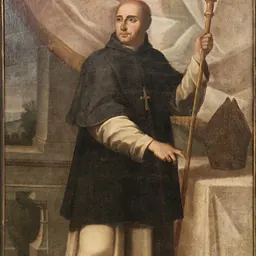

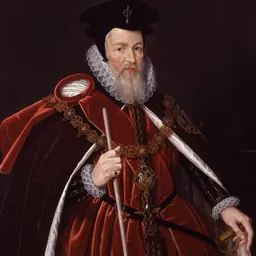
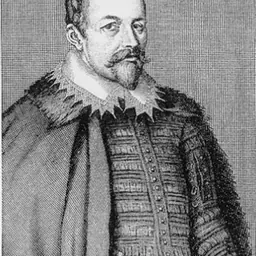
Contemporaries
People whose lives overlapped Joseph Calasanz's


Frequently asked questions
Who was Joseph Calasanz?
Spanish writer and saint
When was Joseph Calasanz born?
Joseph Calasanz was born on 11 September 1556 in Peralta de la Sal.
When did Joseph Calasanz die?
Joseph Calasanz died on 25 August 1648 in Rome.
What was Joseph Calasanz's occupation?
Joseph Calasanz was a catholic priest, pedagogue, founder of Catholic religious community, regular cleric and catholic theologian.
What nationality was Joseph Calasanz?
Joseph Calasanz's recorded nationality: Kingdom of Aragon.
Sources & further reading
Cite this page
APA: Biography.guide. (2026). Joseph Calasanz. https://biography.guide/joseph-calasanz/
MLA: "Joseph Calasanz." Biography.guide, https://biography.guide/joseph-calasanz/.
Chicago: "Joseph Calasanz." Biography.guide. https://biography.guide/joseph-calasanz/.
Data last updated: 2026-09-20 · Spot an error? Report a correction.
Page generated 2026-09-27 05:23 UTC