
About Joseph Byrd
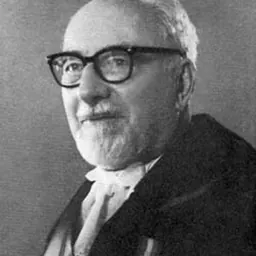
Lived 1937 – 2025 (aged 87). Joseph Byrd was an American composer, songwriter, musician, record producer, university teacher and arrangement.
Joseph Hunter Byrd Jr. (December 19, 1937 – November 2, 2025) was an American composer, musician and academic. After first becoming known as an experimental composer in New York City and Los Angeles, he became the leader of the psychedelic rock band The United States of America, an innovative but short-lived band which integrated psychedelic rock, electronic sound, and radical political ideas into rock music. In 1968 he recorded the album The American Metaphysical Circus, credited to Joe Byrd and the Field Hippies. After working as a record producer, arranger, and soundtrack composer, he became a university teacher in music history and theory.
Early life and career Byrd was born in Louisville, Kentucky, and was raised in Tucson, Arizona, after his father purchased a mine near the Mexican border. His sister, Elizabeth would become a notable writer. As a teenager, Byrd played accordion and vibraphone in a series of pop and country bands, started writing his own arrangements, and performed on some local TV shows. He formed his first jazz quartet while a student at the University of Arizona, where he studied composition with Barney Childs (B.M., 1959). He began his graduate studies in composition on a Sollnit Fellowship at Stanford University, where he first met La Monte Young, then a graduate student at the nearby University of California, Berkeley, as well as Terry Riley and Steve Reich.
New York, 1960–63 After receiving his M.A. from Stanford in 1960, he relocated to New York City to study with avant garde composers Morton Feldman and John Cage; according to Byrd, he became Cage's last student. Byrd became a part of the proto-Fluxus experiments that were emerging at that time in conjunction with Young, Charlotte Moorman (Byrd's girlfriend at one point), Yoko Ono, Jackson Mac Low (he participated in An Anthology of Chance Operations), and others. Byrd took an eclectic approach in his compositions. He continued to work with La Monte Young, who organised the first concert of Byrd's music in Yoko Ono's loft in March 1961. Byrd said: Joseph Hunter Byrd Jr., American composer, c. 1961, New York In New York, we were all subsumed into a protean energy - less a school of composition than an attitude: we were redefining art itself... My time in NY was central to my development.... Cage's influence had spread from music to dance and finally to a kind of art that had no name, and was produced by artists of every kind... These events were called "happenings."... I wrote and performed some music, and developed a rapport with a group of poets who had come under Cage's influence. I studied electronic music with Richard Maxfield at The New School. Mostly though, I looked and listened and marveled. Unlike many of Cage's disciples who had the money to pursue their art... I had to work full time to survive. Byrd's 1962 Carnegie Hall recital was reviewed in prominent publications including The New York Times, which described the concert as a "thimbleful of tiny sounds" that were "generally just this side of the threshold of inaudibility." They include Animals (written for prepared piano and other instruments), Loops & Sequences (written for Charlotte Moorman to perform on cello), Four Sound*Poems (verses written by Byrd and dedicated to four experimental women artists), Water Music (commissioned by and dedicated to percussionist Max Neuhaus), and Prelude to 'The Mystery Cheese-Ball, a piece originally performed by Byrd in 1961 with Young, Mac Low, Ono, David Tudor, and Diane Wakoski. The liner notes by Eric Smigel state:Crafted with technical precision, all of the works were designed to explore the "singularity of sound" that was central to Byrd's lessons with Feldman. Byrd remains sensitive to the vertical qualities of any given pitch collection, but rather than presenting static drones or sequences of isolated chords, he frequently animates the relationship among the materials through indeterminate procedures and shifting cycles.... In other words, he mobilizes the rhythmic arrangements of the independent components, which creates a sophisticated brand of variable polyphony, similar to the ever-changing spatial arrangements of a Calder mobile.
Los Angeles, 1963–68 Late in 1963, Byrd returned to the West Coast with Moskowitz. He enrolled in the musicology doctoral program at UCLA and studied music history, acoustics, psychology of music, and Indian music. He developed radical political views, and joined the Communist Party. At UCLA he formed the New Music Workshop with jazz trumpeter Don Ellis and others, where the first West Coast experiments in what would come to be called "performance art" and "concept art" would develop. On one occasion in 1965, as the concluding part of a series of concerts and events called "Steamed Spring Vegetable Pie" (a title taken at random from The Alice B. Toklas Cookbook), Byrd organized a blues band fronted by his friend Linda Ronstadt, to play during a "happening". Byrd said that "the realization that rock was an access to a larger public came out of that concert, and the idea of forming a band began taking shape."
When Moskowitz returned to California, she and Byrd started the United States of America, with another politically radical composer, Michael Agnello. Earlier collaborations had introduced Byrd to Tom Oberheim, who built ring modulators and other devices for them. Recruiting bassist Rand Forbes, electric violinist Gordon Marron, keyboardist Ed Bogas, and drummer Craig Woodson (another member of the New Music Workshop), the band undertook their first live performances in late 1967, at the Ash Grove in Los Angeles. Byrd was influenced by groups like The Red Crayola, Country Joe and the Fish, and Blue Cheer, and by the music of maverick American composer Charles Ives, particularly the melody "Columbia, the Gem of the Ocean" often referenced by Ives. Electronic devices were used live as well as on the band's recordings, to process other instruments and Moskowitz's voice as well as providing their own musical textures, and the lyrics written by Byrd for some of the songs were markedly political.
The United States of America LP was released in early 1968, but failed to find much commercial success on its original release. The band toured the U.S. East Coast, followed by a number of performances in the Southwest U.S., with mixed success, including shows with The Troggs, The Velvet Underground and at Bill Graham's Fillmore East. However, the group rapidly fell apart over creative and other differences as well as what Byrd saw as a lack of record company support. "a tour de force (though not without its flaws) of experimental rock that blended surprisingly melodic sensibilities with unnerving blasts of primitive synthesizers and lyrics that could range from misty romanticism to hard-edged irony. For the relatively few who heard it, the record was a signpost to the future with its collision of rock and classical elements, although the material crackled with a tension that reflected the United States of America itself in the late '60s." Another critic, Mark Brend, describes the track as "one of the great audacious gestures of 1960s rock." Byrd also arranged two tracks on the 1968 album by folk group The Limeliters, Time To Gather Seeds.
In the early 1970s, Byrd taught at California State University, Fullerton, where he introduced one of the first courses in American music (offered as part of the American Studies curriculum). He also researched the history of American popular music and, in 1974, founded the Yankee Doodle Society with Clare Spark, to research, promote and perform popular music of the mid-19th century American middle class. In 1975, Byrd was approached by Jon Monday at Takoma Records to make a record of synthesized Christmas carols, A Christmas Yet to Come (Takoma C-1046), and in 1976, Yankee Transcendoodle (Takoma C-1051), an LP of synthesized patriotic music in conjunction with the United States Bicentennial. The albums were co-produced by Jon Monday and Byrd. On the albums, Byrd worked with Don Buchla, and synthesizers again made by Tom Oberheim. and the 6-sided LP set Popular Music In Jacksonian America (Musical Heritage Society MHS834651 - 1982).
Byrd arranged and produced Ry Cooder's critically acclaimed 1978 album Jazz, on which Cooder "pays homage to some of the early tunes and masters of jazz, ranging from the late 1800s through the 'coon songs' of the early part of the next century, to the ragtime and 'Spanish' music of Jelly Roll Morton, and the sophistication of cornetist Bix Beiderbecke."
He scored a number of films, including Agnès Varda's 1969 Lions Love, Bruce Clark's 1971 The Ski Bum with Charlotte Rampling and Zalman King, The Ghost Dance (1980) and Robert Altman's ill-fated H.E.A.L.T.H., which was originally shot in 1979, but had its U.S. release delayed until 1982 because of a shakeup in the management of 20th Century Fox.
Byrd also wrote commercially for advertising and television, including a theme for the CBS Evening News, developed sounds used in Mattel toys, and created the electronic/modified voice sound effects for the drones in Douglas Trumbull's Silent Running (which may have been the inspiration for the "voice" of R2-D2 in the first Star Wars film). In the 1990s, he also launched LogoMusic, developing musical signatures and other sound material for corporate websites.
Byrd began teaching music history and theory at the College of the Redwoods in Eureka in 2000. He was for five years a food columnist for the North Coast Journal in Humboldt County, California.
Death Byrd died in Medford, Oregon, on November 2, 2025, at the age of 87.
Don’t just read it —
keep it.
Full-length biographies made to live with: read them, listen on the way to work, watch them tonight.
- E-book
- Audio
- Video
Instant download · yours to keep · every purchase keeps this site free
Important facts
People in Joseph Byrd's life
Named in this biography and alive at the same time




Related people
Same field, nearest in time



Contemporaries
People whose lives overlapped Joseph Byrd's


Frequently asked questions
Who was Joseph Byrd?
American musician (born 1937)
When was Joseph Byrd born?
Joseph Byrd was born on 19 December 1937 in Louisville.
When did Joseph Byrd die?
Joseph Byrd died on 5 November 2025.
What was Joseph Byrd's occupation?
Joseph Byrd was a composer, songwriter, musician, record producer, university teacher and arrangement.
What nationality was Joseph Byrd?
Joseph Byrd was American.
Sources & further reading
Cite this page
APA: Biography.guide. (2026). Joseph Byrd. https://biography.guide/joseph-byrd/
MLA: "Joseph Byrd." Biography.guide, https://biography.guide/joseph-byrd/.
Chicago: "Joseph Byrd." Biography.guide. https://biography.guide/joseph-byrd/.
Data last updated: 2026-09-26 · Spot an error? Report a correction.
Page generated 2026-09-27 05:15 UTC