
About Joseph Breen
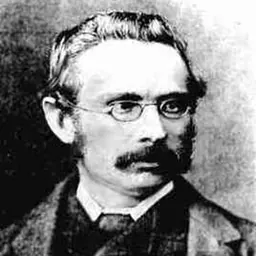
Lived 1890 – 1965 (aged 75). Joseph Breen was an American journalist, screenwriter and censor.
Joseph Ignatius Breen (October 14, 1888 – December 5, 1965) was an American journalist and film censor with the Motion Picture Producers and Distributors of America who applied the Hays Code to film production.
Early life and career Breen was the youngest of three sons born to Mary and Hugh A. Breen in Philadelphia. His father had emigrated from Ireland and met his mother Mary in New Jersey. Breen was raised in a strict Roman Catholic home and attended Gesu Parish School until the eighth grade. He then attended Boys Catholic High School. He attended Saint Joseph's College but dropped out after two years, after which he worked as a newspaper reporter for fourteen years in Philadelphia, Washington, D.C., and Chicago.
As film censor 1934–1941 Breen was a journalist and an "influential layperson" in the Catholic community.
In 1933, the Roman Catholic National Legion of Decency was founded, and began to rate films independently, putting pressure on the industry. In 1933 and 1934 the Legion along with a number of Protestant and women's groups launched plans to boycott films that they deemed immoral. The Motion Picture Producers and Distributors of America (MPPDA) had, up until then, enforced the motion picture industry's own self-censorship standards, albeit not very seriously. Hays, who had been in charge of enforcing this voluntary code since 1927, worried that the NLD's efforts could weaken his own power and that of his office, and hurt industry profits. Unlike previous attempts at self-censorship, PCA decisions became binding — no film could be exhibited in an American theater without a stamp of approval from the PCA. Any producer attempting to do so faced a fine of $25,000.
After ten years of unsuccessful voluntary codes and expanding local censorship boards, the studio approved and agreed to enforce the codes, and the nationwide production code was enforced starting on July 1, 1934.
Breen wrote antisemitic letters in the early 1930s including phrases like "Ninety-five percent of these folks are Jews of an Eastern European lineage. They are, probably, the scum of the scum of the earth". After 1934, he was "publicly and forthrightly anti-antisemitic." He occasionally collaborated with Georg Gyssling, the Nazi representative in Hollywood.
William Dudley Pelley, founder of the antisemitic organization the Silver Legion of America, believed that Jews controlled the movie industry, which he thought to be the "most effective propaganda medium in America", during the 1930s. Hence he applauded the fact that Breen had assumed the power to censor Hollywood. Breen, who also expressed antisemitic views, was deeply worried that Jewish filmmakers would try to use Nazi mistreatment of Jews during the 1930s as a vehicle for propaganda. Breen claimed that plans to make such pictures were being coordinated through the Hollywood Anti-Nazi League, which he claimed was "conducted and financed almost entirely by Jews". Breen pressured Metro-Goldwyn-Mayer to drop plans to film Sinclair Lewis's best-selling anti-fascist novel, It Can't Happen Here after insisting on 60 edits with more to follow. This followed statements in late 1938 by Pope Pius XI denouncing antisemitism, stating that "it is not possible for Christians to take part in antisemitism" as well as the newly formed Committee of Catholics to Fight Anti-Semitism. The two authors of the Hays Code, Martin J. Quigley and the Rev. Daniel Lord, SJ, promoted the cause. Quigley asked Breen to help gather statements of support from Catholics in the Hollywood film industry.
1941–1954 Breen resigned from the PCA in April 1941, attributing his departure to "overwork and the need of a long rest." He briefly put in a stint as the general manager of RKO Pictures,
In 1951, Breen's office refused to approve Otto Preminger's film The Moon Is Blue because of objections to the dialogue. United Artists backed Preminger in his decision to release the movie without Breen's approval.
In 1954, the same year he retired, in responding to these events in an interview with Aline Mosby, Breen claimed that "after the events of the past 10 months — The French Line, The Moon Is Blue and Goldwyn — the code is more entrenched than ever before. Those events brought tremendous support from groups all over the country." On his retirement, he was presented with an honorary Academy Award
Personal life In February 1914, Breen married Mary Dervin, with whom he had six children, three boys and three girls. Their son Joseph Breen Jr. was a writer and director. One of their other children, Thomas, whose right leg was amputated due to a combat injury on Guam during World War II, was cast in a feature role in Jean Renoir's 1950 film The River, playing a wounded war veteran. Renoir was not aware at the time that Thomas was Joseph Breen's son.
After his retirement, Breen moved to Phoenix, Arizona, with his wife Mary. He suffered from poor health in his later years and eventually lost the use of his legs. He died at the age of 77 on December 5, 1965, at the Brentwood Convalescent Home in Los Angeles and was buried at Holy Cross Cemetery, Culver City.
Legacy After Breen's death, Variety magazine wrote that Breen was "one of the most influential figures in American culture" and that "more than any single individual, he shaped the moral stature of the American motion picture." The trade magazine went on to say that Breen enforced the PCA code "with a potent mix of missionary zeal and administrative tenacity."
In the 2004 film The Aviator, Breen was portrayed by Edward Herrmann.
Don’t just read it —
keep it.
Full-length biographies made to live with: read them, listen on the way to work, watch them tonight.
- E-book
- Audio
- Video
Instant download · yours to keep · every purchase keeps this site free
Important facts
People in Joseph Breen's life
Named in this biography and alive at the same time


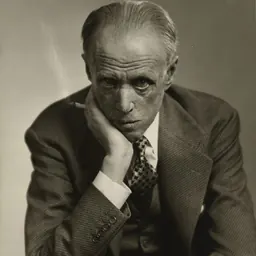
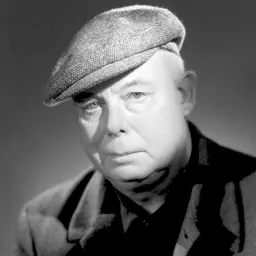

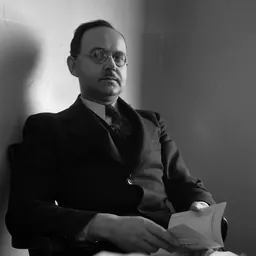

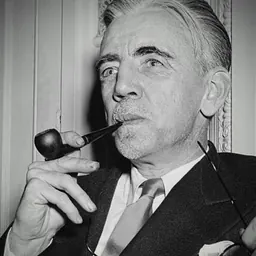
Related people
Same field, nearest in time




Contemporaries
People whose lives overlapped Joseph Breen's


Frequently asked questions
Who was Joseph Breen?
Film censor, journalist (1890–1965)
When was Joseph Breen born?
Joseph Breen was born on 14 October 1890 in Philadelphia.
When did Joseph Breen die?
Joseph Breen died on 5 December 1965 in Los Angeles.
What was Joseph Breen's occupation?
Joseph Breen was a journalist, screenwriter and censor.
What nationality was Joseph Breen?
Joseph Breen was American.
Sources & further reading
Cite this page
APA: Biography.guide. (2026). Joseph Breen. https://biography.guide/joseph-breen/
MLA: "Joseph Breen." Biography.guide, https://biography.guide/joseph-breen/.
Chicago: "Joseph Breen." Biography.guide. https://biography.guide/joseph-breen/.
Data last updated: 2026-09-22 · Spot an error? Report a correction.
Page generated 2026-09-27 05:32 UTC