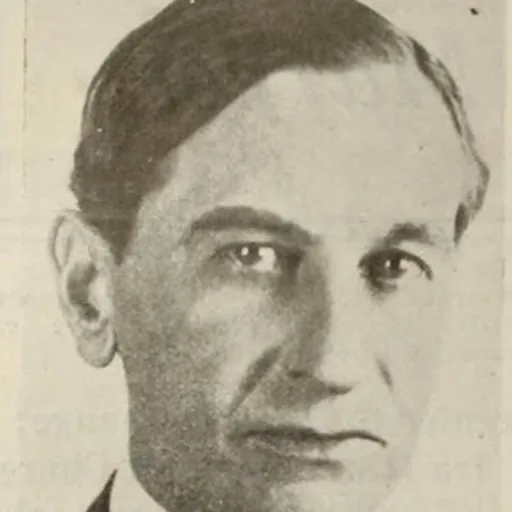
Joseph A. Golden
American film director, screenwriter, producer and playwright
About Joseph A. Golden
Lived 1897 – 1942 (aged 44). Joseph A. Golden was an American screenwriter, film director, film producer and playwright.
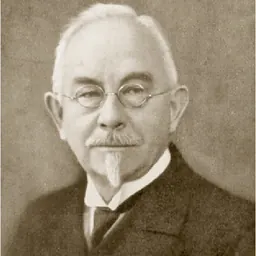
Joseph A. Golden (born Joseph Aron Goldstein; November 16, 1866 – January 3, 1935) was an American film director, screenwriter, producer and playwright. After beginning his career in the theater, he became one of the directors employed by the Biograph Company in 1907. He subsequently worked for several production companies and in 1914 acquired Ludwig Erb's interest in the Crystal Film Company, which operated a studio and film-processing laboratory in the Bronx. Golden directed Pearl White in some of her earliest films and later directed the serials Wolves of Kultur, The Great Gamble (1919) and The Whirlwind (1920). He also wrote plays and vaudeville sketches, including three works with Will M. Cressy.
Early life and theater career
Golden was born Joseph Aron Goldstein in Washington, D.C., on November 16, 1866, one of the children of Simon Goldstein, a Russian-born jeweler, and Rosa Cohen. The 1880 census recorded him under the surname Goldstein in his parents' Washington household. In an affidavit supporting Golden's 1921 passport application, a childhood friend stated that he had known Golden for more than 40 years and that Golden had been born in Washington around 1866.
Golden reportedly began his theatrical career in 1887 as an actor under Dion Boucicault. He later worked as a stage manager for Charles Frohman and directed and managed stock companies. A 1909 profile stated that he had also worked under Wilfred Buckland, then associated with David Belasco. When visiting North Adams, Massachusetts, in 1933, Golden recalled companies he had brought to the city's theaters approximately 35 years earlier.
In addition to his theatrical work, Golden copyrighted a succession of one-act plays, dramatic sketches and vaudeville pieces beginning with Wenonah in 1907. By April 1909, he was associated with the firm Brady and Golden in New York’s Gaiety Theatre Building, which advertised vaudeville sketches that it wrote, staged and booked. The advertisement also identified Golden as collaborating with vaudeville writer Will M. Cressy. Three of Golden’s copyrighted works that year—The Red Parrot, Dan Briggs, Sheriff and The O.K. Girl—were written with Cressy. Another sketch, Love via Wireless, was written with actress Cora Beach Turner and adapted from Robert W. Chambers’s story “Sybilla.” A contemporary review praised its dialogue and situations while criticizing its staging and supporting company.
Golden's one-act drama The Countess Nadine was produced at Proctor's Fifth Avenue Theatre on September 9, 1912, with Blanche Walsh in the title role. A contemporary review praised Golden's ability to compress the drama into the limited running time of a vaudeville playlet. Walsh subsequently performed the work at Keith's Bushwick Theatre.
Film career
Biograph and early companies
Golden entered motion pictures in 1907, when the Biograph Company employed several directors following the departure of production head Frank J. Marion. The Biograph films attributed to Golden include Crayono, Dolls in Dreamland, The Hypnotist's Revenge, The Tired Tailor's Dream, The Deaf-Mutes' Ball and Terrible Ted.
Golden later worked for David Horsley's Centaur Film Company and Nestor Film Company.
Golden's professional association with cinematographer Ludwig G. B. Erb predated their work for Pat Powers. In November 1909, Golden, Erb and Emma Erb were listed as directors of the newly incorporated Erbograph Company. Capitalized at $5,000, the company was organized to deal in motion-picture films, supply performers and other talent, and lease theaters.
By 1910, Golden and Erb were working for the company organized by Powers. In April, the trade press described Golden as staging, writing and producing the Powers picture plays. He and Erb also worked on the first of a proposed series of synchronized-sound comedy and dramatic films made by Powers for the American Fotophone Company, with Erb responsible for the photography and Golden for the staging.
At Powers, Golden directed Pearl White in a number of her earliest pictures, In her 1919 autobiography, White recalled that after unsuccessfully seeking work at the Edison and Kalem studios, she approached Powers, where Golden offered her a trial at five dollars a day. After she completed her first film in two days, the company engaged her at a salary of thirty dollars a week.
During 1911, Golden directed and otherwise worked on a series of films produced by the Selig Polyscope Company. That summer he led a Selig location unit in Colorado whose members included Myrtle Stedman, Thomas J. Carrigan, William Duncan, Otis B. Thayer, Tom and Olive Mix, and George “Mexican George” Hooker. In August, with the company headquartered at American City, Golden directed the staged robbery of a fictitious bank in Central City for Why the Sheriff Is a Bachelor.
The following month, the unit relocated to Cañon City and established headquarters at 312 Main Street. Golden praised the Royal Gorge and Skyline Drive as filming locations, invited residents to watch the company at work, and recruited local riders and horses for its Western productions. Golden’s other Selig work included The New Editor, Western Hearts and Told in Colorado.
Crystal Film Company and feature production
In November 1911, a contemporary trade notice described the Crystal Film Company as recently organized and identified Erb as its president and Golden as its vice-president. A later history additionally identifies Golden as Crystal's director. The company produced short comedies featuring Pearl White.
In June 1914, Erb sold his interest in Crystal to Golden. The company's general manager, Ben Goetz, remained in that position under Golden, while Crystal continued its commercial film-developing and printing business.
Golden also experimented with motion-picture technology. In 1911 he applied for a patent for a camera that moved the film continuously while a reciprocating lens followed the film during exposure. The design was intended to eliminate the intermittent film-advancement mechanism used in conventional cameras. The patent was issued in 1914.
Golden collaborated with Edwin S. Porter on the 1913 feature The Count of Monte Cristo. Film historian Charles Musser wrote that Porter pursued a collaborative approach on the production, working with Golden, who had written scenarios and produced films at Biograph, Centaur and Nestor; Musser described the result as a Porter–Golden collaboration. A 1970 account described Golden as Porter's assistant and collaborator on the scenario, while crediting Porter with directing, photographing and editing the film.
During the middle of the decade Golden directed features for Cosmos Feature Films and the Triumph Film Corporation, including Hearts and Flowers, Fine Feathers, The Master of the House, The Price, The Better Woman, Not Guilty, The Senator, Behind Closed Doors, The Libertine and Redemption. He served as chief director of Triumph. A 1920 trade profile, looking back on his career, reported that Golden had directed performers on stage and on screen including Nat C. Goodwin, Blanche Walsh, James O'Neill, Helen Ware, Julia Dean, John Mason and Holbrook Blinn.
In the summer of 1915, Golden was one of six filmmakers engaged in production by the newly formed Equitable Motion Pictures Corporation, which was closely affiliated with the World Film Company. Motion Picture News identified Divorced, starring Hilda Spong, as his first work for Equitable. Although Edward Warren is credited as the film's director and Golden as producer, a contemporary account in The Moving Picture World described Golden directing a wedding sequence filmed inside a Presbyterian church in the Bronx. By September, Motion Picture News had also identified Golden as a director working at the Triumph studio.
Golden remained involved with Crystal while directing and producing films through other companies. In December 1917, he was elected chairman of a newly organized branch of the National Association of the Motion Picture Industry representing film laboratories, including Crystal Film Laboratories. Interior scenes for his 1920 serial The Whirlwind, produced by Allgood Pictures, were filmed at Crystal’s Bronx studio.
In 1919, minority shareholders obtained the appointment of a receiver for Crystal, alleging that its assets were being dissipated through mismanagement. The company appealed and continued operating while the case was pending. The receivership was discontinued later that year after Golden and Amiel Alperstein acquired a majority of the company's stock.
Crystal filed notice of its dissolution in August 1920. At the same time, the newly formed Claremont Film Laboratories took over management of its Bronx laboratory. Walter E. Greene became president of Claremont, while Golden and Alperstein retained interests in the plant.
Distribution activities
In early 1918, Golden became active in an effort by independent producers to distribute films directly to exhibitors, bypassing state-rights buyers and established film exchanges. At a January meeting of the Manhattan local of the Exhibitors' League, he presented the proposed “Manufacturer to Exhibitor Direct” plan and advocated eliminating the profits of intermediaries by dealing directly with theater owners.
In February, Golden and Louis L. Levine traveled to Baltimore, Washington, D.C., and Greensboro, North Carolina, carrying prints of The Struggle Everlasting and another film for presentation to exhibitors. After returning, Golden reported completing negotiations covering a number of Southern and Mid-Atlantic territories. At the Greensboro convention he also proposed direct distribution of films produced by Triumph and several other independent companies through the planned Carolina Co-operative Booking Agency.
Golden was subsequently elected secretary and treasurer of Producers and Exhibitors Affiliated, an organization of independent producers that proposed eliminating exchanges and having local exhibitor committees arrange bookings and share in film profits. Golden represented Triumph Film Corporation within the organization.
Serials
Wolves of Kultur In 1918 Golden and A. Alperstein's Western Photoplays produced the fifteen-episode serial Wolves of Kultur for Pathé Exchange. Written and directed by Golden, the wartime espionage production starred Leah Baird, Sheldon Lewis and Charles Hutchison. Its story concerned foreign agents attempting to steal the plans for a radio-controlled torpedo. Pathé promoted the serial as an exposé of German plotting and propaganda in the United States.
Contemporary reviews differed sharply. After seeing the first two episodes, Peter Milne of Motion Picture News described Golden's direction as “exceedingly old-fashioned” and criticized the performers' exaggerated gestures and the patriotic intertitles, although he acknowledged that the rapid action could engage devotees of serial films. The serial received a considerably warmer response when it was released in France as Le Messager de la mort. Having watched all fifteen episodes at two trade screenings in October 1919, the critic “Nyctalope” of La Cinématographie française praised its photography, performances, sustained narrative interest and spectacular sequences, and predicted both popular and commercial success.
The Great Gamble
By early 1919, Golden was president of Western Photoplays. The company began work at its Bronx studio on a fifteen-episode Pathé serial provisionally titled The Great Gamble, starring Anna Luther and Charles Hutchison. Based on an original story by Golden, who was responsible for its scenario and direction, the serial was filmed partly in Florida, where the company spent nearly two months making exterior scenes, and in Washington, D.C., where it worked for approximately a week in and around public buildings. Pathé selected it as the first release in a newly announced seven-serial program and scheduled its opening episode for August 3, 1919. Western Photoplays ceased production before the serial was finished, and the Astra Film Corporation completed it.
The Whirlwind
For the Allgood Pictures Corporation, Golden subsequently wrote, directed and produced The Whirlwind (1920), again starring Hutchison. It was Golden's last known work as a director.
After completing the serial, Golden underwent surgery and was hospitalized. A contemporary trade report said that although The Great Gamble and The Whirlwind had established his reputation as a serial producer, his ambition was to move away from serials and make more literary films.
Later plans
Although Crystal had filed notice of its dissolution in 1920, a 1921 newspaper account continued to describe Golden as the owner of the “Crystal Film Studios.”
Golden applied for a passport in New Orleans in December 1920, describing his occupation as the motion-picture business. In a letter to the State Department, he said that he intended to visit Cuba to find locations suitable for motion-picture production.
Return to the theater
In November 1920, Golden addressed the Theatre Club in New York on “The Ideal American Theatre.” The following year he organized the Golden Players as a resident stock company at the Grand Theatre in Trenton, New Jersey.
By late June, the Golden Players were entering their sixth week and presenting Edmund Laurence Burke's comedy Johnny, Get Your Gun. A December report described Golden as the company's producer and stated that the Golden Players had presented numerous plays in Trenton that summer.
In a July 1921 interview, Golden described theater as an uplifting community institution and advocated independent stock companies and subsidized theaters in smaller cities. He proposed a children's theater offering wholesome after-school performances selected in consultation with educational authorities and favored teaching dramatics in public schools to develop confidence and self-expression. He was also considering establishing a winter stock company in Trenton.
Personal life and death
Golden's first wife, actress Lillian De Lesque, died on October 12, 1918. On January 10, 1922, Golden married educator Erna Marguerite Weiss, a daughter of Dr. Joseph Weiss of Zürich, Switzerland, at Delmonico’s in New York. The couple sailed for Europe aboard the Rochambeau one week later and traveled through France, Italy, Switzerland, Germany and England. Their daughter, Odette Golden, was born in New York on November 19, 1922, and later taught French and literature at the University of Washington.
After his marriage in 1922, Golden largely disappeared from public life. He continued to copyright dramatic works through 1931, several of which were identified as unpublished.
Golden died in Yonkers, New York, on January 3, 1935, aged 68.
Selected stage works
Work Copyright date Description Wenonah May 2, 1907 Drama in one act His Affinity February 10, 1908 Dramatic sketch The Red Parrot January 18, 1909 With Will M. Cressy How Women Love March 12, 1929 Unpublished comedy in one act For Love April 29, 1929 Unpublished drama in one act
Selected filmography
A complete filmography of Golden is difficult to compile. Credits for early one- to four-reel films are often incomplete, while terms such as director, producer and supervisor were used inconsistently. Association with a production company does not establish his involvement in every film it made. The following filmography is therefore limited to productions of five or more reels for which Golden’s role can be reliably verified; serials are listed separately.
Feature films
Year Title Credited role Production company Distributor Length Preservation status Notes Ref. 1913 The Count of Monte Cristo Co-director with Edwin S. Porter Famous Players Film Company States' rights 5 reels Extant Filmed in 1912; received a limited showing that year before its national release on November 1, 1913. 1914 Hearts and Flowers Director; adapter Cosmos Feature Film Corporation Alliance Films Corporation 5 reels Lost Released November 30, 1914. Starring Mrs. Thomas Whiffen and Beulah Poynter. 1915 Fine Feathers Director Cosmos Feature Film Corporation World Film Corporation 5 reels; 5,000 feet Not determined Released June 7, 1915; some sources give June 14. 1915 Divorced Producer; contemporary sources also identified him as director or location director Triumph Film Corporation Equitable Motion Pictures Corporation, through World Film Corporation 5 reels Extant Edward Warren is credited as director by AFI, but a contemporary report stated that Golden was directing the production. 1915 The Master of the House Director Triumph Film Corporation Equitable Motion Pictures Corporation and World Film Corporation 5 reels Lost Variety reported that Edgar James was identified in the film as director. 1915 The Price Director; screenwriter Equitable Motion Pictures Corporation World Film Corporation 5 reels Not determined Copyrighted by Cosmos Feature Film Company. Early publicity credited Catherine Carr with the scenario, while a release chart incorrectly identified Triumph as the producer. 1915 The Better Woman Director Triumph Film Corporation Equitable Motion Pictures Corporation, through World Film Corporation 5 reels Not determined Released November 1, 1915. Starring Lenore Ulrich. 1915 Not Guilty Director Triumph Film Corporation and Equitable Motion Pictures Corporation World Film Corporation 5 reels Lost Produced under the working title Justice and rereleased under that title in 1919. 1915 The Senator Director Triumph Film Corporation Equitable Motion Pictures Corporation and World Film Corporation 5 reels Lost A contemporary production report identified Golden as director; another notice incorrectly credited Edmund Lawrence. 1916 Behind Closed Doors Director Triumph Film Corporation Equitable Motion Pictures Corporation, through World Film Corporation 5,000 feet Lost Temporarily titled Love's Cross Roads and Love's Crossed Trail; rereleased in 1919 as The Guilty Woman. 1916 The Prima Donna's Husband Co-director with Julius Steger Triumph Film Corporation A. & W. Film Corporation; states' rights 5 reels Lost A trade showing was held on June 12, 1916. 1916 The Libertine Co-director with Julius Steger Triumph Film Corporation States' rights 6 reels Not determined Produced under the working title On the Brink of Shame and also advertised as Brink of Shame. 1917 The Law of Compensation Co-director with Julius Steger Norma Talmadge Film Corporation Selznick Pictures Corporation and Lewis J. Selznick Enterprises 6 reels Extant Released April 1, 1917. Starring Norma Talmadge. 1917 Redemption Co-director with Julius Steger Triumph Film Corporation Triumph Film Corporation 6 reels Lost Starring Evelyn Nesbit and her son Russell Thaw.
Serials
Year Title Credited role Production company Distributor Length Preservation status Notes Ref. 1918 Wolves of Kultur Director; screenwriter; producer Western Photoplays Pathé Exchange 15 episodes; originally 31 reels Incomplete The surviving material was restored through an international archival collaboration. Released in France as Le Messager de la mort. 1919 The Great Gamble Director; screenwriter; producer Western Photoplays Pathé Exchange 15 episodes; 31 reels Incomplete Released in France as Le Grand Jeu. Claims that Astra Film Corporation completed the serial remain unconfirmed. 1920 The Whirlwind Director; screenwriter; producer Allgood Picture Corporation Republic Distributing Corporation; states' rights 15 episodes; approximately 20 reels Presumed lost Golden's last known original film production.
Don’t just read it —
keep it.
Full-length biographies made to live with: read them, listen on the way to work, watch them tonight.
- E-book
- Audio
- Video
Instant download · yours to keep · every purchase keeps this site free
Important facts
People in Joseph A. Golden's life
Named in this biography and alive at the same time





Related people
Same field, nearest in time




Contemporaries
People whose lives overlapped Joseph A. Golden's


Frequently asked questions
Who was Joseph A. Golden?
American film director, screenwriter, producer and playwright
When was Joseph A. Golden born?
Joseph A. Golden was born on 19 July 1897 in Savannah.
When did Joseph A. Golden die?
Joseph A. Golden died on 8 July 1942 in Los Angeles, Hollywood.
What was Joseph A. Golden's occupation?
Joseph A. Golden was a screenwriter, film director, film producer and playwright.
What nationality was Joseph A. Golden?
Joseph A. Golden was American.
Sources & further reading
Cite this page
APA: Biography.guide. (2026). Joseph A. Golden. https://biography.guide/joseph-a-golden/
MLA: "Joseph A. Golden." Biography.guide, https://biography.guide/joseph-a-golden/.
Chicago: "Joseph A. Golden." Biography.guide. https://biography.guide/joseph-a-golden/.
Data last updated: 2026-09-23 · Spot an error? Report a correction.
Portrait: Wikimedia Commons · author & licence
Page generated 2026-09-27 05:08 UTC