
About Josep Puig i Cadafalch
Lived 1867 – 1956 (aged 89). Josep Puig i Cadafalch was a Spanish architect, art historian, politician, professor and designer.
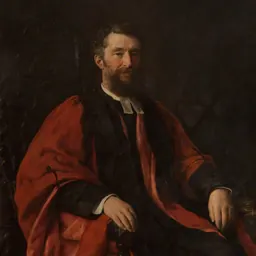
Josep Puig i Cadafalch (; 17 October 1867 in Mataró – 21 December 1956 in Barcelona) was a Spanish architect who designed many significant buildings in Barcelona, and a politician who had a significant role in the development of Catalan regional institutions.
Life and activities He was born on 17 October 1867 in Mataró.
He was the architect of the Casa Martí (also known as "Els Quatre Gats"), which became a place of ideas, projects and social gatherings for such well-known artists as Santiago Rusiñol and Ramon Casas.
Although Puig i Cadafalch's style separated him significantly from his contemporary Gaudí, their relations were neither tense nor problematic, as demonstrated by the participation of both architects in the construction of the Cafe Torino. Another of his significant buildings was the Casa Terrades (also known as "les Punxes"), which is known for its medieval castle style from the north of Europe.
He was also a great defender of Catalan culture and history which he hoped to see fully restored. He published studies of language, legal order and political organisation in the 11th–12th centuries. Amongst his important legacies is also the documentation and photographing of the culturally important buildings and art works the Vall d'Aran and Alta Ribagorça (including the Romanesque Churches of the Vall de Boí) during an expedition sponsored by the Institute for Catalan Studies in 1907.
Puig i Cadalfach was actively involved in politics. He was a Barcelona City Councillor from 1901 to 1903, served in the Spanish Parliament from 1907 to 1910 and was the second president of the Commonwealth of Catalonia from 1917. Like other leaders of Catalan nationalism, Puig i Cadafalch supported Primo de Rivera's coup d'état in 1923. In fact, once the coup was consummated, he was one of the Catalan authorities who went to the train station to bid farewell to General Miguel Primo de Rivera when he moved to Madrid to assume the leadership of the government. Despite this, in January 1924 he was removed from office by the new regime and replaced by Alfonso Sala.
From 1942 to his death in 1956, he was the president of the academic institution of the Catalan language, the Institut d'Estudis Catalans.
Main works
Andorra
Argentona
Barcelona
Canet de Mar YearNameLocationDescriptionConditionImage1898Restaurant of the Hermitage of la MisericòrdiaParc de la Misericòrdia Storey building with typical structure of Puig i Cadafalch with neo-Gothic windows similar to Els Quatre Gats and a lookout tower typical in the modernisme towers. The decor of shades in blue tiles.Good140px1899Fàbrica Carbonell SusagnaRiera Lledoners, 111 The knitting factory was originally in 1899. Joan Carbonell Reverter, son of Joan Carbonell continued the business and changed the name to Carbonell Reverter. It was designed in 1897–98 and began production called Carbonell Susagna and was promoted by industrials Frederic Susagna and Joan Carbonell Paloma. The master builders were Martí Isern and Joan Solà. Remains just the form of entry, of brick. Degraded
Esplugues de Llobregat
La Garriga YearNameLocationDescriptionConditionImage1902Casa FurriolsC. Carrerada, 1 House of two floors and lofts with two covered waters. In very simple structure, highlights the delicate sgraffitos of the main façade. The fence on the street is decorated with the same tiles that would use in the Casa Carreras.Good140px
Lloret de Mar
Massanes
Mataró
Monistrol de Montserrat
el Prat de Llobregat YearNameLocationDescriptionConditionImage1911La Telegrafiafinca La Ricarda Building commissioned for houses the English company Marconi Wireless Telegraph dedicated to the exploitation of telegraph. Puig i Cadalfach commissioned the work to local builder Josep Monés i Jané. It has two floors and is built on a medical floor built with piles of concrete and vaults. Today has been declared a cultural site of local interest since 1996. Good
Sant Fruitós de Bages
Sant Quirze Safaja YearNameLocationDescriptionConditionImage1919Casa Fargas"El Maset" It was commissioned by Merce Fargas Raymat, mother of Ramon Trias Fargas and owner of the "Finca El Maset" name which the house is also called. The property was sold by heirs of original owner to the current owners. It is a square building with a tower, pointed to the extreme northwest. It has three floors and roof water to two with a large gallery on the south façade. The structure resembles the "Granja Terrades" of Seva.Very good140px
Sant Sadurní d'Anoia
Seva
Tàrrega
Viladrau
Viladecans YearNameLocationDescriptionConditionImage1917Casa Pilar MoraguesCamping el Toro BravoSummer house commissioned by the Moragues family. It is a house inspired in the rational style of Puig i Cadalfach, who built it on his second period, "the white time". It has a rectangular gabled roof, which was built to protect it from high groundwater, has ground floor, first floor, attic and cellar semiburied. Until recently had roles as holiday camp within the perimeter of the camping "El Toro Bravo". With the recent expansion of the Barcelona Airport, the building has been given to the City Council of Viladecans that it restored for a museum of the coastline park. Very good
Don’t just read it —
keep it.
Full-length biographies made to live with: read them, listen on the way to work, watch them tonight.
- E-book
- Audio
- Video
Instant download · yours to keep · every purchase keeps this site free
Important facts
People in Josep Puig i Cadafalch's life
Named in this biography and alive at the same time

Related people
Same field, nearest in time



Contemporaries
People whose lives overlapped Josep Puig i Cadafalch's



Frequently asked questions
Who was Josep Puig i Cadafalch?
Catalan architect (1867-1957)
When was Josep Puig i Cadafalch born?
Josep Puig i Cadafalch was born on 17 October 1867 in Mataró.
When did Josep Puig i Cadafalch die?
Josep Puig i Cadafalch died on 23 December 1956 in Barcelona.
What was Josep Puig i Cadafalch's occupation?
Josep Puig i Cadafalch was an architect, art historian, politician, professor and designer.
What nationality was Josep Puig i Cadafalch?
Josep Puig i Cadafalch was Spanish.
Sources & further reading
· Wikipedia: Josep Puig i Cadafalch
· DBpedia: Josep Puig i Cadafalch
Cite this page
APA: Biography.guide. (2026). Josep Puig i Cadafalch. https://biography.guide/josep-puig-i-cadafalch/
MLA: "Josep Puig i Cadafalch." Biography.guide, https://biography.guide/josep-puig-i-cadafalch/.
Chicago: "Josep Puig i Cadafalch." Biography.guide. https://biography.guide/josep-puig-i-cadafalch/.
Data last updated: 2026-09-26 · Spot an error? Report a correction.
Page generated 2026-09-27 05:16 UTC