
Josep de Miró i Argenter
Spanish writer, historian and journalist
About Josep de Miró i Argenter
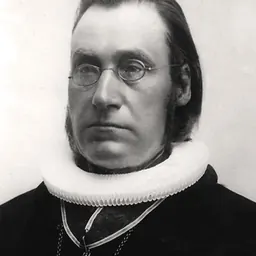
Lived 1851 – 1925 (aged 74). Josep de Miró i Argenter was a Spanish writer, historian, journalist and military personnel.
José Miró Argenter, also known as José de Miró Argenter, was a Cuban brigadier general and author of Catalonian origin who served during the Cuban War of Independence. He was a division General of the Cuban Liberation Army and a member of Antonio Maceo's General Staff. In 1899 he published his work Cuba: Chronicles of the War, which was a book on his participation in the Cuban War of Independence.
Biography Family José Miró Argenter was the son of José Miró Armengol (1816– 1888), secretary and censor of the Sitges town hall, and Joaquina Argenter Llopis. He had three siblings: the painter Joaquim de Miró who was born on 3 February 1849, Rosa, mother of the painter Joaquim Sunyer, and Remei Miró Argenter.
Life in Spain Argenter studied high school in Barcelona before entering the Faculty of Medicine of the Catalan capital in 1869. He left his medical studies to join the Carlist Army, where he reached the rank of lieutenant and the position of company commander.
Life in Cuba In 1874 he embarked for Cuba to settle in Havana and work at the firm Barahona y Domenech which had old acquaintances of his father. Two years later, for health reasons, he accepted the invitation of the Catasús brothers, and worked as a foreman at the "Río Grande" mill, near Santiago de Cuba, where he met Major General Antonio Maceo at lunch. Argenter gave Maceo a farewell on 8 May 1878, just before Maceo left for Jamaica. In Holguín he married Luz Cardona y Cardona in 1891 and Miró was fully involved in the ongoing Cuban independence revolution. In 1893 he founded El Liberal. In 1894 his first daughter, Remedios Miró Cardona, was born. He then collaborated with the Gómez-Maceo Plan in Oriente.
Cuban War of Independence During the Cuban War of Independence, he enlisted on the first day, at the head of a contingent of patriots in Holguín with the rank of colonel as he joined the orders of his friend Maceo. On 14 April 1895, he fought in Ciego La Rioja. After Maceo's arrival on the Island, he ratified his rank and incorporated him into his General Staff. He stood out in Peralejo, and was proposed to the rank of Brigadier General before the Governing Council recognized the degree on 29 September. Days later he was promoted to the position of Chief of Staff of the invading column, with which he left Baraguá.
He was by Maceo's side in the Invasion and throughout the Western Campaign . He stood out in the battles of Iguará, La Lechuza, Cacarajícara, Rubí and Bejerano. He escorted Maceo to the crossing of the trail from Mariel to Majana, falling wounded three days later in San Pedro, where Maceo fell. Due to his service at the Battle of Mal Tiempo, he was proposed to Major General, but it was not until the end of the war that he was awarded the rank.
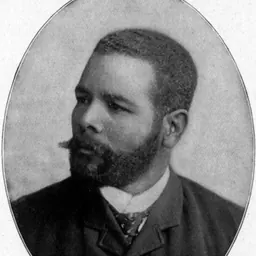
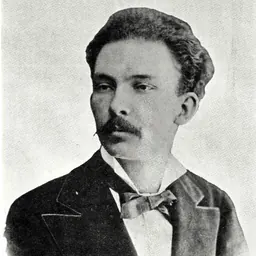
Saddened by Maceo's death at the Battle of San Pedro, he went to Camagüey to continue to Manzanillo, Cuba, where he showed little activity during the rest of the war. Whether Miró got to know José Martí personally is disputed; In a letter dated 7 May 1895, addressed to General José Miró Argenter, Martí says goodbye stating:
In the General Military Archive of Segovia, there are several open cases against José Miró Argenter for various reasons of assault, arson and murder. The causes are numbered as: Cause 10808 (fire); cause 1507 for triple murder; cause 416 for threats to the railway company; cause 333 for rebellion however all of these cases were dismissed
Later years He was appointed Inspector of the Department of the East as well as Secretary of the Liquidating Board of the Cuban Liberation Army. During the first years of the Cuban Republic, he was in charge of the archives of the Liberation Army. He restarted his journalistic activities. In 1900 his second son was born in San Luis, Santiago de Cuba, who, in homage to Maceo, would be named Antonio Maceo Miró Cardona. On 22 August 1902, his third child, José Miró Cardona was born and who would be Cuba's provisional prime minister at the beginning of 1959. In 1920 his wife Luz Cardona died and José died at Havana on 2 May 1925 .
From 1899 to 1909, he wrote Crónicas de la Guerra, which was an exhaustive compendium of military actions and his own personal experiences, where he offers a detailed description of the events related to the death of Antonio Maceo, among other battles and actions of war. He also wrote in 1897 "Death of General Maceo" and "Notes on the life of Antonio Maceo Grajales" and the drama: "El Pacífico" in 1914 edited by Imprenta y papelería de Rambla, Bouza y Cª de La Habana with the same publishing house that in 1910 he published his novel "Salvador Roca".
Don’t just read it —
keep it.
Full-length biographies made to live with: read them, listen on the way to work, watch them tonight.
- E-book
- Audio
- Video
Instant download · yours to keep · every purchase keeps this site free
Important facts
People in Josep de Miró i Argenter's life
Named in this biography and alive at the same time

Related people
Same field, nearest in time



Contemporaries
People whose lives overlapped Josep de Miró i Argenter's





Frequently asked questions
Who was Josep de Miró i Argenter?
Spanish writer, historian and journalist
When was Josep de Miró i Argenter born?
Josep de Miró i Argenter was born on 4 March 1851 in Sitges.
When did Josep de Miró i Argenter die?
Josep de Miró i Argenter died on 2 May 1925 in Havana.
What was Josep de Miró i Argenter's occupation?
Josep de Miró i Argenter was a writer, historian, journalist and military personnel.
What nationality was Josep de Miró i Argenter?
Josep de Miró i Argenter was Spanish.
Sources & further reading
· Wikipedia: Josep de Miró i Argenter
Cite this page
APA: Biography.guide. (2026). Josep de Miró i Argenter. https://biography.guide/josep-de-miro-i-argenter/
MLA: "Josep de Miró i Argenter." Biography.guide, https://biography.guide/josep-de-miro-i-argenter/.
Chicago: "Josep de Miró i Argenter." Biography.guide. https://biography.guide/josep-de-miro-i-argenter/.
Data last updated: 2026-09-20 · Spot an error? Report a correction.
Page generated 2026-09-27 05:00 UTC