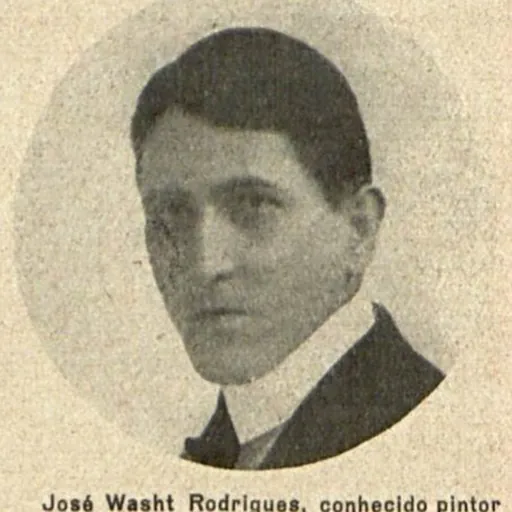
About José Wasth Rodrigues
Lived 1891 – 1957 (aged 66). José Wasth Rodrigues was a Brazilian historian and painter.
José Wasth Rodrigues (19 March 1891 – 21 April 1957) was a Brazilian painter, drafter, illustrator, ceramist, teacher and historian. He was the uncle of the also illustrator Ivan Wasth Rodrigues.
Wasth Rodrigues was an important figure for the history of the city of São Paulo, being responsible for the development of several Brazilian municipalities' coats of arms, such as that of the City of São Paulo, of Mogi das Cruzes and of São Sebastião. Later, he would also design the coat of arms of the State of São Paulo. He also stands out for his work as a historian, leaving several publications focused on architectural documentation of civil and religious construction and works on antique furniture, clothing, insignias and military weapons.
José Wasth Rodrigues was a pioneer in showing concern about the demolitions and decharacterization suffered by examples of Brazil's cultural heritage, suggesting, in an inquiry for the newspaper "O Estado de São Paulo" about Colonial Architecture, that "the foundation of a Society or Commission of Architects with full powers with the governments and the Curias to embargo demolitions and prevent restorations from being made with the sacrifice of the building's 'characteristic physiognomy'".
Biography "Largo e Mosteiro de São Bento" (São Bento Square and Monastery). José Wasth Rodrigues, born in São Paulo, studied for two years with Oscar Pereira da Silva. Not only a painter, he was also a historian and an expert in furniture, armory, and heraldry. He stood out, still young, in the production of plastic arts. In 1910, after his studies from 1908 to 1909, he received a trip to Europe from the government of the State of São Paulo.
In Paris, France, he attended the Académie Julian and the École des Beaux-Arts, having as masters Jean Paul Laurens, Nandi and Lucien Simon. In 1914, he exhibited at the Paris Salon, and before the outbreak of World War I, he returned to Brazil. Two years later (1916) he founded a drawing and painting course in São Paulo. In his first phase (between 1916 and 1925), Wasth Rodrigues counted on the collaboration of the most important part of Brazilian intellectuality, for the defense and diffusion of nationalism, conquering a privileged space by the editorial quality and by the willingness to break with the superficiality that characterized the magazines born under the sign of the turn of the century. Born of articulations promoted by the owners of "O Estado de S. Paulo", the "Revista do Brasil", although of national repercussion, bore the mark of the São Paulo elites in its board of directors, formed by Júlio de Mesquita, Alfredo Pujol, and Luís Pereira Barreto; and, especially, in the list of 66 members of the anonymous society (presided over by Ricardo Severo) that made the project financially viable. "Soldado da Legião Paulista na Cisplatina e Gaúcho" (Soldier of the Paulista Legion in the Cisplatina and Gaucho). The question about the "national" was the order of the day, manifesting itself in all sectors of the country's intellectual life, and particularly in São Paulo. The European war had mortally wounded the spirit of the Belle Époque and, although reactions were not limited to the nativist search for Brazilian roots, for some time "modernity" and "nationalism" were almost synonymous. The Paulista strand of this movement manifested itself in interest in historical and folkloric themes from the past: bandeirantes, caipiras, genealogy, travelers' accounts.
Around 1918, Wasth Rodrigues began to dedicate himself to the study of colonial history, and became one of the pioneers in recording the artistic activities of the period. José Wasth Rodrigues was a pioneer in showing concern about the demolitions and decharacterization suffered by examples of the Brazilian cultural heritage. He suggested, then, in an inquiry for the newspaper "O Estado de S. Paulo" on Colonial Architecture, that "the foundation of a Society or Commission of Architects with full powers with the governments and the Curias to embargo demolitions and prevent restorations from being made with the sacrifice of the building's 'characteristic physiognomy'." Wasth Rodrigues made numerous trips throughout Brazil since 1918, gathering documentation that would become the book "Documentário Arquitetônico" (Architectural Documentary), originally published in fascicles in the 1940s. Severo financed numerous excursions for Wasth Rodrigues, with the aim of researching the vestiges of colonial art and architecture. He commissioned the registration, in pen-and-ink drawings, photographs and watercolors, of constructive and ornamental details that could also constitute themselves as didactic material, intended to standardize the manifestations of architects who intended to follow his call in favor of what he called "traditional art."
Such an approach to traditional Brazilian architecture may have encouraged the removal of constructive or ornamental elements from old buildings, contributing to their decharacterization and stimulating the predatory trade in antiques. This is what can be understood from the terms used by congressman José Wanderley de Araújo Pinho in his federal bill presented in 1930 and concerning "all immovable or movable things to which the state should extend its protection, due to its artistic value, its historical significance or its peculiar and remarkable beauty." In this legal piece, Pinho explicitly refers to the protection of constructive elements such as:
Influences
The documental bases that subsidized the artistic production of Wasth Rodrigues are diverse: the oldest photographic views of the city of São Paulo, from which we highlight the ones by Militão Augusto de Azevedo, and the drawings and engravings of the artists who integrated the scientific expeditions traveling through Brazil during the first half of the 19th century, as well as his trips to study the colonial architecture in the interior of the country, the researches on the uniforms of the Brazilian army, the flags, heraldry and about the Brazilian and Portuguese colonial furniture. José Wasth Rodrigues' interest in Brazilian colonial architecture was motivated after his return from Paris. Influenced by Ricardo Severo, Wasth Rodrigues dedicated himself to the survey of information in the interior and other states, about buildings still remaining of our colonial architecture, an element valued by the Brazilian Neocolonial style of which Ricardo Severo was one of the idealizers.
It was under the care and guidance of Ricardo Severo and José Marianno Filho that Wasth Rodrigues' first consistent work was promoted, which consisted of an in loco survey of architecture. Thus, he increases substantively his knowledge on the subject, and had the production of the important "Documentário Arquitetônico" (Architectural Documentary), sponsored by Severo and carried out in the late 10s, published in the 1940s. Joaquim José da Silva Xavier, "Tiradentes", dressed as an ensign. Work by Wasth Rodrigues. 1940 Severo's commissioning of Wasth Rodrigues lacks documentary proof, even though it appears in several bibliographical references.
Considering that "to build traditional art, traditional elements are needed" Severo used a method of architectural analysis that is based on the decomposition of the building into its constructive and decorative elements. Well aligned with the concept of architecture that was then predominant – in which the spatial conception of the work as a whole is practically independent of the type of ornamentation applied to the parietal surfaces -, Severo presented in his conference a kind of pre-inventory of traditional constructive elements of Brazilian architecture: roofs, eaves, windows, doors, kneecaps, etc.
Publications He published several studies – "Documentário Arquitetônico Relativo à Antiga Construção Civil no Brasil" (Architectural Documentary on the Ancient Civil Construction in Brazil), 1945; "Mobiliário do Brasil Antigo e Evolução de Cadeiras Luso-Brasilieras" (Early Brazilian Furniture and the Evolution of Luso-Brazilian Chairs), 1948 – and executed several heraldic works for the government. He also acted as scenographer and costume designer, signing plays and sets for Alfredo Mesquita's shows, such as "Noite de São Paulo" (São Paulo Night), 1936, and "Casa Assombrada" (Haunted House), 1938.
In "São Paulo Antigo", the gaze of José Wasth Rodrigues highlights the elements of colonial architecture, still easily identified in the buildings existing in the city of São Paulo in the 19th century. His gaze is again not limited to religious buildings, which were the vast majority of examples of this architecture at the time, but elements such as muxarabiê, crystal pinecones, railings and iron supports were also addressed by Wasth. Such items were highly valued in the drawings, and were in the foreground of the watercolors. The architectural detailing was not the only concern of the artist, who also started to introduce urban items in his works, and detailed the clothes that were seen in the streets – such as muleteers, slaves, carters, policemen, to exemplify and characterize the daily life and rhythm of the time. The period was notable for its relentless pursuit of creating a specific image of the city that was devoid of social contradictions.
Wasth Rodrigues had his first authorial exhibition in São Paulo, in 1902, in a collective show that gathered 406 works. In 1922, during the celebrations for the Centennial of Brazil's Independence, he was invited to make, together with Benedicto Calixto de Jesus, Henrique Manzo, Jonas de Barros, Nicola Petrilli and Berthe Adams Worms, seven paintings for the Paulista Museum, which was under the direction of Affonso d'Escragnolle Taunay. He was then invited by Victor Dubugras to make decorative tiles for the project to enhance the oldest obelisk in the city – the Piques Obelisk, located on Memória Square, and also the Monuments in honor of the connection between the capital and the city of Santos – the Caminho do Mar, formed by the Pouso de Paranapiacaba, the Cruzeiro Quinhentista, Lorena Viewpoint and Maioridade Ranch. The State of São Paulo was a great space of study and accomplishment of works for José Wasth Rodrigues.
Don’t just read it —
keep it.
Full-length biographies made to live with: read them, listen on the way to work, watch them tonight.
- E-book
- Audio
- Video
Instant download · yours to keep · every purchase keeps this site free
Important facts
People in José Wasth Rodrigues's life
Named in this biography and alive at the same time

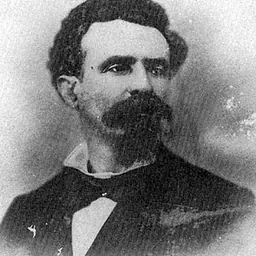


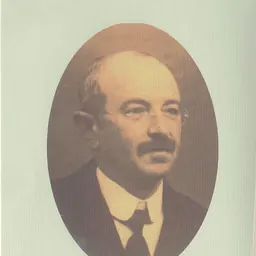
Related people
Same field, nearest in time
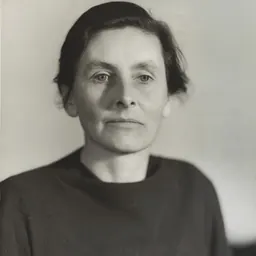

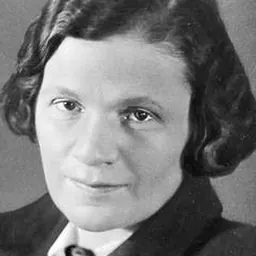
Contemporaries
People whose lives overlapped José Wasth Rodrigues's

Frequently asked questions
Who was José Wasth Rodrigues?
Brazilian historian (1891–1957)
When was José Wasth Rodrigues born?
José Wasth Rodrigues was born on 19 March 1891 in São Paulo.
When did José Wasth Rodrigues die?
José Wasth Rodrigues died on 21 April 1957 in Rio de Janeiro.
What was José Wasth Rodrigues's occupation?
José Wasth Rodrigues was a historian and painter.
What nationality was José Wasth Rodrigues?
José Wasth Rodrigues was Brazilian.
Sources & further reading
· Wikipedia: José Wasth Rodrigues
· DBpedia: José Wasth Rodrigues
Cite this page
APA: Biography.guide. (2026). José Wasth Rodrigues. https://biography.guide/jose-wasth-rodrigues/
MLA: "José Wasth Rodrigues." Biography.guide, https://biography.guide/jose-wasth-rodrigues/.
Chicago: "José Wasth Rodrigues." Biography.guide. https://biography.guide/jose-wasth-rodrigues/.
Data last updated: 2026-09-21 · Spot an error? Report a correction.
Portrait: Wikimedia Commons · author & licence
Page generated 2026-09-27 04:59 UTC