
José Santos Alegría
Puerto Rican poet, writer, lawyer, and independence advocate
About José Santos Alegría
Lived 1886 – 1965 (aged 79). José Santos Alegría was an American journalist, politician, literary critic, poet, judge and jurist.
José S. Alegría (July 17, 1886 – July 29, 1965) was a poet. Alegría was a founding member of the Puerto Rican Nationalist Party and president of the political organization from 1928 to 1930. He was interested in the visual arts and learned some painting techniques from Puerto Rican artist Francisco Oller and from Fernando Díaz Mckenna. He is the father of Ricardo Alegría (1921 – 2011) a scholar, cultural anthropologist and archeologist known as the "Father of Modern Puerto Rican Archaeology".
During the 1930s, Alegría presided over the Casino of Puerto Rico. From 1938 to 1949, he was the director of the magazine "Puerto Rico Illustrado", there he published some of his poems under the name of Raimundo Lucio. His father was a former soldier from Guipuzcoa that had settled and become a merchant, serving as mayor of Dorado twice during the Spanish regime. . Alegría became interested in politics at a young age and when he was 16 years old, he founded the Federal Youth Committee of the Federal Party in the town of Barceloneta. There he established a small source of income source by selling Puerto Rican cigars.
Political career When he returned to Puerto Rico, he joined the Union Party of Puerto Rico. The Union Party was founded in February 1904 by Luis Muñoz Rivera, Rosendo Matienzo Cintrón, Antonio R. Barceló, José de Diego and others after the disbanding of the Federal Party. The party supported greater self-government for the island, though the party was divided between those in favor of independence and those favoring statehood. The party was highly successful electorally through the 1930s. Alegría participated in organizing the party's committee at Manatí. He would frequently hold reunions with other professionals at places such La Mallorquina, with stops at the Banco Territorial or Colonial American Bank marking his afternoons.
After Luis Muñoz Rivera died in 1917 and his successor Antonio Rafael Barceló distanced the Union Party from the ideal of Puerto Rican independence, Alegría became increasingly frustrated by this. By 1930, disagreements between Coll y Cuchi and Albizu Campos as to how the party should be run, led the former and his followers to abandon the party and return to the Union Party. Alegría was named party president in 1928 and held that position until 1930. On May 11, 1930, Dr. Pedro Albizu Campos was elected president of the Puerto Rican Nationalist Party. The new president proposed to the young lawyer to travel throughout Latin American seeking support for independence.
In 1932, Alegría joined the Liberal Party of Puerto Rico, a pro-independence political party. His change in affiliation was the product of his interest in socioeconomic reforms, which he considered essential. He also opposed the demolition of a chapel known as Capilla del Cristo, which he defended along several of San Juan residents.
Arts His stay as a judge at Manatí awoke in him an interest in poetry, joining a group of bards in the area. Alegría would later publish his work in the book Rosas y flechas. Alegría also became one of the first collectors of Puerto Rican art, purchasing the work of Oller and José Campeche. In his role as president, he actively organized several festivals and allowed the use of his house towards this end. Alegría also made arrangements to expand the inclusion of the arts as part of the institution's curriculum, even writing painting the piece La Trulla and writing the zarzuela La Cenicienta for the Club Artístico del Casino de Puerto Rico. As the locale served as the epicenter of activity for a number of influential families, Alegría created the concept of the "Social Friday" at the casino, which has persisted in the Puerto Rican popular culture to this day. He also created an internal magazine, named Casino.
Among his written works are the following: "Crónicas frívolas" (Frivolous Chronics) (1938) "Retablos de la aldea" (Altarpieces of the village) (1949) "El alma de la aldea" (The soul of a village) (1956) "Cartas a Florinda" (Letters to Florinda) (1958) "Rosas y flechas" (Roses and arrows) (1958)
He also authored poems Sirenas de Cristal, Pasión de Ensueño and Romería de Recuerdos.
Alegría focused his work around Puerto Rican scenes and traditions. In 1940, Celeste and Elisa purchased a house at Calle del Parque in Santurce, Puerto Rico, after the latter sold her part to the couple, they repaired it and eventually settled in. In 1947, they sold it to their children, who preserved the building. He would also hold family reunions at the Del Parque house on Sundays.
When Ricardo graduated from Central High, but lacked four mandatory English classes and had a lackluster average, the university did not accept him. Instead, Alegría sent his son to the Instituto Politécnico in the municipality of San Germán, Puerto Rico. The youngster was frustrated with the environment and was expelled after only one semester, due to persistent pranks. Alegría then incorporated his son to the staff of Puerto Rico Ilustrado for six months.
When Luis Muñoz Marín swore in as governor of Puerto Rico, he elaborated a piece discussing how the three generations of that family had been ideologically different from each other. In 1949, Alegría left his work at Puerto Rico Ilustrado after a dispute with president Ángel Ramos over a segment that he considered was disrespectful towards Inés Mendoza. That same year, his book Retablos de la aldea received an award from the Institute of Literature. After his death, Ricardo preserved a painting of his father done by Carlos Marichal at his library.
Personal life In 1913, Alegría attended a party held at La Fortaleza, where he first met the family of Canóvanas mayor Luis Hernáiz Veronne, taking particular interest in his half-sister, Celeste Gallardo. Alegría was satisfied with the building, in particular due to its oceanside site.
The couple had four children, José Esteban (1916), María Antonieta (1917), Félix Luis (1918) and Ricardo (1921), which were delivered in the house. An avid reader, he built a private library that reflected a number of his interests like Puerto Rican literature, history, journalism, law and the arts. His copy of El Tesoro de la Juventud would fuel Ricardo's future passion for archeology. At San Juan, Aegría and his wife would visit the Luna theater with frequency, taking the young Ricardo with them.
Alegría continued being an independentist throughout his life, keeping a painting of Ramón Emeterio Betances as the centerpiece of his library. His son, Ricardo, inherited this belief and since his youth would express it by boycotting the pledge of allegiance at his school. When Ricardo became interested in biology, Alegría purchased a used microscope to foster this interest.
Don’t just read it —
keep it.
Full-length biographies made to live with: read them, listen on the way to work, watch them tonight.
- E-book
- Audio
- Video
Instant download · yours to keep · every purchase keeps this site free
Important facts
Family & relationships
People in José Santos Alegría's life
Named in this biography and alive at the same time

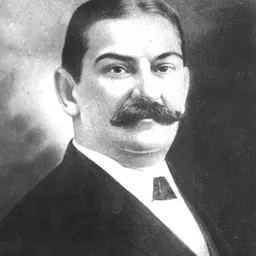




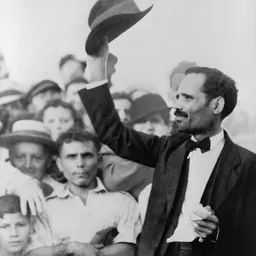
Related people
Same field, nearest in time


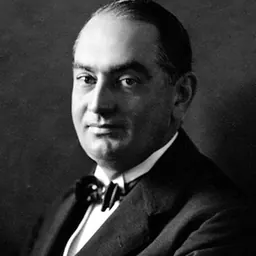
Contemporaries
People whose lives overlapped José Santos Alegría's




Frequently asked questions
Who was José Santos Alegría?
Puerto Rican poet, writer, lawyer, and independence advocate (1886–1965)
When was José Santos Alegría born?
José Santos Alegría was born on 17 July 1886 in Dorado.
When did José Santos Alegría die?
José Santos Alegría died on 29 July 1965 in San Juan.
What was José Santos Alegría's occupation?
José Santos Alegría was a journalist, politician, literary critic, poet, judge and jurist.
What nationality was José Santos Alegría?
José Santos Alegría was American.
Sources & further reading
· Wikipedia: José Santos Alegría
Cite this page
APA: Biography.guide. (2026). José Santos Alegría. https://biography.guide/jose-santos-alegria/
MLA: "José Santos Alegría." Biography.guide, https://biography.guide/jose-santos-alegria/.
Chicago: "José Santos Alegría." Biography.guide. https://biography.guide/jose-santos-alegria/.
Data last updated: 2026-09-20 · Spot an error? Report a correction.
Page generated 2026-09-27 05:30 UTC