
About José Ruben
Lived 1888 – 1969 (aged 80). José Ruben was an actor.
José Ruben (December 8, 1884 – April 28, 1969) was a French-born actor whose career from 1910 on was in the United States. He first rose to prominence in 1916-1917 with the Washington Square Players, and for the next ten years was a highly regarded lead player. He acted in over twenty silent films and was a fixture on Broadway stages, as both performer and director, for over forty years. He also taught drama at Barnard College and was a stage director for the New York City Opera.
Early life Ruben was born in Paris, France, He had studied English in secondary school, but found it difficult to understand native speakers, so he spent six months living in London in order to develop an ear for the language. the tour performed a different production from its repertoire of twenty plays each night. Lost among a troupe of forty-six, with the critics attention focused almost exclusively on Bernhardt, it is not possible to detail Ruben's contribution to the tour, which finished up with Camille in New York City on June 21, 1911. While Bernhardt and her troupe sailed for France the following day, Ruben stayed behind in America. When teaching at Barnard College in 1944, a school reporter asked him about Sarah Bernhardt, to which he "reluctantly" replied: "She was a great actress in that time, but I dread to think of how audiences would react to her today".
The Garden of Allah Through Bernhardt's American business manager Ruben met producer George C. Tyler, who in turn introduced him to Robert Hichens and Mary Anderson. Ruben was one of only two supporting actors singled out for praise by the Brooklyn Daily Eagle reviewer, and also earned commendation from the New York World critic. Described as a spectacle with a story, the production was the largest ever mounted on an American stage to that point. The cast included numerous authentic inhabitants of Tunisia and Algeria, as well as livestock. When the play closed on May 18, 1912, it had been viewed by 375,000 people, and established Ruben as able to handle English-language roles.
The Liebler Company cast Ruben for its national tour of The Garden of Allah starting in Chicago at the Auditorium on August 31, 1912. The tour encompassed actors, props, sets, and livestock (camels, goats, horses, and mules) used in the production. While the animals were housed in a nearby stable, those cast members actually from North Africa were accommodated in a warehouse, since no Chicago hotel would accept them as guests. While in Boston, Ruben filed a Petition for Naturalization, with the help of the tour's manager and two journalists as witnesses.
Ruben and Madame Yorska Ruben joined the company of the French Drama Society in Manhattan in December 1913. This was headed by Madame Yorska, like Ruben a former pupil of Bernhardt. A colossal poseur, her real name was Elsie Stern; she was from New Orleans, Louisiana, The tour finished up the season in Ottawa, Canada, during May 1914.
During the early fall of 1914, Madame Yorska's troupe toured on a vaudeville circuit in a one-act play called Days of War, with Ruben as the male lead. Ruben returned with the troupe to New York City and for the winter of 1914-1915 played French-language works in Manhattan and a few nearby cities. During the first half of 1915 Ruben continued with Madame Yorska's troupe, again playing Days of War in vaudeville theatres, and performing benefits for French war relief.
Biograph film work Ruben appears to have detached himself from Madame Yorska's troupe in the summer of 1915. He returned to New York where he made a short film, A Daughter of Earth. This was the first of many pictures he would make at the Biograph Company during 1915-1916, but not his first film. He had done an independently produced short called Lord Chumley in 1913-1914, for which his role is unknown and verification is lacking.
With his fourth Biograph short, Ashes of Inspiration, Ruben became the central figure in the storyline, an artist torn between his wife and his muse. He is again the central figure in his fifth short for Biograph, The Rehearsal, this time as a playwright with a treacherous fiancé and a new helpmate. His first longer work was a Biograph special three-reeler, produced in association with Klaw and Erlanger, titled His Hand and Seal, from a story by Carolyn Wells. By the time Biograph stopped making movies in late spring 1916, Ruben had appeared as a lead in twenty-three films.
Washington Square Players Ruben had returned to the stage briefly in May 1916, but otherwise had no known performing work for several months after the steady job with Biograph ended. It was perhaps a measure of desperation that saw him join the Washington Square Players (WSP), a semi-amateur troupe that drew lots of critical attention but which couldn't afford to match professional Broadway salaries. Ruben appeared with the WSP on the first bill of their third season. The WSP specialized in one-act plays, usually presenting four on each bill. Ruben debuted in Lover's Luck, immediately drawing praise from the critics. His professional training and experience stood out among the largely untrained players, most of whom had careers other than the stage. Alexander Woollcott went so far as to say that Ruben "is by far the best actor the group has known".
The WSP responded to the favorable notices by casting Ruben in three playlets for its second bill starting November 13, 1916. He played an unwed husband in Another Way Out, an original satire of Greenwich Village social mores by Lawrence Langner; the tragic lead in Bushido, a translated excerpt from an 18th Century Japanese play by Takeda Izumo; and a self-absorbed character in Altruism, a satirical farce by Karl Ettlinger. Of Ruben in Bushido, Heywood Broun wrote "José Ruben gives an extraordinarily impressive performance as the father who sacrifices his son. It is the best bit of acting in the evening...". This program of plays, strongly supported by Ruben's acting, would become the most successful of all WSP bills, playing over 100 performances thru February 1917.
Midway thru this four-month run Ruben played the lead in a special matinee for WSP subscribers only, and was also the subject of a profile in The New York Times. Illness limited Ruben's participation in the WSP's fourth bill of the season, but he recovered in time to star with Mary Shaw in Ghosts, which ended the season. Meant for a one week engagement, it was held over for three weeks due to popular demand. Alexander Woollcott and Heywood Broun again wrote highly of Ruben's acting as Oswald Alving.
Madame Sand Ruben left the WSP after a single season. He signed with director Arthur Hopkins in June 1917 for a production to be mounted that fall. This was Madame Sand, a comedy about George Sand and her lovers by Philip Moeller starring Mrs. Fiske. The production previewed in Baltimore during late October, and premiered at Broadway's Criterion Theatre on November 19, 1917. Aside from Mrs. Fiske, who wore pants and smoked cigars while in character, Ruben was the only actor singled out for praise by critics. The reviewer for Brooklyn Life said Ruben's acting "is not eclipsed even by that of so great an actress as Mrs. Fiske, and he far surpasses any member of her supporting company". Burns Mantle recognized that the play itself would appeal only to "a limited and intellectual public"; it closed at the Knickerbocker Theatre on January 12, 1918. Madame Sand then went on tour for two months, with Ruben continuing in his role.
Broadway stage: 1918-1920 Laurette Taylor chose Ruben for a program of excerpts from three Shakespeare plays, in which he played Romeo to her Juliet in the balcony scene. It played for a single matinee at the Criterion Theatre on April 5, 1918, to a small audience of fellow actors. Her performance was panned by reviewers, and even Ruben drew a very rare poor review, He was then cast in I.O.U., which co-starred Mary Nash; it opened at the Savoy Theatre in Asbury Park, New Jersey on August 5, 1918. Ruben's character changed from the Japanese "Baron Tori" in the tryouts but no rewriting could save this play. It closed after a brief run, upon which Ruben married his co-star. Newspapers made much of their romance, with a full-page story and photos, even suggesting the play folded early because they couldn't convincingly play antagonists.
Almost immediately the couple's work pulled them apart; Nash went into another New York play while Ruben joined the touring company of A Marriage of Convenience. The tour finished up in January 1919; there is a seven-month gap before Ruben's next known performing work. During the latter part of this time Actors' Equity Association (AEA) launched an actor's strike. Ruben was elected to the board of the Actors' Fidelity League, a new organization of actors opposed to the strike tactics of AEA. However, with the backing of Samuel Gompers and the American Federation of Labor, the AEA won out.
The Dancer by Edward Locke opened October 1, 1919, at the Harris Theatre. A story about a Russian ballerina, it had a lead actress who could neither dance nor speak with a convincing accent. Ruben next appeared as a morphine-addicted pianist in Sacred and Profane Love by Arnold Bennett, which opened in February 1920. This production had a good run, and towards the end of it Ruben gave a long interview to the New York Tribune in which he discussed acting.
Mary Nash was then appearing on the English stage in The Man Who Came Back. giving his destination as England and his reason for travelling as "To visit my wife Mary Nash now playing in London". After a few weeks of tryouts, this comedy opened on Broadway in mid-August, with Ruben as the star. Critics were not impressed, one opining that Ruben "did well but in an unenthusiastic way". Alexander Woollcott blamed the writing, saying the play was amusing but not believable. It closed on September 4, 1920, but Ruben was soon at work staging Thy Name Is Woman, in which both he and Mary Nash would star. Ruben played a deformed, malignant smuggler in the Spanish Pyrenees, who stabs his wife Guerita (Mary Nash) when she betrays him with a young soldier (Curtis Cooksey). The play was successful, running for over fifteen weeks at the Playhouse Theatre then moving to other theatres for another three weeks before going on tour thru May 1921. It later was adapted for a 1924 silent film, Thy Name Is Woman.
Stage and screen: 1921-1924 Ruben next starred with Clare Eames in Swords, a costume drama by Sidney Howard, which opened on Broadway on September 1, 1921. It closed on October 1, done in by warm weather according to one reviewer.
During late 1921 Ruben travelled to Italy to shoot a film called The Man from Home, which was released by April 1922. He had begun another film, When Knighthood Was in Flower, earlier in the year but suffered a serious eye injury on the set that forced him to stop all performing work. By October 1922 he had recovered well enough to make another film titled Black Fury, which was released as Dark Secrets in January 1923. Reviewer Paul Gallico called it "trashy" and said Ruben was "the only one in the picture worth watching".
Ruben resumed stage acting with Gringo, an unusual first play by Sophie Treadwell. Alexander Woollcott said Ruben was "expert and vivid and engaging", The playwright herself wrote an article praising Ruben's performance, but the production closed January 13, 1923.
The Exile was a romantic comedy written by Sidney Toler, for which Ruben both directed and starred. It opened for a week-long preview on March 5, 1923, at the Montauk Theatre in Brooklyn, with opera singer Eleanor Painter as co-star. Critic Arthur Pollock thought Toler's writing too long on exposition and short of dramatic action. It moved over to Broadway on April 9, 1923, where the reviewer Burns Mantle considered it to have only one exciting scene; audiences agreed and it closed on May 5, 1923.
There followed a six-month hiatus in Ruben's performing career, broken in late 1923 by a one-act drama on the B. F. Keith vaudeville circuit. During February 1924, he produced and staged The Woman Hunter for regional theater, but did not appear in it. He did appear in a series of French-language matinees given at the Gaiety Theatre by Mme. Simone's company during March 1924.
His next performance was on Broadway for a revival of the 1904 melodrama, Leah Kleschna. Upon opening April 21, 1924, the Brooklyn Daily Eagle said "Not all the stars in this resuscitation of Leah Kleschna are entirely familiar with their lines". Despite an all-star cast, it closed May 17, 1924, then went on tour to Boston and Chicago thru June. October 1, 1924, saw Ruben once more on Broadway, in a dramatic fantasy called Bewitched. After just two weeks it switched theaters, but closed for good on October 25 when its producer ran out of money. Ruben's last performing job for the year was also his final motion picture, Salome of the Tenements, for which he had a leading part.
Stage performances: 1925-1928 Ruben went through a ten-month hiatus of performing from December 1924 thru September 1925. He broke the dry spell in late September 1925, taking over the lead in the touring company for The Firebrand when Joseph Schildkraut fell ill. Ruben finished up the tour by November when he started rehearsals for the Theatre Guild production of Merchants of Glory. This opened at the Guild Theatre on December 14, 1925. A cynical satire on war profiteers and sham patriots by Marcel Pagnol and Paul Nivoix, its humor didn't translate well from the original French. That spring Ruben reprised his portrayal of Oswald Alving in Ghosts, a production of the Actors' Theatre that co-starred Lucile Watson. No sooner had its run finished then he appeared with his wife and sister-in-law in The Two Orphans, a revival of an old melodrama.
In March 1927 Ruben played the lead in Closed Doors, a drama by Mercedes de Acosta. Meant to be a tryout for Broadway, it was shut down by the producer after just a few performances and deferred to later in the season. Suddenly unemployed, the two stars Ruben and Florence Eldridge took to vaudeville with a one-act playlet by Ruben called The Crest of the Wave.
Ruben appeared briefly in a successful gangster melodrama called Speakeasy in late summer 1927, but then had to return to Closed Doors, now renamed Jacob Slovak, when it resumed production in October 1927. Ruben's last major performance as a lead actor was for The Red Robe, a musical version of Under the Red Robe by Stanley J. Weyman, which opened on Broadway during late December 1928.
Directing: 1929-1943 This period of Ruben's career marked the transition away from acting to directing. From 1929 on his principal occupation would be stage directing, though he did still take on occasional supporting roles. He directed Robert Wilder's Sweet Chariot in 1930.
This period also saw the production of Alice Takat, adapted by Ruben from a Hungarian story by Dezső Szomory, which opened on Broadway on February 10, 1936. Though Ruben had written one-act playlets for vaudeville before, this was his only attempt to handle a larger work. Produced by Ed Wynn, it starred Mady Christians and Russell Hardie. and Ruben settled back to directing.
Later activities Barnard College During the fall of 1943 the "Wigs and Cues" student drama club at Barnard College mounted a production of Christopher Marlowe's Edward II. Ruben was asked by English department head Dr. Minor Latham to direct the student-chosen production, conducting a course called "Dramatic Workshop". He was paired with instructor Marcia Freeman, Ruben and Freeman, along with Dr. Latham, auditioned students Ruben left the position in February 1945, to begin preparations for staging productions for the New York City Center Opera.
Ruben returned to lecturing at Barnard for the winter session of 1945-46. He also cast and directed the drama club's production of The Duchess of Malfi in December 1945.
Opera staging During 1944, Ruben branched out to staging operas and related musical performances, starting with the Belmont Operetta Company at New York City Center. He did the stage direction for The New Moon, then staged La bohème, La traviata, and Manon Lescaut for the New York City Center Opera's fall season, and Der fliegende Holländer and Faust for its 1945 spring season. Ruben went to the West Coast in spring 1946 to stage The Vagabond King for the Los Angeles Civic Light Opera, and the San Francisco Light Opera Association.
Ruben shared stage direction duties for the Chicago Opera's fall 1946 season. He handled the stage direction for a Broadway musical, Toplitzky of Notre Dame during the late fall of 1946. With spring 1947, Ruben returned to the West Coast to stage The Three Musketeers for both the Los Angeles Civic Light Opera, and the San Francisco Light Opera Association. Ruben returned to San Francisco in 1950 to stage Rose-Marie.
For the New York City Center Opera's 1951 spring season Ruben devised staging for a new work in its repertoire, Manon. For the fall season he created staging for Rigoletto.
Last performance Ruben's last performance came in 1956 with the broad comedy The Great Sebastians, which starred Lynn Fontanne and Alfred Lunt. The play opened on January 4, 1956, at the ANTA Theatre, The New York Times, whose editors had better memories, gave him a two-column article covering his life and career.
Ruben married actress Mary Nash on October 19, 1918, at the Church of the Blessed Sacrament. Ruben directed and performed with Nash in Thy Name Is Woman during 1920-21. The play was set in Spain; Nash told an interviewer that her husband had travelled in Spain and Italy and knew both languages. A brief article from March 1923 mentioned that the couple lived together with Nash's sister Florence Nash, and that all three supported each others' acting careers. The couple performed together in a 1926 stage play, head of the Book Department of Bloomingdale's, and Ruben were married on September 29, 1949, in Manhattan, and remained so at his death in 1969. The Garden of Allah Batouch Touring Company The travelling spectacle toured from late August 1912 thru May 1913. The then Italian Ambassador to the US, Cusani Confalonieri, had translated this comedy by Giuseppe Giacosa into French. Days of War Count Dolga Vaudeville circuit One-act drama had Madame Yorska as a dancer pursued by Ruben whom she denounces as a spy. Garrick Theatre American debut of play by Jerzy Żuławski, starred Madame Yorska and Robert T. Haines, with Florence Short, Roy Hoyer, Ruth Sharpe. 1919 The Dancer Bejdan Borivenko Harris Theatre Produced by the Shuberts, this play by Edward Locke starred Isabelle Lowe, John Halliday, Effingham Pinto, and Ruben. The Checkerboard Feodor Masimoff Previews39th Street Theatre By Frederick and Fanny Hatton, staged by Clifford Brooke, starred Ruben with Donald McDonald, Miriam Sears, Dorothy Smoller, Kate Mayhew. Shubert Belasco Theater Three-act play by Lewis Slodan and James Tracey; produced and staged by Ruben, who did not appear in it. Starred Ruth Shepley, with Charlotte Walker, William Boyd, Saxon Kling. La Coutouriere de Luneville M. Rallon Gaiety Theatre One-act play by Alfred Savoir, given twice as a matinee. Starred Mme. Simone and Ruben. Le Passe Gaiety Theatre One-act play by Porto-Riche, given twice as a matinee. Starred Mme. Simone and Ruben, with José Delaqueriere, Henry Morrell, Emile Villamin. Leah Kleschna Schram Lyric Theatre Revival of melodrama by C. M. S. McLellan starred William Faversham, Arnold Daly, Helen Gahagan, Ruben, Arnold Korff, and Lowell Sherman. Old Warner's Son Two-reel Biograph short starred Gretchen Hartman, Alan Hale, Edward Cecil and G. Raymond Nye. Reapers of the Whirlwind Charles Howard Biograph tragic short, directed by J. Farrell Macdonald, has Charles H. Mailes, Gretchen Hartman, Violet Reid, and G. Raymond Nye. The Law of Love Stanley Brentwood Another Biograph short, this time with Madge Kirby as the forlorn heroine; with Charles H. Mailes, G. Raymond Nye. Ashes of Inspiration Adrian West Biograph short; Ruben is again an artist, his muse being Ilean Hume and his wife Claire McDowell. With Charles H. Mailes, G. Raymond Nye, The Rehearsal Cecil King Biograph short; with Madge Kirby, Vera Sisson, and Kate Bruce. His Wife's Story George Fenmore This was a Klaw and Erlanger production, perhaps in cooperation with Biograph. With Vera Sisson, G. Raymond Nye, and Charles H. Mailes. His Hand and Seal Ed Curwood A three-reel Biograph-Klaw and Erlanger production, with Vera Sisson, Claretta Clair, Charles H. Mailes. The Laurel of Tears Dick Stuart Another three-reel Biograph film directed by J. Farrell Macdonald. With Vera Sisson, Madge Kirby, G. Raymond Nye, and Charles H. Mailes. The Chief Inspector Biograph short, with Vera Sisson, Madge Kirby, G. Raymond Nye, and Charles H. Mailes. The Eyes of the Soul Joe Abbott Biograph short, with Claire McDowell. Love's Enduring Flames Biograph short, with Claire McDowell, Alan Hale, Vola Smith, William J. Butler. His Emergency Wife Mrs. George Haynes Ruben plays the imposter in this variation of Charley's Aunt. With Alan Hale, Vola Smith, and William J. Butler.
A Life Chase Three-reeler, with Louise Vale, Franklin Ritchie, Jack Drumier, Gus Pixley, and Herbert Barrington. The Iron Will Lieutenet Szilard Three-reel Biograph film, with Vera Sisson, G. Raymond Nye, Ivan Christy, Charles H. Mailes, Gretchen Hartman, Jack Mulhall. What Happened to Peggy Biograph short directed by Walter Coyle, with Claire McDowell and Vola Smith. The Indian Three-reel western, with Claire McDowell and Vola Smith. Poor Plutocrats Three-reel drama from story by Maurice Joakins, with Gretchen Hartman, Charles H. Mailes, Jack Mulhall, G. Raymond Nye, and Ivan Christy. A Grip of Gold Alias Jimmie Barton Jimmie Barton Biograph short, with Jack Mulhall, Gretchen Hartman, Jack Drumier. Paths that Crossed Three-reel drama, with Charles H. Mailes, Adelaide Woods, Claire McDowell, and Vola Smith The Larrimore Case Ruben and Charles H. Mailes got carried away during a fight scene and had to be separated by director J. Farrell Macdonald. Three reels, with Vera Sisson and Gretchen Hartman. Merry Mary Biograph short, with Vola Smith and Claire McDowell. 1921 The Lying Truth Extra While touring Los Angeles in Thy Name Is Woman, Ruben and Mary Nash were offered one-day parts as extras in this film by the director, Nash's friend Marion Fairfax. 1922 The Man from Home Ribière Based on a Booth Tarkington work, the exteriors were shot in Italy. 1923 Dark Secrets Dr. Mohammed Ali Filmed at Paramount Studio on Long Island during October 1922 with the working title of Black Fury. 1925 Salome of the Tenements Jakey Solomon This was filmed in November 1924 at the Famous Players–Lasky studio in Astoria, Queens.
Don’t just read it —
keep it.
Full-length biographies made to live with: read them, listen on the way to work, watch them tonight.
- E-book
- Audio
- Video
Instant download · yours to keep · every purchase keeps this site free
Important facts
People in José Ruben's life
Named in this biography and alive at the same time


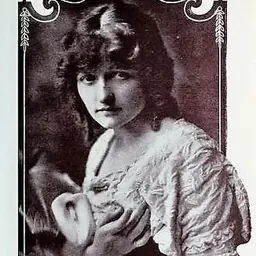

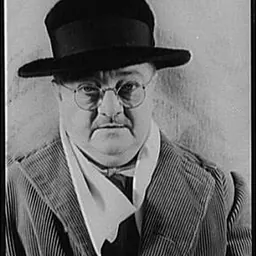



Related people
Same field, nearest in time
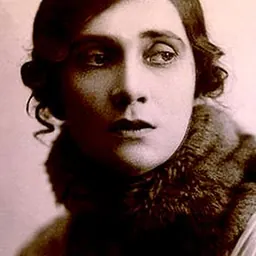
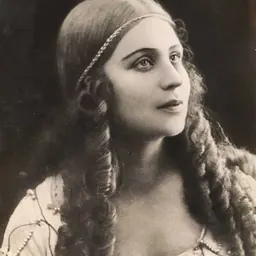

Contemporaries
People whose lives overlapped José Ruben's



Frequently asked questions
Who was José Ruben?
actor (1888-1969)
When was José Ruben born?
José Ruben was born on 8 December 1888 in Paris.
When did José Ruben die?
José Ruben died on 28 April 1969 in New York City.
What was José Ruben's occupation?
José Ruben was an actor.
Sources & further reading
Cite this page
APA: Biography.guide. (2026). José Ruben. https://biography.guide/jose-ruben/
MLA: "José Ruben." Biography.guide, https://biography.guide/jose-ruben/.
Chicago: "José Ruben." Biography.guide. https://biography.guide/jose-ruben/.
Data last updated: 2026-09-22 · Spot an error? Report a correction.
Page generated 2026-09-27 05:29 UTC