
About José Marques da Silva
Lived 1869 – 1947 (aged 77). José Marques da Silva was a Portuguese architect.
José Marques da Silva (18 October 1869 – 6 June 1947) was a Portuguese architect and educator.
Life and work Training José Marques da Silva was born at 113 Rua de Costa Cabral, in Porto, on 18 October 1869. His architectural training began at the Porto Academy of Fine Arts, where his teachers were, among others, António Geraldes da Silva Sardinha, João Marques de Oliveira and António Soares dos Reis. In 1889 he left for Paris in order to enter the École nationale supérieure des Beaux-Arts, and remained in the city until he received the French Government designation of Graduate Architect on 10 December 1896.
During his time in Paris, Marques da Silva did the majority of his academic work in a free atelier external to the School under the direction of Victor Laloux, resulting in some notable architectural drawings. At the time this atelier was attended by an international community of architecture students, including Charles Lemaresquier, future successor of Victor Laloux; Paul Norman, who would win the Grand Prix of 1891; Charles Butler, the atelier's first American graduate in 1897; and also his fellow-countryman Miguel Ventura Terra. The José Marques da Silva Foundation Institute holds a unique set of documents dating from this period, consisting of 67 architectural drawings, an important and enlightening record of fin-de-siècle architectural practices within the Beaux-Arts tradition.
Architectural practice Marques da Silva returned to Portugal in 1896, and his intense professional activities quickly earned him public recognition. At the Paris Universal Exposition of 1900 he received the silver medal and at the Rio de Janeiro Exposition of 1908 he was awarded the gold medal for his architectural achievements.
In 1908 he was awarded the Official Degree of the Santiago [St James] Order of Merit for Science, Literature and Art. With designs such as the São Bento railway station (1896), the São João National Theatre (1910), the Four Seasons Building (1905), the Alexandre Herculano High School (1914), the Rodrigues de Freitas High School (1919), the Nascimento Department Store (1914), the Casa de Serralves (1925–1943), and the Monument to the Heroes of the Peninsular War (1909), he shaped the face of his home city of Porto. In addition, his activities extended to other areas in the north of the country, in particular Guimarães, a city for which he would design several important buildings such as the headquarters of the Martins Sarmento Society, the Market Hall, the Penha Sanctuary and his first project there, the Casa Correia de Matos. His work, at a moment of change in construction practices, combined the values of the Beaux-Arts tradition with the elements of reason, resulting in practical designs adapted to the mechanics of modern life, with his own individual way of understanding the building of the city.
Teaching Marques da Silva's teaching activities began in 1900, as Professor of Drawing and Modelling in the Porto Industrial and Commercial Institute. In 1906 he was appointed Professor of Architecture at the Porto Academy of Fine Arts, later coming to occupy the post of Director of the (as it was then known) Porto School of Fine Arts (1913–1914; 1918–1939). Among his students and later employees was Rogério de Azevedo. He was also Director and Professor of the Soares dos Reis School of Applied Art (1914–1930).
Design was the driving force of his teaching, both as a central tool of project practice, and as a basis for the transmission of reliable methodological processes while at the same time responding to the multiple demands of society. This strategy earned him the respect of several generations of modern architects who, starting from the academic basis established by Marques da Silva, learned how to reinvent the architectural practice of Porto.
Legacy Marques da Silva died on 6 June 1947, at his home in the Praça Marquês de Pombal, in Porto. In his many areas of activity, this scholar of the Academies of Fine Arts of Lisbon and Porto, board member of the Society of Fine Arts, and founder member of the Society of Northern Architects, left a lasting legacy in the architectural culture of Porto, in the city's landscape, in the culture of architectural design, in teaching practices, and in a certain way of thinking about and practising architecture which was consolidated in Porto during the 20th century.
The estate of Marques da Silva was bequeathed to the University of Porto by his daughter and son-in-law, Maria José Marques da Silva (1914–1994) and David Moreira da Silva (1909–2002), themselves also architects, through the creation of the Marques da Silva Institute. In 1996, the university founded the Architect José Marques da Silva Institute, and in July 2009 the decision was made to transform the institute into a private foundation, the Architect José Marques da Silva Foundation Institute (FIMS), whose mission is to promote the scientific, cultural, pedagogical and artistic heritage of the architect José Marques da Silva, in the context of his time and in relation to the modern culture of which he was a precursor. The Foundation, based in the architect's own Residence-Atelier and next to the Lopes Martins family mansion, as well as occupying a pavilion in the large garden, houses the literary, artistic, architectural and town planning collection of the architects Maria José Marques da Silva Martins and David Moreira da Silva. FIMS coordinates the conservation, evaluation and handling of the information with its research and dissemination, and is open to receiving or incorporating other heritage-related items of historical, scientific, artistic or documentary value, preferably referring to architecture and urban planning in Porto and Portugal. The collections and archives of many other architects have been donated to FIMS over recent years.
In May 2011, the Sociedade de Transportes Colectivos do Porto [Porto Public Transport Society], in collaboration with the Marques da Silva Foundation, paid tribute by providing information to passengers on the various buildings designed by Marques da Silva on the route of Line 22 of the Electric Trams of Porto.
List of completed works
São Bento railway station (1896–1916), in the Praça de Almeida Garrett, Porto "O Comércio do Porto" Housing Estate (1899–1905), in the Rua da Constituição/ Rua de Serpa Pinto, Porto Augusto Leite da Silva Guimarães House (1899), in the Rua Latino Coelho/ Rua de Gil Vicente, Porto Clemente A. M. Lobo Mausoleum (1900), Agramonte Cemetery, Porto Martins Sarmento Society Building for the Sociedade Martins Sarmento (1901–1908) and (1934–1967), Guimarães David Soares da Silva Moreira, Two Houses (1904), in the Rua D. João IV/ Rua de Fernandes Tomás Four Seasons Building (1905), in the Rua das Carmelitas, Porto Public Works Building (1905), Braga Marques da Silva House and Atelier (1909), in the Praça do Marquês de Pombal, Porto Monument to the Heroes of the Peninsular War Monumento aos Heróis da Guerra Peninsular (1909), also known as the Boavista Monument, in the Praça Mouzinho de Albuquerque, Porto S. João National Theatre (1910–1920), in the Praça da Batalha, Porto Casa Correia de Matos (1912), Guimarães Grandes Armazéns Nascimento Department Store, now the Galerias Palladium (1914–1927), corner of the Rua de Santa Catarina and Passos Manuel, Porto Alexandre Herculano High School Liceu Alexandre Herculano (1914–1931), in the Avenida de Camilo, Porto Conselheiro Pedro Araújo Mansion (1917), in the Rua do Campo Alegre, Porto Conde Vizela Palace (1917–1923), in the Rua das Carmelitas/ Rua do Conde de Vizela/ Rua de Cândido dos Reis, Porto "A Nacional" Insurance Company Building (1919–1924), in the Avenida dos Aliados, Porto Rodrigues de Freitas High School (1918–1932), in the Praça de Pedro Nunes, Porto António Enes Bagana Building (1919), in the Rua do Rosário, Porto Tomb of José Lopes Martins (1921), Lapa Cemetery, Porto Casa da Espinhosa (1921–1923), Guimarães Tomb of Ramiro Magalhães (1922), Agramonte Cemetery, Porto Joaquim Emílio Pinto Leite Building (1922), in the Avenida dos Aliados, Porto Jornal de Notícias Building (1925), in the Avenida dos Aliados, Porto Revenue Building (1925–1928), in the Rua de Alexandre Braga, Porto Serralves House and Gardens (1925–1943), in the Rua de Serralves, Porto House of Joaquim Gouveia Allen (1927), in the Rua de António Cardoso, Porto Market Hall (1927–1947), Guimarães Penha Sanctuary Santuário da Penha (1930–1947), Guimarães Quinta do Mata-Sete [Farm] (1935), Serralves Gardens, in the Rua de D. João de Castro, Porto Building in the Rua Barjona de Freitas (1940), Barcelos Temple of São Torcato, Guimarães
Gallery
Don’t just read it —
keep it.
Full-length biographies made to live with: read them, listen on the way to work, watch them tonight.
- E-book
- Audio
- Video
Instant download · yours to keep · every purchase keeps this site free
Important facts
People in José Marques da Silva's life
Named in this biography and alive at the same time
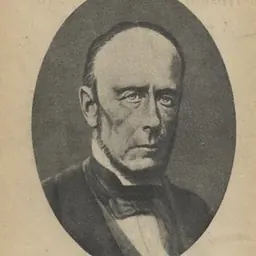

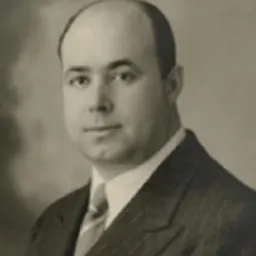

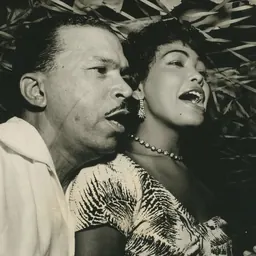


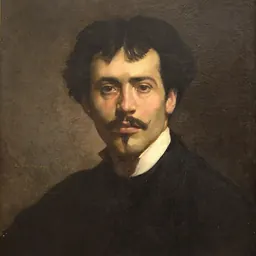
Related people
Same field, nearest in time


Contemporaries
People whose lives overlapped José Marques da Silva's




Frequently asked questions
Who was José Marques da Silva?
Portuguese architect (1869–1947)
When was José Marques da Silva born?
José Marques da Silva was born on 18 October 1869 in Porto.
When did José Marques da Silva die?
José Marques da Silva died on 6 June 1947 in Porto.
What was José Marques da Silva's occupation?
José Marques da Silva was an architect.
What nationality was José Marques da Silva?
José Marques da Silva was Portuguese.
Sources & further reading
· Wikipedia: José Marques da Silva
· DBpedia: José Marques da Silva
Cite this page
APA: Biography.guide. (2026). José Marques da Silva. https://biography.guide/jose-marques-da-silva/
MLA: "José Marques da Silva." Biography.guide, https://biography.guide/jose-marques-da-silva/.
Chicago: "José Marques da Silva." Biography.guide. https://biography.guide/jose-marques-da-silva/.
Data last updated: 2026-09-22 · Spot an error? Report a correction.
Page generated 2026-09-27 05:25 UTC