
José Gómez
Civil rights activist and educator
About José Gómez
Lived 1943 – 2014 (aged 70). José Gómez was an American.
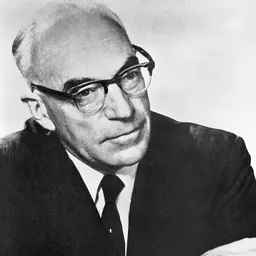
José Gómez (born Joseph Gómez, September 28, 1943 – September 14, 2014) was an American labor and civil rights activist and educator. He was most widely known for his work as executive assistant to president of the United Farm Workers Cesar Chavez, for founding the Committee on Gay Legal Issues (COGLI) at Harvard Law School, and for his law review article "The Public Expression of Lesbian/Gay Personhood as Protected Speech."
Early life and education José Gómez was born September 28, 1943, in Colorado and grew up in Wyoming. He was the son of Juan Gonzalez Gómez and Mercedes Aragon Gómez, and was one of ten children. His early childhood was spent in Reliance, Wyoming. Juan G. Gómez worked in coal mines until 1954, when mine closures led him to seek agricultural work in Wyoming's Big Horn Basin. The family settled in Worland, Wyoming where Juan G. and Mercedes A. Gómez and their children labored in sugar beet fields. At the time, Worland segregated its primary school children and operated a school called the Mexican School. In 1954, José and his sister Rosa Gómez were the first Latino/a students to attend the Emmett School rather than the Mexican School. Observing the difference between the education he received versus that offered in the Mexican School impressed upon Gómez the capacity of education to offer an escape from poverty, and he resolved to become an educator.
Gómez enrolled at the University of Wyoming and earned a B.A. in 1965 with emphases in Spanish, Journalism, and Education. He began graduate studies in Spanish and Latin American Literature at the University of Wyoming and in 1966–1967 was awarded a Fulbright Program grant to study Latin American literature in Nicaragua. The year in Nicaragua deepened his critique of U.S. foreign policy in Latin America. He returned to Laramie for the 1967–1968 academic year, but in the context of the Civil Rights Movement and opposition to United States Involvement in the Vietnam War he suspended graduate studies and moved toward activism.
Career and Activism From May 1968-April 1969 Gómez served as a Peace Corps Volunteer in the northeast state of Sergipe, Brazil. He trained elementary school teachers and organized literacy classes. His opposition to U.S. foreign policy coupled with his discomfort with the policies of the Brazilian military government led him to resign from the Peace Corps after one year. He traveled to San José, Costa Rica where he took a teaching position at Lincoln School, an international secondary school.
Gómez was also active in the wider Boston community, volunteering as a founding board member of Gay & Lesbian Advocates & Defenders (GLAD) from 1979 to 1981. He entered the national stage as a board member of the National Gay Task Force, later renamed National LGBTQ Task Force, from 1979 to 1984, serving as co-chair from 1982 to 1984.
From 1981 to 1983 Gómez worked as executive director of the Human Rights Foundation, a group established by San Francisco donors in the wake of the defeat of California Proposition 6, popularly known as the Briggs Initiative. That initiative aspired to ban from employment in California public schools any LGBT person and any person who supported LGBT rights. The Human Rights Foundation sought to create a supportive environment in public schools for LGBT students. Gómez organized a speaker's bureau and co-wrote and edited a resource book, Demystifying Homosexuality: A Teaching Guide about Lesbians and Gay Men.
In 1983 Gómez was named executive director of the legal services agency La Raza Centro Legal in San Francisco. He held that post until 1988, when he took a position as academic dean at The Evergreen State College.
Gómez served as dean from 1988 to 1996, after which time he joined the faculty. He taught law at The Evergreen State College from 1997 to his death.
In 2006 Gómez delivered the faculty commencement address at The Evergreen State College.
Death Gómez died September 14, 2014 after a battle with cancer. He is buried at Mount Calvary Cemetery in Portland, Oregon.
Don’t just read it —
keep it.
Full-length biographies made to live with: read them, listen on the way to work, watch them tonight.
- E-book
- Audio
- Video
Instant download · yours to keep · every purchase keeps this site free
Important facts
People in José Gómez's life
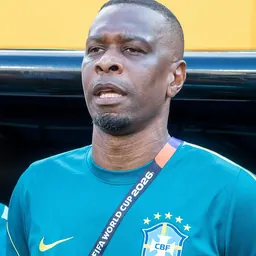
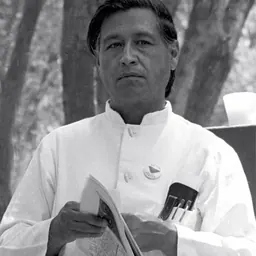
Named in this biography and alive at the same time


Contemporaries
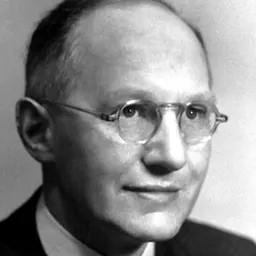
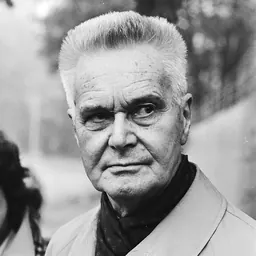
People whose lives overlapped José Gómez's



Frequently asked questions
Who was José Gómez?
civil rights activist and educator (1943-2014)
When was José Gómez born?
José Gómez was born on 28 September 1943.
When did José Gómez die?
José Gómez died on 14 September 2014.
What nationality was José Gómez?
José Gómez was American.
Sources & further reading
· DBpedia: José Gómez (activist)
Cite this page
APA: Biography.guide. (2026). José Gómez. https://biography.guide/jose-gomez-1943/
MLA: "José Gómez." Biography.guide, https://biography.guide/jose-gomez-1943/.
Chicago: "José Gómez." Biography.guide. https://biography.guide/jose-gomez-1943/.
Data last updated: 2026-09-20 · Spot an error? Report a correction.
Page generated 2026-09-27 05:23 UTC