
José Esteban Muñoz
American academic
About José Esteban Muñoz
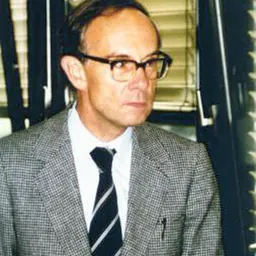
Lived 1967 – 2013 (aged 46). José Esteban Muñoz was a Cuban hispanicamericanist, known for Ephemerality, Performance studies and Queer theory.
José Esteban Muñoz (August 9, 1967 – December 3, 2013) was a Cuban American academic in the fields of performance studies, visual culture, queer theory, cultural studies, and critical theory.
His first book, Disidentifications: Queers of Color and the Performance of Politics (1999) examines the performance, activism, and survival of queer people of color through the optics of performance studies. His second book, Cruising Utopia: the Then and There of Queer Futurity, was published by NYU Press in 2009. In 2020, the book that Muñoz was working on at the time of his death, The Sense of Brown: Ethnicity, Affect and Performance, was published by Duke University after Joshua Chambers-Letson and Tavia Nyong'o finished the manuscript Muñoz left behind. In this book, Muñoz describes the term “Brownness”, used to describe experiences and cultural practices of Brown people. He not only explains this term, but he also relates it back to the queer community, expanding on his past work on queer theory. He relates these topics together, advocating for a mode of resistance against the negative experiences presented by societal norms.
Muñoz was Professor in, and former Chair of, the Department of Performance Studies at New York University's Tisch School of the Arts. Muñoz was the recipient of the Duke Endowment Fellowship (1989) and the Penn State University Fellowship (1997). He was also affiliated with the Modern Language Association, American Studies Association, and the College Art Association.
Biography Muñoz was born in Havana, Cuba, in 1967, shortly before relocating with his parents to the Cuban exile enclave of Hialeah, Florida, the same year. He earned a B.A. in Comparative Literature at Sarah Lawrence College in 1989. In 1994, he earned a doctorate from the Graduate Program in Literature at Duke University, where he studied under queer theorist Eve Kosofsky Sedgwick.
He wrote about artists, performers, and cultural figures including Vaginal Davis, Nao Bustamante, Carmelita Tropicana, Isaac Julien, Jorge Ignacio Cortiñas, Kevin Aviance, James Schuyler, Richard Fung, Basquiat, Pedro Zamora, and Andy Warhol. His work is indebted to the work of Chicana feminists: Gloria Anzaldúa, Cherríe Moraga, Chela Sandoval, and Norma Alarcón,
Muñoz also worked on the initial Crossing Borders Conference in 1996, which focused on Latin America and Latino queer sexualities.
In the Spring of 2016, the Department of Performance Studies at New York University inaugurated the distinguished José Esteban Muñoz Memorial Lecture; speakers have included Fred Moten, José Quiroga, and Judith Butler.
Research and areas of interest Muñoz challenges and questions contemporary mainstream gay and lesbian politics. He argues that present gay and lesbian politics, whose political goal is gay rights, same-sex marriage, and gays in the military, are trapped within the limiting normative time and present. Muñoz re-articulates queerness as something "not yet here." Muñoz proposes the concept of "disidentificatory performances," as acts of transgression and creation, by which racial and sexual minorities, or minoritarian subjects articulate the truth about cultural hegemony.
Ephemera as evidence Muñoz first introduced his concept of ephemera as evidence in the 1996 issue of Women & Performance: A Journal of Feminist Theory. The idea that performance is ephemeral is essential to the field of performance studies. In this essay, Muñoz claims that ephemera does not disappear. Ephemera in the Muñozian sense, is a modality of "anti-rigor" and "anti-evidence" that reformulates understandings of materiality. Muñoz claims that the ephemeral, "traces, glimmers, residues, and specks of things," is distinctly material, though not always solid. Framing the performative as both an intellectual and discursive event, he begins by defining queerness as a possibility, a modality of the social and the relational, a sense of self-knowing. He argues that queerness is passed on surreptitiously due to the fact that the trace of queerness often leaves the queer subject vulnerable to attack. Muñoz's definition of ephemera is influenced by Paul Gilroy's The Black Atlantic "as part of the exchange of ephemera that connects and makes concert a community." Muñoz departs from Peggy Phelan's argument that the ontology of performance lies in its disappearance. Muñoz parts from this view as it is confined to a narrow view of time. He suggests live performance exists ephemerally, then without completely disappearing after it vanishes. and heteronormativity. In his own words, "disidentification is about managing and negotiating historical trauma and systemic violence." and, "tactically and simultaneously works on, with, and against, a cultural form." Aside from being a process of identification, disidentification is also a survival strategy. a simultaneous insertion and subversion. By the mode of disidentification, queer subjects are directed towards the future. Through the use of shame and "misrecognition through failed interpellation, queer collectivity neither assimilates nor strictly opposes the dominant regime," but works on strategies that result in queer counterpublics. Disidentifications uses a performance studies approach to analyzing queer of color social formation that resists state power. In the context of a performance, the performer employs the dominant narrative’s construction of minoritized identity in order to reconstruct and transform dominant logics tied to the subjugated identity, in order to produce the self as liberated from the confines of marginalization. Muñoz’s disidentification theory set the groundwork for subsequent queer of color critique, especially in the realm of performance studies.
His theory of disidentification is foundational to understandings of queer of color performance art and has proved indispensable across a wide variety of disciplines. Muñoz's argument is in conversation with Stefan Brecht's theory of "queer theater." Brecht argues that queer theater inevitably turns into humor and passive repetition, ultimately falling apart. Muñoz is wary of Brecht's theory, as it doesn't seem to consider the work of artists of color and also ignores the use of humor as a didactic and political project. Counterpublics disrupt social scripts and create through their work an opening of possibility for other visions of the world that map different, utopian social relations. Examples of counterpublics includes visual performances like , Vaginal Davis, and Cuban activist and The Real World: San Francisco cast-member Pedro Zamora.
Queer futurity and optimism Queer futurity is a literary and queer cultural theory that combines elements of utopianism, historicism, speech act theory, and political idealism in order to critique the present and current dilemmas faced by queer people of color, but also to revise, interrogate, and re-examine the death drive in queer theory. Queer futurity or "queer sociability" addresses themes and concerns of minoritarian subjects through a performance and aesthetics lens, encompassing a range of media and artists with a shared interest in envisioning queer futures that stem from minoritarian subject experiences. The study of queer sociability has expanded beyond the fields of Performance Studies, Queer Theory, and Gender and Women's Studies and has been used by various scholars to address issues of Black Diaspora Studies, Caribbean Studies, and musicology,
In Cruising Utopia, José Muñoz develops a critical methodology of hope to question the present and open up the future. He draws on Ernst Bloch's Marxist inspired analysis of hope, temporality, and utopia, and looks at "inspirational moments from the past in order to (re)imagine the future." In the book, Muñoz revisits a series of queer art works from the past to envision the political potentiality within them. He draws on the queer work of Frank O'Hara, Andy Warhol, Fred Herko, LeRoi Jones, Ray Johnson, Jill Johnston, Jack Smith, James Schulyer, Elizabeth Bishop and Samuel Delany's and Eileen Myles queer memoirs of the 60s and 70s.
Chusma Muñoz theorizes chusmeria or chusma as a form of behavior that is in excess of normative comportment. Chusmeria is "a form of behavior that refuses bourgeois comportment and suggests Latinos should not be too black, too poor, or too sexual, among other characteristics that exceed normativity." In the Muñozian sense, "lo sucio" persistently lingers as the "yet to be".
Sense of feeling brown Muñoz began to theorize on brown affect in his piece "Feeling Brown: Ethnicity and Affect" in Ricardo Bracho's The Sweetest Hangover (and Other STDs). In this article, Muñoz wanted to focus on ethnicity, affect, and performance in order to question the U.S. national affect and highlight the affective struggles that keep minoritarian subjects from accessing normative identity politics. Muñoz's undertaking was to move beyond notions of ethnicity as "what people are" and instead understand it as a performative "what people do." With Latinidad as an affective difference, "José gave us a road map or toolkit to point us in the direction of the gap, wound, or hole of displacement as a necessary condition for interpretation to take place." It is not tied to a specific ethnicity or a fixed identity but instead reflects a collective space where those who experience racialization or marginalization find belonging through shared struggles, desires, and expressions of being. Although Aztlantis pays homage to a lost Chicano homeland, the club is not codified as strictly Latino, as other people of color are frequently in attendance. Additionally, the nightclub isn’t only open for men; people of various genders and sexualities are often in attendance. The term “undercommons” refers to spaces of subversion and fugitivity, where marginalized individuals- particularly Black and Brown people- create new forms of solidarity and collective existence that is inherently contradictory to the normative organization, culture, and values of the dominant society. The Western value system upholds individualism, democratic governance, capitalism and privatization, privacy, and a hard work ethic. Moten and Harney argue that each of these values is inherently contradictory to the values of the undercommons: collectivity and solidarity, fugitivity and resistance, care and improvisation, ambiguity, refusal of governance, professionalization and commodification, and ongoing study and radical learning.
The “logistics” of dominant organizing forces in the society- such as debt, education, work/professionalization- are structured to isolate the individual from the collective, so that each of these spaces becomes more privatized and hyper-individualized. where those who have been racialized as brown are devalued outside of their community, within their commons, their brownness is used as a strength to reaffirm their own value within the world, and to contradict mainstream narratives espoused by the dominant culture about their own culture. He also discusses Du Bois's theory which suggests that "feeling like a problem is also a mode of belonging, a belonging through recognition". He uses this term as an attempt to modify this problem that is presented by the term "latinidad", where he describes that this term does not consider the difference cultures, customs, beliefs different “Latin” people have. Instead, it groups all people from Latin America into one category that cannot accurately describe everyone. This brownness opens "onto alternative futures, shared worlds that cannot be fully grasped within the racist, heteronormative limitations of present understanding". Consequently, individuals associated with brownness are compelled to seek alternative means to reconcile their identity with societal expectations. They strive to find methods that are “pleasurable, ethical and indeed tolerable” to adapt to these norms. and academic institutions, artists, and periodicals, commemorated his legacy and contributions through a series of online and journal based obituaries and memorial lectures and annual events. In the special edition of Boundary 2, Ann Cvetkovich credits Muñoz for the explosion and morphing of the field of affect theory as a result of Jose's work. Deborah Paredez describes Muñoz as key to the practice of a critical and ethical attentiveness to a wide range of performances by Latina/o artists and for helping scholars listen to the melody of what it is like to feel brown.
In 2014, Muñoz's concept of ephemera as evidence was the theme for a Visual AIDS exhibit, curated by Joshua Lubin-Levy and Ricardo Montez. The exhibit took its name from Muñoz's 1996 essay, Ephemera as Evidence: Introductory Notes to Queer Acts. Featuring visual art, performance art, and pedagogical projects, Ephemera as Evidence explores how the HIV/AIDS crisis forged new relationships of temporality. The exhibit, which ran from June 5 to June 24 at La Mama Galleria, featured works from Nao Bustamante, Carmelita Tropicana, Benjamin Fredrickson, and more.
Muñoz's disidentification theory has also influenced other thinkers in the field. In Crip Theory: Cultural Signs of Queerness and Disability, Robert McRuer, draws on Muñoz's theory of disidentification to articulate and imagine "collective disidentifications" made possible when putting queer and crip theory in conversation. Diana Taylor, Ann Cvetkovich, Roderick Ferguson, and Jack Halberstam have cited and applied Muñoz to their own work. Muñoz was also influential in the field of Queer of Color Critique. In the book Aberrations in Black, Roderick Ferguson employs Muñoz's disidentification theory to reveal how the discourses of sexuality are used to articulate theories of racial difference in the field of sociology. Moreover, disidentification theory has been used by an array of scholars to apply a queer of color critique to various themes such as identity politics, temporality, homonationalism, and diaspora and native studies.
In 2014, the art collective, My Barbarian, was selected to participate in "Alternate Endings", a video program put on by Visual AIDS, for the 25th anniversary of . Begun in 1989, the annual event is meant to commemorate the AIDS crisis and give artists a platform to display work that reflects and responds to the history of HIV/AIDS. Titled, "Counterpublicity", the video performance is based on Muñoz's essay on Pedro Zamora. Lyrics for the piece were adapted from Muñoz's theory of counterpublic spheres. In a panel, My Barbarian said, "the video is a remembrance within a remembrance: to Pedro Zamora and to José Esteban Muñoz." The video premiered at Outfest in Los Angeles.
Xandra Ibarra, La Chica Boom's use of "spics" is influenced by Muñoz's Sense of Brown and Counterpublics. For Muñoz, spics are epithets linked to questions of affect and excess affect. Ibarra's performances of "la Virgensota Jota" and "La tortillera" are ways to re-inhabit toxic languages for the purpose of remapping the social or what Muñoz described as disidentificatory performances. Muñoz has a seminal influence on many American scholars and artists, among them Robert McRuer, Roderick Ferguson, Daphne Brooks, Nadia Ellis, Juana María Rodríguez, Deborah Paredez, and Ann Cvetkovich.
Publications Books
Disidentifications: Queers of Color and the Performance of Politics (1999). Minneapolis: University of Minnesota Press. . Cruising Utopia: The Then and There of Queer Futurity (2009). New York: NYU Press. . Translated to Spanish (Utopía queer, Caja Negra, 2020), French (Cruiser l'utopie, Les Presses du Réel, 2021) and Italian (Cruising Utopia. L'orizzonte della futurità queer, NERO, 2022). The Sense of Brown (2020). Durham, NC: Duke University Press. .
Edited books With Celeste Fraser Delgado. Everynight Life: Culture and Dance in Latin/o America. Durham: Duke University Press, 1997. With Jennifer Doyle and Jonathan Flatley. Pop Out: Queer Warhol. Durham: Duke University Press, 1996.
Book chapters "The Future in the Present: Sexual Avant-Gardes and the Performance of Utopia." The Future of American Studies. Eds. Donald Pease and Robyn Weigman. Durham and London: Duke University Press, 2002. "Gesture, Ephemera and Queer Feeling: Approaching Kevin Aviance." in _Dancing Desires: Choreographing Sexuality On and Off the Stage_ Ed. Jane Desmond. (Madison: University of Wisconsin Press, 2001. "The Autoethnographic Performance: Reading Richard Fung's Queer Hybridity." Performing Hybridity. Eds. Jennifer Natalya Fink and May Joseph. Minneapolis: University of Minnesota Press, 1999. "Latino Theatre and Queer Theory." Queer Theatre. Ed. Alisa Solomon. New York: New York University Press, 1999. "Luis Alfar's Memory Theatre." Corpus Delecti. Ed. Coco Fusco. New York and London: Routledge, 1999. "Pedro Zamora's Real World of Counterpublicity: Performing an Ethics of the Self." Living Color: Race and Television. Ed. Sasha Torres. Durham and London: Duke University Press, 1998. "Rough Boy Trade: Queer Desire/Straight Identity in the Photography of Larry Clark." The Passionate Camera. Ed. Deborah Bright. New York: Routledge, 1998. "Photographies of Mourning: Ambivalence and Melancholia in Mapplethorpe (Edited by Van Der Zee) and Looking for Langston." Race and the Subject(s) of Masculinity. Eds. Harry Uebel and Michael Stecopoulos. Durham and London: Duke University Press, 1997. "Famous and Dandy Like B. 'n' Andy: Race, Pop, and Basquiat." Pop Out: Queer Warhol. Eds. Jennifer Doyle, Jonathan Flatley and José Esteban Muñoz. Durham and London: Duke University Press, 1996. "Flaming Latinas: Ela Troyano's Carmelita Tropicana: Your Kunst Is Your Waffen." The Ethnic Eye: Latino Media. Eds. Ana M. López and Chon A. Noriega. Minneapolis: University of Minnesota Press, 1996. "Ghosts of Public Sex: Utopian Longings, Queer Memories." Policing Public Sex: Queer Politics and the Future of AIDS Activism. Ed. Dangerous Bedfellows. Boston: South End Press, 1996.
Selected journal articles "The Queer Social Text," Social Text 100 Vol 27, No. 3 (Fall 2009): 215–218. "From Surface to Depth, between Psychoanalysis and Affect," Women and Performance: A Journal of Feminist Theory. Vol. 19, No 2 (July 2009): 123–129. "Hope and Hopelessness: A Dialogue," with Lisa Duggan, Women and Performance: A Journal of Feminist Theory. Vol. 19, No 2 (July 2009): 275–283. "The Vulnerability Artist: Nao Bustamate and the Sad Beauty of Reparation," Women and Performance: A Journal of Feminist Theory, Vol. 16, No. 2, (July 2006): 191–200. "Feeling Brown, Feeling Down: Latina Affect, the Performativity of Race, and the Depressive Position," Signs: Journal of Women in Culture and Society, Vol. 31, No 3 (2006): 675–688. "What's Queer about Queer Studies Now," with David. L. Eng and Judith Halberstam in Social Text: What's Queer about Queer Studies Now? ed. with David L. Eng and Judith Halberstam, Vol. 23, Nos. 84-86 (Fall/Winter 2005): 1-18. "My Own Private Latin America: The Politics and Poetics of Trade," (with John Emil Vincent), Dispositio/n 50 (Spring 1998 ), 19–36. "Ephemera as Evidence: Introductory Notes to Queer Acts," Women and Performance, A Journal of Feminist Theory, eds. José E. Muñoz and Amanda Barrett, Vol. 8, No. 2 (1996): 5-18.
Don’t just read it —
keep it.
Full-length biographies made to live with: read them, listen on the way to work, watch them tonight.
- E-book
- Audio
- Video
Instant download · yours to keep · every purchase keeps this site free
Important facts
People in José Esteban Muñoz's life
Named in this biography and alive at the same time








Related people
Same field, nearest in time




Contemporaries
People whose lives overlapped José Esteban Muñoz's



Frequently asked questions
Who was José Esteban Muñoz?
American academic
When was José Esteban Muñoz born?
José Esteban Muñoz was born on 9 August 1967 in Havana.
When did José Esteban Muñoz die?
José Esteban Muñoz died on 4 December 2013 in New York City.
What was José Esteban Muñoz's occupation?
José Esteban Muñoz was a hispanicamericanist.
What was José Esteban Muñoz known for?
José Esteban Muñoz was known for Ephemerality, Performance studies and Queer theory.
What nationality was José Esteban Muñoz?
José Esteban Muñoz was Cuban.
Sources & further reading
· Wikipedia: José Esteban Muñoz
Cite this page
APA: Biography.guide. (2026). José Esteban Muñoz. https://biography.guide/jose-esteban-munoz/
MLA: "José Esteban Muñoz." Biography.guide, https://biography.guide/jose-esteban-munoz/.
Chicago: "José Esteban Muñoz." Biography.guide. https://biography.guide/jose-esteban-munoz/.
Data last updated: 2026-09-22 · Spot an error? Report a correction.
Page generated 2026-09-27 05:09 UTC