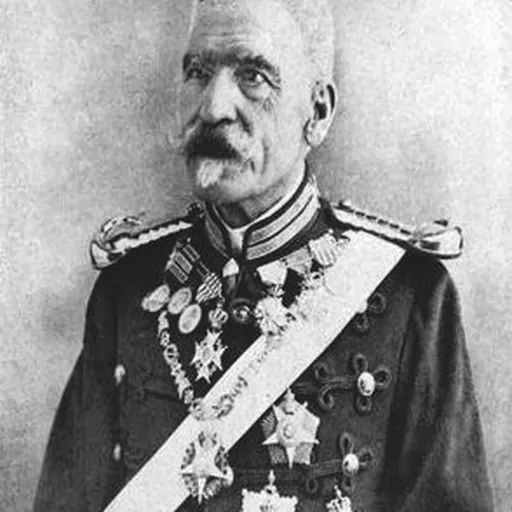
About José Celestino da Silva
Lived 1849 – 1911 (aged 62). José Celestino da Silva was a Portuguese military officer and politician.
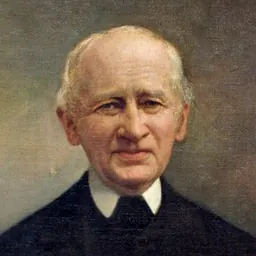
General José Celestino da Silva, (6 January 1849 – 10 February 1911) was a Portuguese Army officer and colonial administrator. Between 1894 and 1908, he was governor of the colony of Portuguese Timor.
Early life and career Celestino da Silva was born in , Chaves, Portugal, on 6 January 1849. He attended the School of the Army, from which he graduated in 1865 as best in class. In 1869, he was given the rank of ensign. In that capacity, he was assigned to Prince Carlos, later Carlos I of Portugal, and a friendship arose between the two. In 1875, he was promoted to lieutenant, and in 1883 to captain in the 2nd Lancers Regiment.
Governorship In 1894, Celestino da Silva was appointed to the rank of Major, and as Governor of Portuguese Timor. Under him, the dominance of Portuguese rule in the colony was consolidated. In three major offensives launched in 1894-95, he carried on wars of pacification against certain kingdoms. He also draw up terms of vassalage with several native petty kings (Liurai), but even so, he had to quell various rebellions. Overall, he conducted more than 20 military actions during his tenure as governor.
From Celestino da Silva's point of view, future wars could only be prevented if the military, civilian officials and the missionaries did a good job. During his tenure, the finta tax, which had been levied in kind, was replaced with a poll tax. He founded schools in various parts of the colony where the population was taught the basics of agriculture in order to apply them to coffee cultivation for export. He and one of his successors, (who was Governor from 1911 to 1913), made efforts to establish the coconut palm tree, which had been grown in Timor even before the Portuguese arrived, as a cash crop. He also set up regular sea connections with Macau and Australia, and a colonial telephone network several hundred kilometres long. The swamps of Dili were drained, a water supply was established, and in 1906 a modern hospital was built.left
However, Celestino da Silva also used his position as governor to enrich himself, both at the expense of the Portuguese state and at the expense of the Timorese inhabitants. He was either involved in, or the owner of, almost all private plantation companies that emerged for the first time in his reign. He also illegally provided these companies with Timorese forced laborers. In 1897, he established the Sociedade Agrícola Pátria e Trabalho (SAPT), which eventually acquired wide-ranging monopolies in the colony, and even after World War II was majority owned by his descendants. Contemporary critics mockingly called him "King of Timor".
Only after Celestino da Silva's friend King Carlos I was assassinated in 1908 was the governor recalled. As it was feared that Celestino de Silva would not voluntarily vacate his post, his successor, , was accompanied by the Director General of Overseas, Captain , who would arrest Celestino da Silva in an emergency. However, for health reasons Celestino da Silva had meanwhile appointed Captain as acting governor, and had traveled with his wife to Australia. After he returned to Dili, he even offered his help to Marques, as Castro's father, General Joaquim Pimenta de Castro, was a friend of his.
Later career On the trip home, Celestino da Silva's ill wife died. Following his return to Portugal, he was appointed as Commander of a Cavalry Regiment in Almeida. In 1910, after the proclamation of the Republic, he was promoted to the rank of General and placed in the reserve. He died on 10 February 1911.
Honours and awards A sixty Timorese Escudo banknote from 1959, featuring the former governor's portrait. Celestino da Silva was a knight of the Order of Aviz and of the Order of the Tower and Sword. For his achievements on Timor, he was awarded the gold medal for military merit and the gold medal of Queen Amélie. In 1932, he was posthumously appointed Grand Officer of the Order of the Colonial Empire. In the late 1950s, the Banco Nacional Ultramarino decided to issue new Portuguese Timorese escudo banknotes depicting Celestino da Silva's image to replace the previously circulating Portuguese Timorese pataca notes. The new banknotes began circulating in January 1960.
Don’t just read it —
keep it.
Full-length biographies made to live with: read them, listen on the way to work, watch them tonight.
- E-book
- Audio
- Video
Instant download · yours to keep · every purchase keeps this site free
Important facts
People in José Celestino da Silva's life
Named in this biography and alive at the same time

Related people
Same field, nearest in time




Contemporaries
People whose lives overlapped José Celestino da Silva's



Frequently asked questions
Who was José Celestino da Silva?
Portuguese officer (1849–1911)
When was José Celestino da Silva born?
José Celestino da Silva was born on 6 January 1849 in Vilar de Nantes.
When did José Celestino da Silva die?
José Celestino da Silva died on 10 February 1911 in Lisbon.
What was José Celestino da Silva's occupation?
José Celestino da Silva was a military officer and politician.
What nationality was José Celestino da Silva?
José Celestino da Silva was Portuguese.
Sources & further reading
· Wikipedia: José Celestino da Silva
· DBpedia: José Celestino da Silva
Cite this page
APA: Biography.guide. (2026). José Celestino da Silva. https://biography.guide/jose-celestino-da-silva/
MLA: "José Celestino da Silva." Biography.guide, https://biography.guide/jose-celestino-da-silva/.
Chicago: "José Celestino da Silva." Biography.guide. https://biography.guide/jose-celestino-da-silva/.
Data last updated: 2026-09-21 · Spot an error? Report a correction.
Portrait: Wikimedia Commons · author & licence
Page generated 2026-09-27 05:00 UTC