
About Jorge Volpi
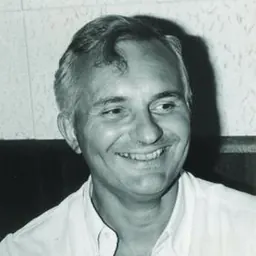
Born 1968. Jorge Volpi is a Mexican writer, essayist, lawyer, diplomat and jurist.
Jorge Volpi (full name Jorge Volpi Escalante; born July 10, 1968) is a Mexican novelist and essayist, best known for his novels such as In Search of Klingsor (En busca de Klingsor). Trained as a lawyer, he gained notice in the 1990s with his first publications and participation in the pronouncement of the "Crack Manifesto" with several other young writers to protest the state of Mexican literature and promote their own work. Volpi's novels are distinct from magical realism and other trends of Latin American literature as they focus on the actions of characters and research into academic topics, especially history and science, and do not always focus on Latin American characters and settings. His work has been translated into twenty five languages and recognized with awards such as Biblioteca Breva Award and the Debate-Casa de América as well as a grant from the Guggenheim Foundation. In addition to his writing he has worked as a cultural attaché, the director of Canal 22 in the State of Mexico and is currently the director of the Festival Internacional Cervantino.
Life Jorge Volpi was born in Mexico City. Since childhood, he has been interested in history and science. At age thirteen, he wanted to be a historian, specializing in the Middle Ages, attempting to write a book on the entire topic. He stated much of his interest in science was sparked by watching Carl Sagan's Cosmos on television. He decided later in life to abandon these for literature, but these interests remain and appear in his writing.
Volpi attended high school at the Centro Universitario México in Mexico City,
In 1996, Volpi moved to Spain to do his doctorate at the University of Salamanca. He spent three years there, earning his degree in Hispanic philology with his thesis about poet Jorge Cuesta.
Since 2007, he has taught Mexican literature and other topics at universities on three continents, at institutions such as the National Autonomous University of Mexico, This followed the planning of near-simultaneous publication of five works by the group, mostly as a protest against the then dominant "literature light" novels as well as current events, with the books carrying the label of "crack novels." The book is the first of a trilogy which includes El fin de la locura (2004) and No sera la Tierra (2006).
In addition to books, Volpi writes book reviews and essay for Mexican cultural press, collaborating with Reforma, The Nation, the Confabulario supplement and the magazines Viceversa, Letra Internacional and Letras Libres. However, they also appeal to readers interested in ethical questions, as well as complex systems of interrelations, making them similar to the "novelas totalizantes" of the 1960s. He is the only major writer of this kind of novel in Spanish and has been "accused" of not being Latin American enough for his distinctive style and subject matter. Volpi disputes this.
His first notable work were the "novelas de crack" publishing in the 1990s in which he rejected the then dominant "literature light" and focused less on the language and more on the actions of the characters. He felt literature light trivialized the link between literature and knowledge. This novels, which include La paz de los sepulcros, El tempermento meloncólico and Sanar tu piel amarga were writing during the Carlos Salinas de Gortari administration, when Mexican politics and economy were under great strain. This influence remains in his work as he still focuses on developing his characters before he starts the novel. Even though these sketches change, it allows Volpi to "know" them and a few important features to help describe them briefly, like a first impression in real life.
Volpi has stated that "The novels I like to read and the ones I try to write are those that consider fiction as a vehicle of knowledge." He believes that "a novel is a form of exploring the world." His novels show great effort to research an area of knowledge to incorporate this into the story, with the main characters often also involved in the discovery of knowledge. In A pesar del oscuro silencio, the main character is researching the tragic life of Jorge Cuesta, a Mexican vanguard poet and essayist of the 1920s and 1930s. Similarly, the protagonist in Tribuna del escandolo also engages in biographical research, but in this case to solve a double murder. In El temperamento melancolico, Volpi psychologically analyzes the idea of human temperament, exploring group dynamics and the effects of individual actions. The story here is of a German film director making his last film in Mexico, with Volpi focuses on the ten Mexican actors and their roles in the film. In La tejedora de sombras, the subject matter is the psychoanalysis of Carl Jung. Memorial del engaño is about the 2008 financial crisis and the revelation that much of the world economic order was due to communist spies. Volpi's best known work, En busca de Klingsor, is the first of a trilogy that not only traces the development of scientific knowledge of the latter 20th century, but also aligns it to the political and social thought of the same era. He begins in the first book with relatively theory and quantum mechanics questioning much of how we see existence, (developed inside the search for Hitler's chief scientific advisor just after World War II), It is followed by El fin de la locura set from the May 1968 demonstrations in Paris to the Fall of the Berlin Wall. No será la Tierra is about the end of communist ideal in the 20th century.
For Volpi, literature is to satisfy his curiosity and search for knowledge, including knowledge about himself, preferring to use first-person narrators. For Volpi, the novel is a vehicle for knowledge about identity in action, placing readers in a position to observe the how human behavior works. He generally writes about identity as a mixture of character, temperament and will. His stories are often experiments to place certain temperaments together to analyze their interactions. However, knowledge in Volpi's novels is a search rather than explaining what is already known and it is never complete, generally related to the concept of identity and human behavior.
Don’t just read it —
keep it.
Full-length biographies made to live with: read them, listen on the way to work, watch them tonight.
- E-book
- Audio
- Video
Instant download · yours to keep · every purchase keeps this site free
Important facts
People in Jorge Volpi's life
Named in this biography and alive at the same time

Related people
Same field, nearest in time




Contemporaries
People whose lives overlapped Jorge Volpi's




Frequently asked questions
Who is Jorge Volpi?
Mexican writer
When was Jorge Volpi born?
Jorge Volpi was born on 10 July 1968 in Mexico City.
What is Jorge Volpi's occupation?
Jorge Volpi is a writer, essayist, lawyer, diplomat and jurist.
What nationality is Jorge Volpi?
Jorge Volpi is Mexican.
Sources & further reading
Cite this page
APA: Biography.guide. (2026). Jorge Volpi. https://biography.guide/jorge-volpi/
MLA: "Jorge Volpi." Biography.guide, https://biography.guide/jorge-volpi/.
Chicago: "Jorge Volpi." Biography.guide. https://biography.guide/jorge-volpi/.
Data last updated: 2026-09-20 · Spot an error? Report a correction.
Page generated 2026-09-27 05:33 UTC