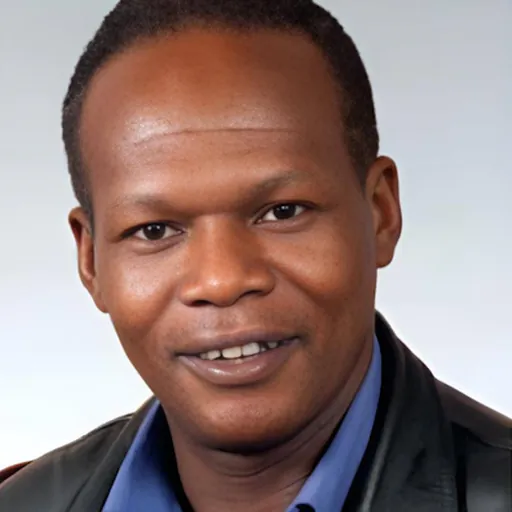
About Jorge Medina
Lived 1968 – 2022 (aged 54). Jorge Medina was a Bolivian politician, composer and civil rights advocate.
Jorge Medina Barra (; 24 April 1968 – 23 November 2022) was a Bolivian civil rights activist and politician who served as a member of the Chamber of Deputies from La Paz, representing its special indigenous circumscription from 2010 to 2015.
Raised in the Afro-Bolivian community of the tropical Yungas region, Medina became active in the Afro civil rights movement after moving to the city of La Paz. He was a founding member of the Afro-Bolivian Saya Cultural Movement and co-founded the Afro-Bolivian Center for Integral and Community Development, two organizations dedicated to promoting public and state recognition of Afro cultural identity.
Having succeeded in securing the inclusion of Afro-Bolivians in the 2009 Constitution, Medina was later elected to represent La Paz's minority indigenous peoples in the Chamber of Deputies, becoming the first Afro-Bolivian to serve in either chamber of the Bolivian legislature. In parliament, Medina spearheaded Bolivia's flagship Law Against Racism and promoted other pro-Afro pieces of legislation. He was not nominated for reelection.
Early life and career Jorge Medina was born on 24 April 1968 to Paulino Medina and Sergia Barra, an Afro-Bolivian family from the rural community of Chijchipa in the La Paz Department's agricultural Nor Yungas Province. Medina completed his primary schooling in the nearby town of Tocaña before moving with his parents to Caranavi in Alto Beni, where he attended the city's Martín Cárdenas School. After graduating in 1988, Medina moved to the city of La Paz to pursue a college education; he studied business administration at the Higher University of San Andrés and took courses in systems engineering at the University of Aquinas. In the ensuing years, Medina worked a number of odd jobs, spending six years as a chauffeur for the Golden Eagle Mining Company before being employed as a mechanic at a local workshop, and later as a laborer for a nearby paper company. He also spent short stints as an employee at YPFBthe state-owned petroleum enterpriseand the Ministry of Labor.
Activism and organizational leadership Medina's entry into the Afro-Bolivian civil rights movement was precipitated by his early experiences residing in La Paz, a city "devoid of Afro-Bolivians... [where] it was not uncommon for other Bolivians to be oblivious to the existence of black people". Recognition of the Afro-Bolivian population was niche, limited in academia to Western scholars studying the African diaspora. Their presence in public often promoted racial discrimination, including physical harassment, due to the superstitious belief that pinching a black person would bring good luck. "It was 'lucky negro'; they surrounded us... and fought among themselves over who saw us first", Medina recalled.
Starting from the late 1980s, Medina became active in promoting the saya, a style of Afro-Bolivian folk songs mixed with drums, which the Afro movement had begun using to generate cultural visibility. During this time, Medina also distinguished himself as a popular saya composer and performer in his own right, writing the songs "Flor de Alelí", "Ser Líder de un Grupo", and "Guarachera de Cuba", among others. Along with other activists, Medina founded the (MOCUSABOL) in 1988, which became one of the country's leading Afro-Bolivian civil rights and awareness organizations. He served as vice president and later president of the body for five years between 1999 and 2004.
Despite MOCUSABOL's successes in spreading the saya popularity, Medina soon grew frustrated with the growing perception that Afro-Bolivians were just "'the negros who dance.' That made me angry because we are not only good at dancing, we can do other things", he stated. In 2006, together with Marfa Inofuentes, Medina founded the Afro-Bolivian Center for Integral and Community Development (CADIC), Ultimately, Angola was forced to withdraw his candidacy, given that he was in active military service. Given the offer, Medina recalled stating, "Barack Obama is president of the United States; why should an Afro not be able to be in parliament here in Bolivia". He received one of the highest vote shares of the entire election cycle, winning nearly ninety-two percent of the popular vote, becoming the first Afro-Bolivian in history to serve in either chamber of the Legislative Assembly.
Tenure As a parliamentarian, Medina was instrumental in drafting what became the Law Against Racism and All Forms of Discrimination. The 2012 census was held midway through Medina's term, a notable event, as it was the first time the government had ever tabulated the Afro-Bolivian population in its history. Using this data, Medina put forward the concept of creating a majority Afro-Bolivian municipality to give greater electoral representation to its inhabitants, though the concept never got off the ground. Upon the conclusion of his term in 2015, Medina retired from politics and returned to the direction of CADIC. Rural Native Indigenous Peoples and Nations Committee (2010–2011) Plural Economy, Production, and Industry Commission Industry, Commerce, Transport, and Tourism Committee (2012–2013) Social Policy Commission Social Security and Protection Committee (2013–2014) Planning, Economic Policy, and Finance Commission Financial, Monetary, and Insurance Policy Committee (Secretary; 2014–2015)
Personal life and death Medina married , an ethnic Afro-Bolivian saya performer from Chulumani in the Sud Yungas Province. The couple had two children: Adin Dube and Malaika, Swahili names meaning "strength and passion" and "angel", respectively. His relative, Tomasa Medina, also gained notoriety in the Afro-Bolivian community, though as an opponent of the MAS and its efforts to expand its influence over the Yungas-based coca market. Outside of his work at MOCUSABOL and CADIC, Medina was also active in radio, hosting the talk show Raíces Africanas, which began airing in 2001. In film, he starred as a supporting actor in 2005's American Visa.
Electoral history + Year Office Party Votes Result . Total % . 2009 Deputy Movement for Socialism 13,283 91.97% 1st Source: Plurinational Electoral Organ Electoral Atlas
Don’t just read it —
keep it.
Full-length biographies made to live with: read them, listen on the way to work, watch them tonight.
- E-book
- Audio
- Video
Instant download · yours to keep · every purchase keeps this site free
Important facts
People in Jorge Medina's life
Named in this biography and alive at the same time
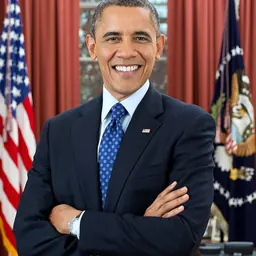


Related people
Same field, nearest in time
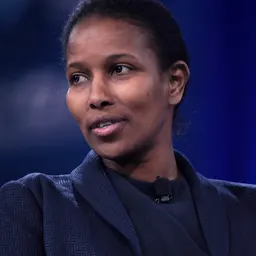

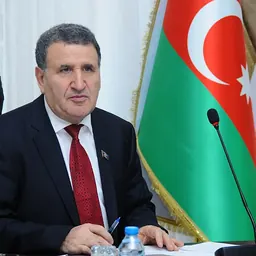


Contemporaries
People whose lives overlapped Jorge Medina's



Frequently asked questions
Who was Jorge Medina?
Bolivian politician (1968–2022)
When was Jorge Medina born?
Jorge Medina was born on 24 April 1968 in Chijchipa.
When did Jorge Medina die?
Jorge Medina died on 23 November 2022 in La Paz.
What was Jorge Medina's occupation?
Jorge Medina was a politician, composer and civil rights advocate.
What nationality was Jorge Medina?
Jorge Medina was Bolivian.
Sources & further reading
Cite this page
APA: Biography.guide. (2026). Jorge Medina. https://biography.guide/jorge-medina/
MLA: "Jorge Medina." Biography.guide, https://biography.guide/jorge-medina/.
Chicago: "Jorge Medina." Biography.guide. https://biography.guide/jorge-medina/.
Data last updated: 2026-09-23 · Spot an error? Report a correction.
Portrait: Wikimedia Commons · author & licence
Page generated 2026-09-27 05:07 UTC