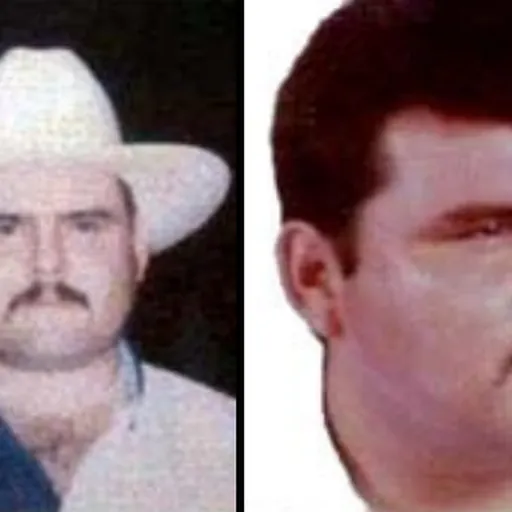
About Jorge Eduardo Costilla Sánchez
Born 1971. Jorge Eduardo Costilla Sánchez is a Mexican drug trafficker, police officer and gulf Cartel.
Jorge Eduardo Costilla Sánchez (born 6 January 1971) is a former Mexican drug lord and top leader of the criminal drug trafficking organization known as the Gulf Cartel. He was among Mexico's most-wanted drug lords, until his arrest in 2012.
He joined the ranks of the Gulf Cartel in the late 1990s after he had served as a policeman in Matamoros, Tamaulipas. Under the tutelage of Osiel Cárdenas Guillén, Costilla Sánchez became a lieutenant for the cartel and started controlling several drug trafficking activities for the organization.
Costilla Sánchez was arrested by the Mexican marines in the city of Tampico, Tamaulipas, on 12 September 2012. The Gulf Cartel, however, was suffering from an infighting by the time of his arrest.
On 16 September 2022, Costilla Sánchez pleaded guilty to conspiracy to distribute cocaine and marijuana into the United States. He was sentenced to life in prison and was ordered to pay a forfeiture judgement of $5 million.
Criminal career Costilla Sánchez was born on 6 January 1971 in the city of Matamoros, Tamaulipas; he is the son of a woman who worked as the principal of a middle school in Matamoros. At the age of 21, he became a municipal police officer in Matamoros and worked from 1992 to 1995, where he became familiar with the drug trade. Costilla Sánchez then left the police and formed a kidnapping ring called "Los Sierra."
He joined the works of the Gulf Cartel in the late 1990s and become a lieutenant during the reign of then-leader Osiel Cárdenas Guillén.
Costilla Sánchez is one of a number of high-ranking members of the Gulf Cartel who has been indicted in the United States for drug trafficking activities. Costilla Sánchez has also been indicted for threatening U.S. law enforcement officials in November 1999. In that incident, FBI and DEA agents in Mexico were forcibly stopped at gunpoint by a group of heavily armed men, allegedly including Costilla Sánchez and other key members of the Gulf Cartel. Costilla Sánchez and the other cartel members were said to have pointed AK-47 rifles at the U.S. federal agents and threatened to kill them. After a tense standoff, the FBI and DEA agents were allowed to leave. After the death of Antonio in a gunfight with the Mexican Marines on 5 November 2010, Costilla Sánchez took full control of the Gulf Cartel and began directing the daily drug trafficking activities of the organization. Among other charges, Costilla Sánchez is accused of being involved in the 2004 assassination of the journalist Francisco Arratia Saldierna, who covered drug trafficking and organized crime reports in Matamoros. In addition, the Proceso magazine alleges that Costilla Sánchez had some connections with high-ranking military officials in the Mexican Armed Forces between 2011 and 2012.
Standoff with U.S. agents On 9 November 1999, two U.S. agents from the Drug Enforcement Administration (DEA) and Federal Bureau of Investigation (FBI) were threatened at gunpoint by Cárdenas Guillén, Costilla Sánchez, and approximately fifteen of his henchmen in Matamoros. Cárdenas Guillén demanded the agents and the informant to get out of their vehicle, but they refused to obey his orders. The incident escalated as Cárdenas Guillén threatened to kill them if they did not comply and as his gunmen prepared to shoot. The agents tried to reason with him that killing U.S. federal agents would bring a massive manhunt from the U.S. government. Cárdenas Guillén eventually let them go and threatened to kill them if they ever returned to his home turf. The FBI and the DEA mounted numerous charges against him and issued a US$2 million bounty for his arrest.
Gulf-Zeta cartels split In the late 1990s, Osiel Cárdenas Guillén, then leader of the Gulf Cartel, began recruiting members of the Mexican Army to protect his territory, personnel, and drug trafficking operations. These original deserters, who were known as Los Zetas, came from the Special Forces squadron of the army, arguably the best trained branch of the Mexican military. Upon the arrest and extradition of Cárdenas Guillén in 2003 and 2007 respectively, Los Zetas strengthen its role in the Gulf Cartel, but managed to retain its alliance. Nonetheless, that alliance lasted until early 2010, when disagreements reached a turning point. On 18 January 2010, several members of the Gulf Cartel kidnapped Víctor Peña Mendoza, a leader of Los Zetas nicknamed Concord 3 and a close associate and friend of Miguel Treviño Morales, alias Z-40. When he was held captive, Peña Mendoza was asked to switch alliances and join the Gulf Cartel, but he refused, earning a beating and an execution, presumably carried out by Samuel Flores Borrego.
Treviño Morales heard about the incident and issued an ultimatum to Flores Borrego and Costilla Sánchez:
Both of the Gulf Cartel leaders ignored the command, and Treviño Morales did not wait to avenge the death of his friend. On 30 January 2010, Treviño Morales kidnapped and murdered 16 Gulf Cartel members in Reynosa, Tamaulipas, marking the start of the cartel war between the Gulf Cartel and Los Zetas in the Mexican states of Tamaulipas, Nuevo León, and Veracruz that has left thousands of people killed. Los Zetas used violent and intimidation tactics to expand, emerging with a notorious reputation as Mexico's most violent drug trafficking organization. Through these tactics, it has managed to take control of most of the territories "owned" by the Gulf Cartel where they had once essentially served as a single organization.
PRI candidate assassination On the morning of 28 June 2010, Rodolfo Torre Cantú, the leading candidate of the Institutional Revolutionary Party (PRI) for the Tamaulipas state elections, was heading to the airport in Ciudad Victoria to close his campaign in Valle Hermoso and Matamoros, Tamaulipas six days before the elections. While heading to the airport, Torre Cantú's convoy was ambushed by armed assailants, killing the candidate and six other people who were in his entourage. His death marked the highest-profile murder in the Mexican drug war and the highest-profile assassination in Mexico since the death of Luis Donaldo Colosio, the PRI presidential candidate for the 1994 elections. By 2011 and into 2012, the Mexican authorities still did not have solid evidence to prosecute Torre Cantú's assassins.
Nonetheless, Costilla Sánchez was linked to Torre Cantú's assassination by the PGR and the DEA agencies on 20 September 2012. Reportedly, Torre Cantú was killed by an armed squad directly linked to Costilla Sánchez for refusing to protect the cartel's investments that allowed money laundering from drug proceeds. Tamaulipas' former governor, Tomás Yarrington, has also been linked to Torre Cantú's death by the DEA since February 2012. Costilla Sánchez was presented on camera on the morning of 13 September 2012, handcuffed and wearing a long-sleeve shirt. Ten bodyguards of Costilla Sánchez were also arrested during the operation. Ernesto Banda Chaires, one of the detainees, is believed to be the regional boss of the cartel in Tampico. In the Wednesday arrest, the Mexican authorities confiscated several assault rifles, pistols encrusted with jewelry, and a number of expensive-looking watches. When asked if he had anything to say about his criminal charges and if he had a lawyer, Costilla Sánchez shook his head. His arrest came a few days after the apprehension of Mario Cárdenas Guillén, the leader of one of factions in the cartel. Moreover, Costilla Sánchez is currently detained at the installations of the SIEDO, Mexico's intelligence agency.
Costilla Sánchez was an evasive capo who preferred to stay low-profile. Only two photographs of him were ever made public prior to his arrest.
It is likely that Costilla Sánchez will be extradited to the United States, raising political implications for the top politicians in the states of Tamaulipas and Veracruz who have been accused of taking bribes from the Gulf Cartel. Among them is Tomás Yarrington, the former governor of Tamaulipas who is now a fugitive. If the testimonies end up being damaging, President Enrique Peña Nieto will have to take steps to clean up the image of the Institutional Revolutionary Party (PRI), which governed Mexico for 71 years and was tainted with an image of corruption.
Theoretical aftermaths The capture of Costilla Sánchez and Mario Cárdenas Guillén leaves the Gulf Cartel without a definite successor. Both arrests, in effect, wipe out the traditional old-time bosses of the cartel, putting an end to a generation of drug traffickers. When Cárdenas Guillén was arrested on 4 September 2012, it looked as if Costilla Sánchez had finally won the leadership of the Gulf Cartel. Throughout the end of 2011 and until the time of his arrest in 2012, Costilla Sánchez had carried out a campaign to put down Cárdenas Guillén and his faction – the Rojos – by reportedly setting up its members to get arrested or killed. His attempts to successfully put down his rivals allegedly gave him the protection of some high-ranking officials in the Mexican Armed Forces. One clear benefactor of the fall of the Gulf Cartel is its rival group, Los Zetas. It is also possible that several within the Gulf Cartel may decide to join the Sinaloa Cartel or Los Zetas, although the latter seems unlikely given the bitter feelings between both groups. The first possible group to take control of the smuggling routes in Tamaulipas is Los Zetas, who can decide to make a violent push into the last territories of the Gulf Cartel and finally take control of Matamoros, Tamaulipas. While women leading Mexico's "macho" criminal underworld is quite unusual, it is not entirely unprecedented. Enedina Arellano Félix of the Tijuana Cartel now manages the organization along with her son Luis Fernando Sánchez Arellano. Another woman, Sandra Ávila Beltrán, served as an important link between the Sinaloa Cartel and the Norte del Valle Cartel in Colombia until her arrest in 2007. The authorities believe that if one of the Cárdenas Guillén sisters takes over leadership of the Gulf Cartel, it could serve to unite the broken organization. Nonetheless, InSight Crime argues that if the Gulf Cartel's last chance to regain its hegemony lies on a female successor, there is little chance that the cartel will ever recover. As previously reported by the agency, "drug queens" in Mexico tend to have difficulty commanding their cartels, and have been forced to work alongside men to legitimize their positions.
In addition, the arrest of Costilla Sánchez opens a bigger role for the Sinaloa Cartel in the state of Tamaulipas. Since their leader Joaquín "El Chapo" Guzmán and the Gulf Cartel tend to be "business-oriented," both organizations may possibly strengthen their alliances by acknowledging that "violence is bad for business." This is one reason why the Gulf Cartel and El Chapo might fight off Los Zetas together. On 1 October, he declared himself not guilty of the charges imposed at a federal court in Brownsville, Texas. On 26 September 2017, he pleaded guilty to conspiracy to possess narcotics with intent to distribute cocaine and cannabis, in addition to two counts of assault on federal agents for the standoff in 1999. His sentencing was originally scheduled for 18 January 2018. On 22 September 2022, Costilla Sánchez was sentenced to life in prison and was ordered to pay a forfeiture judgment of $5 million, the amount that he was found to have profited from his involvement in drug trafficking.
Gulf Cartel infighting
Background In the late 1990s, Osiel Cárdenas Guillén, the former leader of the Gulf Cartel, had other similar groups besides Los Zetas established in several cities in Tamaulipas. Each of these groups were identified by their radio codes: the Rojos were based in Reynosa; the Metros were headquartered in Matamoros; and the Lobos were established in Laredo. When the Gulf Cartel and Los Zetas split in early 2010, some members of the Rojos stayed with the Gulf Cartel, while others decided to leave and join the forces of Los Zetas.
InSight Crime explains that the fundamental disagreement between the Rojos and the Metros was over leadership. Those who were more loyal to Mario Cárdenas Guillén stayed with the Rojos, while those loyal to Jorge Eduardo Costilla Sánchez, like Flores Borrego, defended the Metros.
Alleged ties with the Mexican military The power struggle within the Gulf Cartel in northeastern Mexico throughout 2011 and 2012 was a sign of the organization's decline. Part of the shifting landscape, according to Proceso magazine, is attributed to the alleged protection the Mexican Armed Forces gave to Costilla Sánchez.
The last days of Costilla Sánchez's leadership began on 3 September 2012, when several banners were reportedly put up in Ecatepec, State of Mexico, accusing the capitan of the Mexican Naval Infantry, Marina Efraín Martínez Talamantes, of protecting Costilla Sánchez. In the United States, he has been charged with 12 counts of drug trafficking and money-laundering and is also wanted for assaulting a federal law enforcement officers in 1999 in Matamoros, Tamaulipas.
The U.S. Department of State was offering a reward of up to US$5 million for information leading to his arrest and/or conviction.
Costilla Sánchez has several aliases, including but not limited to: Cos, El Coss, Costi, El Judas, George XX, and Sombra.
Kingpin Act sanction On 20 July 2009, the United States Department of the Treasury sanctioned Costilla Sánchez under the Foreign Narcotics Kingpin Designation Act (sometimes referred to simply as the "Kingpin Act"), for his involvement in drug trafficking along with three other international criminals. The act prohibited U.S. citizens and companies from doing any kind of business activity with him, and virtually froze all his assets in the U.S.
Don’t just read it —
keep it.
Full-length biographies made to live with: read them, listen on the way to work, watch them tonight.
- E-book
- Audio
- Video
Instant download · yours to keep · every purchase keeps this site free
Important facts
People in Jorge Eduardo Costilla Sánchez's life
Named in this biography and alive at the same time


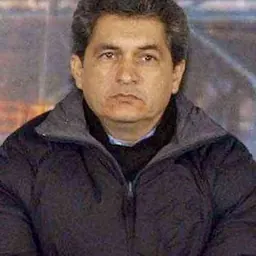



Related people
Same field, nearest in time


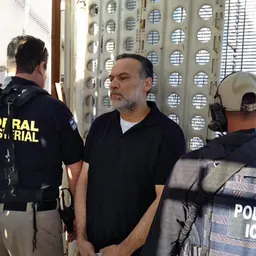
Contemporaries
People whose lives overlapped Jorge Eduardo Costilla Sánchez's



Frequently asked questions
Who is Jorge Eduardo Costilla Sánchez?
Mexican drug lord
When was Jorge Eduardo Costilla Sánchez born?
Jorge Eduardo Costilla Sánchez was born on 6 January 1971 in Heroica Matamoros.
What is Jorge Eduardo Costilla Sánchez's occupation?
Jorge Eduardo Costilla Sánchez is a drug trafficker, police officer and gulf Cartel.
What nationality is Jorge Eduardo Costilla Sánchez?
Jorge Eduardo Costilla Sánchez is Mexican.
Sources & further reading
· Wikipedia: Jorge Eduardo Costilla Sánchez
· DBpedia: Jorge Eduardo Costilla Sánchez
Cite this page
APA: Biography.guide. (2026). Jorge Eduardo Costilla Sánchez. https://biography.guide/jorge-eduardo-costilla-sanchez/
MLA: "Jorge Eduardo Costilla Sánchez." Biography.guide, https://biography.guide/jorge-eduardo-costilla-sanchez/.
Chicago: "Jorge Eduardo Costilla Sánchez." Biography.guide. https://biography.guide/jorge-eduardo-costilla-sanchez/.
Data last updated: 2026-09-22 · Spot an error? Report a correction.
Portrait: Wikimedia Commons · author & licence
Page generated 2026-09-27 05:00 UTC