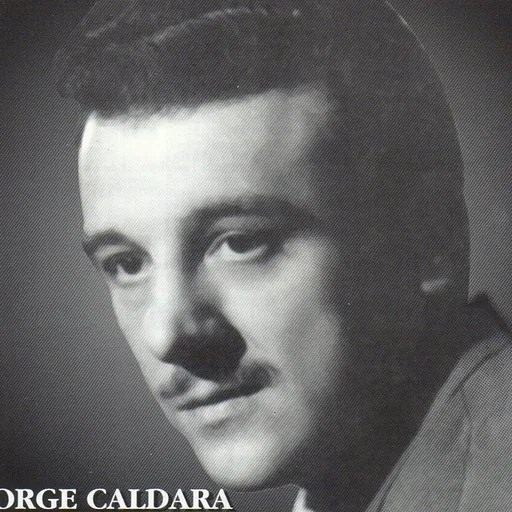
About Jorge Caldara
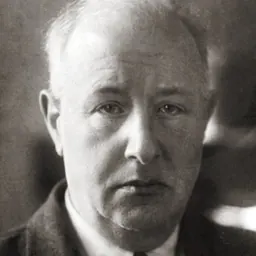
Lived 1924 – 1967 (aged 42). Jorge Caldara was an Argentine bandoneonist, composer and conductor.
Jorge Caldara (17 September 1924 – 24 August 1967) was an Argentine bandoneonist, orchestra conductor, and composer dedicated to the tango genre. In addition to leading his own orchestra, he played in the orchestras of Francisco Lauro, Alberto Pugliese, Emilio Orlando, and Osvaldo Pugliese, where he reached his peak as a musician, arranger, and composer, among others. As a composer, he is remembered for his tangos Pastoral, Pasional, and Por pecadora, among others.
Life Jorge Caldara was born in the Abasto neighborhood and was 4 years old when his family moved to La Paternal, still within the city of Buenos Aires. He liked music from a young age, especially the piano, but his father, who was a tango enthusiast, convinced him to study bandoneón with a local teacher. Due to financial reasons, he had to abandon those studies and work as a laborer, first in a cardboard factory and later in another that made rocker arms.
After a careful selection process, the orchestra was assembled and made its debut on Radio Tokyo. It later performed on the radio stations Nipon, Binca, and N.H.K., on the television channel J.O.R.K., and at the Kokusai and Nibiahai theaters. The orchestra also made some recordings, including the orchestral tangos Lorenzo by Agustín Bardi and Jueves by Udelino Toranzo and Rafael Rossi. which toured across the Americas, appeared on Peruvian television, and recorded several tracks for Odeon.
In the 1960s, he restructured his orchestra by teaming up with singers Ricardo Ruiz and Rodolfo Lesica. However, Ruiz left shortly afterward, though not before recording the tango Mi malacara y yo by Luis Stazo and Federico Silva—performed as a duet with Lesica—for the Music-Hall label. Lesica also recorded the tango Mis consejos by Héctor Marcó. The group was then renamed Caldara-Lesica and, under the same label, recorded the instrumental pieces Nochero soy, Mi bandoneón y yo, and La yumba, along with vocal tracks sung by Lesica: Confesión, Ríe payaso, and Por la vuelta.
Later on, he formed a new orchestra with bandoneonists Carlos Goliat, Miguel Incardona, Omar Nacir, and himself; double bassist Fernando Romano; pianist Rodolfo Mansilla; violinists Mario Abramovich, Antonio Agri, Carlos Arnaiz, Mario Grossi, Antonio Magnético, Félix Molino, and Fernando Suárez Paz; and cellist José Federighi.
In 1966, Roberto Echagüe replaced Lesica, and during the year he was with the group—before being succeeded by Raúl Funes—he recorded the tangos La novia ausente and Madame Ivonne.
In 1963, doctors diagnosed Caldara with Hodgkin's disease (cancer of the lymph nodes), and after a four-year battle, he died in Buenos Aires on 24 August 1967.
Don’t just read it —
keep it.
Full-length biographies made to live with: read them, listen on the way to work, watch them tonight.
- E-book
- Audio
- Video
Instant download · yours to keep · every purchase keeps this site free
Important facts
People in Jorge Caldara's life
Named in this biography and alive at the same time





Related people
Same field, nearest in time
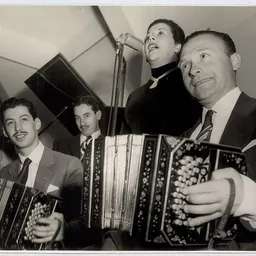
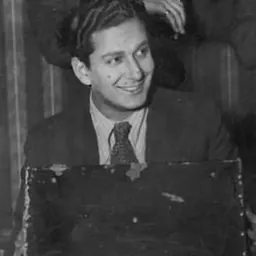


Contemporaries
People whose lives overlapped Jorge Caldara's
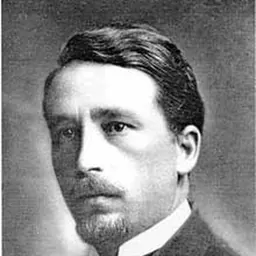
Frequently asked questions
Who was Jorge Caldara?
Argentine bandoneonist, orchestra conductor, and composer
When was Jorge Caldara born?
Jorge Caldara was born on 7 September 1924 in Buenos Aires.
When did Jorge Caldara die?
Jorge Caldara died on 24 August 1967 in Buenos Aires.
What was Jorge Caldara's occupation?
Jorge Caldara was a bandoneonist, composer and conductor.
What nationality was Jorge Caldara?
Jorge Caldara was Argentine.
Sources & further reading
Cite this page
APA: Biography.guide. (2026). Jorge Caldara. https://biography.guide/jorge-caldara/
MLA: "Jorge Caldara." Biography.guide, https://biography.guide/jorge-caldara/.
Chicago: "Jorge Caldara." Biography.guide. https://biography.guide/jorge-caldara/.
Data last updated: 2026-09-22 · Spot an error? Report a correction.
Portrait: Wikimedia Commons · author & licence
Page generated 2026-09-27 05:02 UTC