
About Jonathan Townley Crane
Lived 1819 – 1880 (aged 60). Jonathan Townley Crane was an American cleric.
Jonathan Townley Crane (June 18, 1819 – February 16, 1880) was an American clergyman, author and abolitionist. He was born in Connecticut Farms, in Union Township, New Jersey, and is most widely known as the father of writer Stephen Crane.
Early years Crane was the son of William Crane (1778-1830) and Sarah Townley (1776-1830), who both died when he was 13 years old. He was subsequently apprenticed to a trunk maker in Newark. Although raised in the Congregational church, he rejected its deterministic teachings. Accidentally, in 1838, he wandered into a Revival meeting, and was converted to Methodism.
Education He graduated from the Princeton Theological Seminary in Princeton, New Jersey in 1843 and in 1844 was licensed to preach, after which he was admitted to the New Jersey Annual conference of the Methodist Episcopal Church in 1845. Dickinson College conferred upon him the Doctorate of Divinity in 1856.
Career Throughout his career as an educator, pastor and writer, Crane was active in local temperance movements, and strongly supported abolitionist causes.
Ministry In 1846, he was stationed as pastor at Hope Township, Warren County, New Jersey, and in 1847 at Belvidere, New Jersey. After his administrative career ended, he returned to parish work, serving at Cross Street Church in Paterson, New Jersey, and then to Drew Methodist Episcopal Church in Port Jervis, New York. His books, The Right Way, or Practical Lectures on the Decalogue (1853) and Popular Amusements (1869), in which he described how even the most apparently innocent amusements led people into sin were aimed at juvenile audiences. In Arts of Intoxication (1870), he wrote against alcoholic beverages of any kind and advocated temperance. He also wrote theological tracts Holiness, the Birthright of all God's Children (1874) and Methodism and its Methods (1875).
Crane's literary works traditionally have been used as a foil for his son's urban grittiness, but more recent scholarship posits his writing as a critique of nineteenth century social failures to address problems of poverty, disease, education, and employment. In his "Christ and the Painters", which was published in the Sunday School Times in 1877, he criticized the sentimental piety of contemporary painters who depicted Jesus blessing a clutch of rosy cheeked children; such "specimens of infantile innocence and grace" as were portrayed in these paintings were "perhaps just such a lot of little wretches as the modern traveler in that same region sees crawling out of their mud huts, dirty, unkempt, ragged, or without even a rag, to stare at him with their sore eyes." He rejected his contemporaries overly simplistic sentimentality that desensitized people to the real and abject problems of their fellow beings. The poison of sectionalism, he further explained in Methodism and its Methods, had distracted Christians from the real work of the Gospel, which was the Word.
Educator While presiding elder of the Newark District, Crane helped to found the Centenary Collegiate Institute, now known as Centenary University, in Hackettstown, New Jersey, in 1867, which was originally a coeducational preparatory school for girls. Both of his daughters attended the school, and his son Edmund was a librarian there. He also founded a school in Port Jervis to serve the African American population; one of his daughters taught there for several years.
Family Mary Helen Peck (1827-1891), wife; married 1848. She was the daughter of an itinerant Wilkes-Barre, Pennsylvania clergyman, George Peck, who, at the time, was also the editor of the Methodist Quarterly Review. They had fourteen children, although only nine survived into adulthood. After her husband's death, she moved to the predominantly Methodist Episcopal community at Asbury Park, New Jersey, where she bought a small cottage, Arbutus Cottage. Jonathan Townley Crane, Jr. (1853–1908), known as "Townley". Reporter in Asbury Park, New Jersey. William Howe Crane (1854–1926), attended Centenary, graduated from Albany Law, had an independent law practice in Port Jervis, New York. Agnes Elizabeth Crane (1856–1884), teacher. Edmund Brian Crane (1857–1922). Wilbur Fiske Crane (1858–1918), known as "Burt". Luther Peck Crane (1863–1886), flagman and brakeman for Erie Railroad; fell under the wheels of an ongoing train when a round rock turned and threw him down on the rails. Stephen Crane (1871–1900), journalist, poet, novelist, author of The Red Badge of Courage.
Crane's contemporary published work The Art of Intoxication: Its Aims and Results, University of Michigan Library, Ann Arbor, MI 2006, Popular Amusements, University of Michigan Library, Ann Arbor, MI 2006,
Don’t just read it —
keep it.
Full-length biographies made to live with: read them, listen on the way to work, watch them tonight.
- E-book
- Audio
- Video
Instant download · yours to keep · every purchase keeps this site free
Important facts
People in Jonathan Townley Crane's life
Named in this biography and alive at the same time

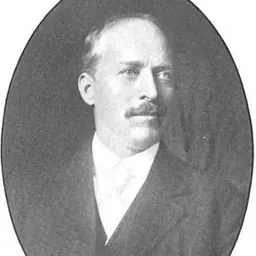
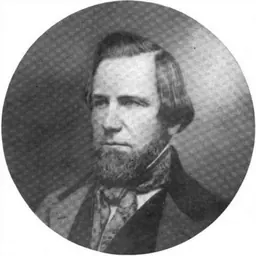


Related people
Same field, nearest in time

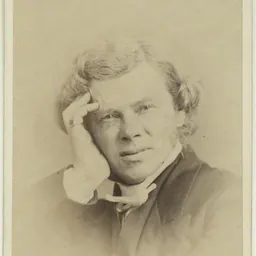


Contemporaries
People whose lives overlapped Jonathan Townley Crane's

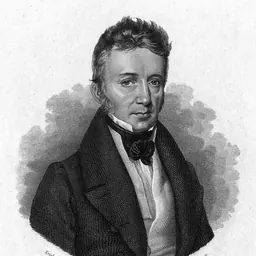
Frequently asked questions
Who was Jonathan Townley Crane?
American clergyman (1819–1880)
When was Jonathan Townley Crane born?
Jonathan Townley Crane was born on 18 June 1819 in Union County.
When did Jonathan Townley Crane die?
Jonathan Townley Crane died on 16 February 1880 in Port Jervis.
What was Jonathan Townley Crane's occupation?
Jonathan Townley Crane was a cleric.
What nationality was Jonathan Townley Crane?
Jonathan Townley Crane was American.
Sources & further reading
· Wikipedia: Jonathan Townley Crane
· DBpedia: Jonathan Townley Crane
Cite this page
APA: Biography.guide. (2026). Jonathan Townley Crane. https://biography.guide/jonathan-townley-crane/
MLA: "Jonathan Townley Crane." Biography.guide, https://biography.guide/jonathan-townley-crane/.
Chicago: "Jonathan Townley Crane." Biography.guide. https://biography.guide/jonathan-townley-crane/.
Data last updated: 2026-09-20 · Spot an error? Report a correction.
Page generated 2026-09-27 05:18 UTC