
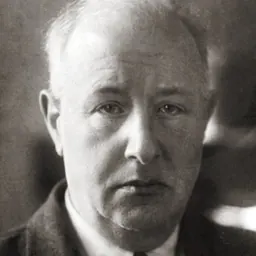
Johnny Papalia
Italian-Canadian mobster
About Johnny Papalia
Lived 1924 – 1997 (aged 73). Johnny Papalia was an Italian crime boss and drug trafficker.
John Joseph Papalia (; March 18, 1924 – May 31, 1997), also known as Johnny Pops Papalia or "The Enforcer", was a Canadian crime boss of the Papalia crime family based in Hamilton, Ontario, Canada. The Papalia crime family is one of three major crime families in Hamilton, the other two being the Musitano crime family and the Luppino crime family.
Papalia was born in Hamilton, to Italian immigrants who also had a history in organized crime. At a young age, he was involved in petty crimes, but by the 1950s, moved his way up to drug trafficking and formed a powerful alliance with the Buffalo crime family. Papalia also operated various gambling bars and vending machine businesses. In the 1960s, he played a role in the French Connection drug smuggling operation, for which he was extradited to the United States and served five years of a 10-year prison sentence. On May 31, 1997, Papalia was shot to death outside his vending machine business by Kenneth Murdock, a hitman hired by Angelo and Pat Musitano of the Musitano crime family.
Early life and criminal activities Papalia was born on March 18, 1924, in Hamilton. His father, Antonio "Tony" Papalia, who had early Picciotteria values, was a bootlegger who immigrated to Canada from Delianuova, Calabria, Italy, in 1912. He first came through New York City before moving on to Montreal, Quebec, then to New Brunswick to work in the coal mines, before finally settling on Railway Street in Hamilton, Ontario, in 1917. His father became associated with Calabrian compatriot and notorious bootlegger Rocco Perri, and later Guelph mobster Tony Sylvestro, working as a bootlegger who operated speakeasies. Papalia said of his father, in a 1986 interview with The Globe and Mail'''s Peter Moon, "I grew up in the '30s and you'd see a guy who couldn't read or write but who had a car and was putting food on the table. He was a bootlegger and you looked up to him."
Papalia's mother, Maria Rosa Italiano, also came from a Mafia family, the Italiano clan, who also participated in Perri's gang. Maria Rosa initially married Antonio's younger brother Giuseppe Papalia Jr., giving birth to two sons in Italy, however when Giuseppe died, she immigrated to Canada with her two sons in 1913 to live with Antonio, whom she married at some point, although it remains unclear when the wedding actually took place. Papalia's parents were not married at the time of his birth, which was a source of much shame for him. Moon stated, "John was a bastard. He was born out of wedlock. And he was always very self-conscious about it. You have to remember, he grew up in an era when it was a terrible thing to be conceived out of wedlock. Apparently it bothered him all his life and you had to very careful about calling John a 'bastard'." Johnny, the oldest brother to Frank, Rocco and Dominic Papalia, half-brothers Joseph and Angelo Papalia, brother-in-law Tony Pugliese, and associates, all worked in running his clubs and gambling operations.
Papalia attended St. Augustine Catholic School on Mulberry Street, dropping out in grade 8 after he suffered from a case of tuberculosis that put him in a sanitorium for several months. In 1986, Papalia stated that his biggest regret in life was never attending high school, saying of his life, "It's been an interesting one. But maybe I'd liked it to be different." As a teenager, Papalia was a member of a gang that staged burglaries in Hamilton, with the icehouse at the corner of Railway and Mulberry streets serving as their base. Papalia later described himself as a "wild kid" who was known for his womanizing, and who had contracted syphilis by the age of 19. Papalia had "a reputation for extreme violence" from the start of his criminal record as a teenager in the 1930s, and despite being only with a slender build, was widely feared.
Early career In 1940, Papalia's father was arrested and sent to internment at Camp Petawawa as part of the Italian Canadian internment, as potentially dangerous enemy aliens with alleged connections to Benito Mussolini's fascist regime, causing his son to have a grudge against the Canadian government. Papalia later gave his father's internment as the reason as to why he did not serve in the military during World War II. When Antonio Papalia was interned, his profession was listed as "bootlegger." Antonio Papalia was released in 1941 after he convinced the authorities that he was not a Fascist. The authorities imposed conditions upon his release such as he stay out of Hamilton and regularly check in with the police. After his release, the Papalia family aligned with the Buffalo crime family, causing tensions with the still interned Perri who saw this as a betrayal. The Papalia family were still angry with Perri for his refusal to support the Italiano family and made an alliance with Stefano Magaddino against him. Johnny Papalia did not volunteer for overseas service (until November 1944, Canada only sent volunteers overseas to fight in World War II). He later claimed that his reputation for violence dated back to the war years when he was the subject of anti-Italian bullying and insults, leading Papalia to engage in violence for self-defense. In 1943, Papalia moved to Toronto, where he joined a gang that specialized in burglaries. During this period, Papalia started to work for Harvey Chernick, one of Toronto's biggest heroin dealers.
During his time in Toronto, Papalia served with a youth gang consisting of Paul Volpe, Pasquale Giodrano, Roy Pasquale, and Alberto Mignacchio. Many of the members of the gang such as Volpe remained long-time associates of Papalia. One who knew the gang stated, "They were a very tough bunch. They had a lot of balls. John himself talked tough, although he wasn't tough himself. He was smart enough, though, to make sure he was with people who were. John was the type of guy-even back then-that if he sensed fear in you, he tried to prey on it." On January 27, 1944, Papalia was arrested for failing to register for conscription for the defense of Canada as he was legally obliged to do in 1942 when he turned 18. Papalia's criminal record, health problems and his anger at the Canadian government for interning his father ensured that he was not conscripted.
On October 17, 1943, Perri was released from internment as Italy had signed an armistice with the Allies on September 3, 1943. It is believed Antonio and Johnny Papalia, along with Stefano Magaddino of the Buffalo crime family, played a role in Perri's disappearance in 1944 after Perri left members of his Mafia crew "slighted", although the case remains unsolved. It is not clear just precisely when Papalia became a made man, but it appears to have occurred sometime in 1955. Galante had forged an alliance with the Cotroni family, placing Quebec in the sphere of influence of the Bonanno family, and Magaddino, who wanted to keep southern Ontario in his sphere of influence, chose Papalia as one of his instruments for doing so. Magaddino informed Papalia that he was not to replace the older leaders in Ontario, but rather to work with them. Papalia was to serve as the enforcer boss who was to accept the advice of the older dons who were to play a role almost analogous to a consigliere. Papalia's territory covered Hamilton, Burlington, Oakville, St. Catharines, Welland, Niagara Falls and much of Toronto. Papalia also had influence into northern Ontario with his power extending into North Bay.
In 1954, Papalia was running a taxi company in Hamilton, which attracted police attention when one of the cab drivers, Tony Coposodi, was killed execution-style. By 1955, Papalia was known for wearing expensive suits and driving equally expensive automobiles, together with his womanizing habits. He liked to flash what he called "reds and browns" ($50 and $100 bills) as a sign of his wealth. Also in 1954, Papalia paid the tax arrears of the Porcupine Miners' Club of Timmins, a social group for the miners in northern Ontario founded in 1929 that had been out of business for some time. Papalia used the right that he gained with the social club charter to reopen the Porcupine Miners' Club in Hamilton in 1955, which served as a cover for an illegal gambling club that operated for the next two years. Papalia had the games rigged at his gambling club, having the dice loaded to favour certain numbers, having small dents placed in the cards to let the dealers know what the cards were and clips were placed under the gambling tables to remove cards with high values. In June 1955, while collecting money from various Montreal businesses together with the boxer Norm Yakubowitz, Papalia was the subject of an assassination attempt when someone opened fire on the duo. Yakubowitz was shot in the leg while Papalia was unharmed. He later shifted to Toronto extorting brokers and running gambling clubs. In 1955, Papalia organized in Toronto a bare-knuckle boxing match between Chard and James J. Parker, the former British Empire and Canadian heavyweight champion. Papalia, a boxing fan, together with 100 guests watched the last known bare knuckles boxing match in Canada, a fight that was notorious for its bloodiness and ended with Chard defeating Parker. Also in 1955, with assistance from Sylvestro, Papalia started opening charter gambling clubs in Hamilton and Toronto. Sylvestro's son-in-law Danny Gasbarrini, Papalia's brothers Frank, Rocco and Dominic, half-brothers Joseph and Angelo, brother-in-law Tony Pugliese, and associates Red LeBarre, Freddie Gabourie, Frank Marchildon and Jackie Weaver, all worked in running Papalia's clubs. After police raids, Papalia started working with James McDermott and Vincent Feeley, two major figures in gambling, in several clubs throughout southern Ontario. Together with Alberto Agueci of the Magaddino family, Papalia contacted Antoine Cordoliani and Joseph Césari, two Corsican leaders of Le Milieu, to buy high-quality heroin.
Papalia often seized control of various businesses by asking of the business owners the question "Johnny Papalia-does that mean anything to you?" When the answer was no, Papalia replied "Well, it's going to. I'm your new partner." Those who refused his offers of partnership were then beaten bloody by Papalia's thugs. Papalia especially liked to target stockbrokers who worked on Toronto's Bay Street, usually demanding that they pay him about $1,000 per week as "protection", supposedly against their enemies, but in fact for protection against being beaten by Papalia's crew. The Hamilton police chief, Leonard Lawrence, stated in a press conference that Papalia was the leading suspect in a number of beatings of businessmen, saying, "We have heard rumors that gangland beatings have taken place here recently, but when we question people who are said to be involved, nobody-including the victims-shows much interest in talking to us. It is typical of what happens when a syndicate tries to take over and organize crime." The protection payments served as seed money for Papalia's loan sharking business, which he called "shylocking." Papalia's principle enforcer was Howard "Baldy" Chard, a professional heavyweight boxer with a scarred face. Chard failed to win any professional titles, but during his time in Kingston Penitentiary, had been the prison boxing champion, a title that commanded both respect and fear on the streets.
In October 1958, Papalia made contact with Vinnie Mauro and Frank Caruso of the Genovese family, saying he wanted to smuggle heroin into the United States and needed someone to sell the heroin. Agueci went to Buffalo to see Magaddino and secured his support by paying him US$4,000 and a promise of the half the profits. In 1959, Papalia was the only Canadian who attended the meeting in New York that formally set up the French Connection smuggling network. Under the "French Connection", the Mafia brought heroin via France into North America. The "French Connection" heroin was grown in the poppy fields of Turkey and further afield in the "Golden Crescent" nations of Afghanistan, Pakistan and Iran or the "Golden Triangle" nations of Burma, Thailand and Laos. Joseph Valachi, who also attended the same meeting in New York, and later turned informer, testified that he knew Papalia as a capo (boss) who dominated southern Ontario under the authority of the Magaddino family of Buffalo.
The Bluestein beating The illegal gambling business in Toronto was very lucrative, dominated by Maxie Bluestein who kept the Mafia out of his pocket. Bluestein's Lakeview Club earned more than $13 million a year, but on March 21, 1961, at the Town Tavern in Toronto, Papalia met with Bluestein. It was understood that if Bluestein accepted a drink paid for by Papalia, it would mean submission to Papalia and he refused it, it would mean defiance; Bluestein refused the proffered drink. Bluestein refused to "merge" his operations with Papalia's and was beaten with brass knuckles, iron bars and fists as a result. The beating of Bluestein attracted much media attention, and the Toronto Star newspaper columnist Pierre Berton called the attack a "semi-execution" brazenly committed in public view. Berton turned the Bluestein beating into a cause célèbre, constantly demanding in his column that Papalia be brought to justice. Berton described the beating, "...as terrible a beating as it is possible to give a man without killing him...Iron bars with ropes attached to them for greater leverage rained down on Bluestein's head and across his forehead, eyes and cheekbones. His scalp was split seven or eight times. Brass knuckles were smashed into his eyes and a broken bottle was ground into his mouth. When Bluestein dropped to the floor, he was kicked in the face. His overcoat, torn and slashed, was literally drenched in his own blood... When I saw Bluestein, some 10 days after the affair, he looked like a piece of meat." Several of the witnesses to the Bluestein beating received threatening phone calls in the days after, warning them that it would be "healthier" for them to forget what they had just seen.
The 100 some witnesses to the beating were reluctant to come forward, but in May of that year Papalia turned himself in to police to take some heat off of the crime family, and he was sentenced in June to 18 months in prison for the assault. Berton's columns had their effect, causing massive public outrage and Papalia was ordered to turn himself in. As Papalia entered the Toronto police station, he displayed his hatred of journalists yelling insults at the assembled reporters, being quoted as saying "look at the dirty rats. The creeps. Those crummy, rotten cameras and all you crummy rotten guys." In 1986, Papalia expressed no remorse for the beating, saying "Bluestein was greedy, he wanted it all for himself." At the trial, which started on June 27, 1961, the witnesses were visibly terrified of Papalia, and several times, the presiding judge, Joseph Addison, accused several of the witnesses of perjury, saying he did not find their testimony about not being able to remember who had beaten Bluestein very credible. The trial ended with Papalia being found guilty of assault and Judge Addison sentenced Papalia to 18 months in prison. Addison noted that the witnesses had all taken oaths on the Bible to tell the truth before testifying, which led him to sourly note that the fear of Papalia seemed greater than the fear of God with the witnesses at this trial. While Bluestein kept control of the Toronto gambling market, he had paranoia and was later committed to a mental institution in 1973 after he had killed a friend, before later dying of a heart attack in 1984.
A profile of Papalia was published in Toronto Star Weekly Magazine by Peter Sypnowich under the title "He Wanted To Be Canada's Al Capone." However, Synowich focused on Papalia's sex addiction, calling him "a compulsive womanizer." Synowich wrote, "His relationships with women provide the best clue to his character. Papalia has an inbred need to steal other men's women. They serve as his trophies." Papalia's fondness for the wives and girlfriends of other men led him to engage in a succession of fights with the cuckolded men.
Later in 1961, Papalia demolished the family home and built a warehouse for his vending machine business, an all-cash business, to serve as the front for his criminal operations. The office for the Monarch Vending company was located at 20 Railroad Street and became Papalia's principal base, although officially Monarch Vending was owned and managed by his brother Frank Papalia together with Bruno Monaco. Through the company records listed Johnny only as an employee of his brother Frank, he was considered by almost everyone to be the real boss of Monarch Vending. Monarch Vending and its successor company Galaxy Vending had a monopoly on the vending machine business in Hamilton as no other vending machine company was willing to compete with Papalia. Monarch Vending was a profitable concern, making a daily profit of $12,000. Papalia began to hijack trucks to supply cigarettes for his vending machines. Papalia was also associated with F.M. Amusements, a pin-ball machine company and Beer Magic, which had a virtual monopoly on supplying beer dispensers for bars in Ontario for decades to come. As a loan shark, Papalia forced those who took loans from him to pay back $6 for every $5 they had borrowed with the interest compounding on a weekly basis, amounting to an annual 1,040 percent interest on the loans. Businessmen who were unable to repay their loans were forced to take on vending machines from Papalia on his terms while those who could still not repay their loans were further threatened "or worse."
Extradition and sentencing By the early 1960s, he earned his reputation from the "French Connection", which had then been responsible for supplying over 80 percent of America's heroin market between the 1960s and 1970s. He worked in this operation with the Sicilian Agueci brothers, Alberto and Vito, along with the vending machine businesses with Alberto, until he was brutally murdered by the Buffalo crime family in late 1961, and Vito jailed. On May 22, 1961, several people were indicted related to the "French Connection" from informants Salvatore Rinaldo and Matteo Palmeri.
In July 1961, Papalia was ordered to be extradited to the United States for his role in the smuggling ring.
In 1963, Papalia was also convicted in absentia in Italy of gangsterism and sentenced to 10 years in prison. It was for this reason that Papalia never visited Italy. Upon his return to Canada from his prison term in the United States, the Canadian authorities refused the extradition request from Italy under the grounds that Papalia was a Canadian citizen and that the offence of "Mafia associations" did not exist in the Criminal Code of Canada. Papalia worked closely with the Italian branch of his 'ndrina (clan). There is also an Australian branch of the Papalia family based in Griffith, but the precise relationship, if any, between the Australian and Canadian Papalias beyond blood ties remains unclear. Two of Papalia's Australian cousins were murdered.
Return to Hamilton On January 25, 1968, after serving less than half the sentence, he was released from a United States penitentiary in Lewisburg, Pennsylvania and sent back to Canada. Papalia's homecoming to Hamilton was a lavish affair as Railway Street was filled up with a vast assortment of parked Lincolns and Cadillacs as a number of the underworld figures of southern Ontario arrived to pay their respects. Much to Papalia's annoyance, some of his interests in Toronto were handed over by the Magaddinos to Volpe. Papalia met with Luppino to ask that his interests in Toronto be returned, a request that was refused, but Luppino did say that there was still work for Papalia to do in Toronto. At a meeting with Luppino in November 1968, Papalia expressed some uncertainty as to whom the Cotroni family of Montreal answered to, saying it was either the Magaddino family or the Bonanno family, leading to Luppino to answer "We are still under the Commission."
On June 6, 1969, Papalia visited Toronto to meet with Luppino. On the following day, the bullet-ridden body of Filippo Vendemini was found in the parking lot behind his shoe store on Bloor Street. Vendemini's widow, Giuseppina, told the police that her husband was frequently on the phone with a man she only knew as Vincenzo. Using the phone records, the police discovered that Vincenzo was Vincenzo Sicari, the owner of a pizzeria in Montreal who often visited Toronto. Sicari stated to the police that on the day of the murder, he had driven Vendemini to Hamilton to see an unnamed mutual friend and then drove Vendemini to the Toronto airport; he denied knowing anything about the murder. On July 28, 1969, Papalia again returned to Toronto to meet with Luppino, and on the same day, the bullet-ridden body of Sicari was found in Toronto. The way that murders in Toronto always seemed to occur at the same time that Papalia met with Luppino led the police to suspect that Papalia was the killer. It was around this time that Papalia started to be known in the underworld as "the Enforcer."
On June 4, 1970, a NDP MPP, Morton Shulman, gave a speech at Queen's Park, that detailed the close friendship between Papalia and a locally prominent Oakville businessman with a long criminal record, Clinton Duke as well as with the commissioner of the Ontario Provincial Police Eric Silk. The speech caused a media storm in Ontario. Papalia behaved with characteristic insolence when interviewed by two police officers, giving flippant answers to questions about his relationship with Duke. At a public inquiry to examine Shulman's allegations, Papalia admitted that Duke was a long-standing friend of his, but denied corrupting the police, claiming to be unaware that Duke was a close friend of Silk's. The photographs of Papalia entering the Old City Hall of Toronto to testify at the inquiry dressed in a trench coat and a fedora while smoking a cigarette made the frontpages of the Canadian newspapers. The inquiry commissioner found no evidence that Papalia had corrupted Silk via Duke, but did criticize Silk for associating with Duke, whom he stated was an unsavory figure.
In August 1970, Papalia attended a crime summit in Acapulco representing the Magaddino family to meet with gangsters from Canada, the United States, France, and Mexico to discuss plans to take over the soon to be legalized casino industry in Quebec. The chairman of the Acapulco summit was Meyer Lansky who represented "the Commission" of New York while Vic Cotroni, Paolo Violi and Frank Cotroni were present to represent the Cotroni family. The various gangsters who attended the summit numbered at least 100 and it was intended to use the Quebec casinos to engage in money laundering on a colossal scale. French gangsters of Le Milieu'' attended the summit as it was planned to use the casinos to launder the profits from the French Connection smuggling network. The plans turned out to be moot when the Quebec premier, Robert Bourassa, later dropped his plans to legalize casinos as his government took a tough law-and-order stance in response to the FLQ. The allegation made by the FLQ in its manifesto of October 8, 1970, that was read out on national television and radio in both French and English following the kidnapping of the British trade commissioner James Cross on October 5 that Bourassa was working for "the election riggers Simard-Cotroni" caused Bourassa to change his policies that were perceived to be friendly towards organized crime. Papalia remained close to American gangsters whom he often met in the resort towns of Turkey Point and Port Rowan on the shores of Lake Erie. In August 1971, at a meeting in Toronto, Luppino shifted control of the construction unions in Toronto from Papalia to Volpe, which was a major blow to Papalia's ego. In August 1971, Papalia assaulted a court employee, Len Joy, who arrived at the Monarch Vending office to give him a summons. The incident led to Papalia being charged with assault, but a month later, in September 1971 the assault charges were dropped when Joy accepted a written apology from Papalia who stated he "been under a great deal of pressure at the time" and refused to testify against him.
In 1972, Papalia was summoned to a meeting in Toronto by Michele Racco to discuss the situation with his son Domenic Racco who was facing three counts of attempted murder after he lost his temper and impulsively shot three men whom he felt had insulted him. The meeting was held in Italian, a language that Papalia could speak competently, albeit he was "not fluent in the delicacies of the language." However, inviting Papalia to the meeting to discuss a problem within the Racco family was a sign of great respect, showing that Racco held him in high esteem. Despite their efforts, Domenic Racco was convicted of three counts of attempted murder. Racco asked Papalia to look after his son after his death, which was a mark of great honor within the Mafia subculture. Papalia took this duty seriously, attempting to serve as a surrogate father to Domenic Racco and tried to discourage him, albeit unsuccessfully, from abusing drugs. In 1974, Papalia attended the murder trial of Peter Demeter in Toronto, which was already a media circus and his presence in the courtroom caused a "media sensation" as there was much speculation about why he was attending a trial in which the Papalia family was apparently not involved in.
In 1971, Stanley Bader, a disreputable Toronto stockbroker with a talent for swindling his investors went into business with Sheldon "Sonny" Swartz, who was the son of a Papalia family associate. In 1973, Bader swindled a group of Montreal investors, which Swartz mentioned to Papalia. Papalia devised a plan under which Swartz would tell Bader that the investors were from the Cotroni family, and that Papalia would volunteer to "return" the stolen money to Montreal in exchange for sparing Bader's life. On August 26, 1973, Swartz told Bader that the defrauded investors were from the Cotroni family who were planning to "maim" him, but that Papalia had stepped in to save him by agreeing to take $300,000 to Montreal. Bader believed these claims, saying he had noticed "strange" cars parked outside of his house at night, whom he felt were from Montreal, and agreed to hand over the money to Papalia.
The next year, Bader mentioned to a friend from the Montreal underworld about what had happened to him in August 1973, who in turn passed along the news to the Cotroni family. In 1974, Montreal mobsters Vincenzo Cotroni and Paolo Violi were overheard on a police wiretap threatening to kill Papalia and demanding $150,000 after he used their names in the $300,000 extortion of Toronto business man Stanley Bader without notifying or cutting them in on the score.
Death In April 1997, Pasquale "Fat Pat" Musitano, the boss of the Musitano family, met with Gaetano "Guy" Panepinto, the Toronto agent of Montreal's Rizzuto family, in Niagara Falls. Musitano was unhappy with the way that his family was subordinate to the Papalia family, which in turn was the Canadian branch of the Magaddino family. Both Papalia and his right-hand man Barillaro were "made men" in the Magaddino family, and Musitano needed the "protection" of a more powerful family to avoid retaliation from the Buffalo family should either be killed. Musitano wanted an alignment with the Rizzuto family, which in turn was looking to expand into Ontario.
Papalia was fatally shot in the head on May 31, 1997, at the age of 73 in the parking lot of 20 Railway Street outside his vending machine business, Galaxy Vending, in Hamilton. The hitman Kenneth Murdock claimed that he had been ordered to kill Papalia by Angelo and Pat Musitano of the Musitano crime family who owed $250,000 in bookmaking debts to Papalia. Murdock went to Galaxy Vending to meet with Papalia, whom he had met several times before, to speak in the parking lot of Galaxy Vending under the false pretense of seeking his help to get money back from the Musitanos. After Papalia refused to get involved, he turned his back, and Murdock pulled out his handgun and shot him. Papalia was brought to Hamilton General Hospital where he was pronounced dead.
Amid controversy, Papalia was refused a full Funeral Mass by the Diocese of Hamilton due to having been a career criminal. He was buried at Holy Sepulchre Cemetery, in a family plot, in Burlington.
Aftermath and legacy Murdock also killed Papalia's right-hand man Carmen Barillaro two months after he killed Papalia. In November 1998, Murdock pleaded guilty to three counts of second degree murder and was sentenced to life imprisonment, and he named Pat and Angelo as the men who had ordered the murders; he was released on parole after serving 13 years. In February 2000, the brothers were sentenced to 10 years for conspiracy to commit murder in the murder of Barillaro in a plea bargain arrangement. No conviction was obtained in relation to the murder of Papalia. In October 2006, the Musitano brothers were both released from prison.
Papalia's brother Frank, the former underboss of the family, who would have been the heir to the operation, decided not to retaliate; instead, he retired and lived inconspicuously. He died of natural causes in April 2014, at the age of 83. Langton noted Papalia had a marked distaste for outlaw bikers and, in a sign of his power, Walter Stadnick, the former president of Hells Angels Canada, had trouble establishing the Angels in Ontario while Papalia was alive. Langton stated, "It's hard for people to understand now just how powerful Johnny Pops was. He was basically the only Canadian Mafia figure who could sit at the table with the top guys in New York. He was part of the French connection; he ruled a big swath of Canada, particularly Southern Ontario, for a very long time. After the Mafia imploded in less than a year, there was no one to oppose the bikers and they came rushing in."
Don’t just read it —
keep it.
Full-length biographies made to live with: read them, listen on the way to work, watch them tonight.
- E-book
- Audio
- Video
Instant download · yours to keep · every purchase keeps this site free
Important facts
People in Johnny Papalia's life
Named in this biography and alive at the same time







Related people
Same field, nearest in time



Contemporaries
People whose lives overlapped Johnny Papalia's

Frequently asked questions
Who was Johnny Papalia?
italian-Canadian mobster
When was Johnny Papalia born?
Johnny Papalia was born on 18 March 1924 in Hamilton.
When did Johnny Papalia die?
Johnny Papalia died on 31 May 1997 in Hamilton.
What was Johnny Papalia's occupation?
Johnny Papalia was a crime boss and drug trafficker.
What nationality was Johnny Papalia?
Johnny Papalia was Italian.
Sources & further reading
Cite this page
APA: Biography.guide. (2026). Johnny Papalia. https://biography.guide/johnny-papalia/
MLA: "Johnny Papalia." Biography.guide, https://biography.guide/johnny-papalia/.
Chicago: "Johnny Papalia." Biography.guide. https://biography.guide/johnny-papalia/.
Data last updated: 2026-09-20 · Spot an error? Report a correction.
Page generated 2026-09-27 05:26 UTC