
About Johnny Marcum
Lived 1909 – 1984 (aged 75). Johnny Marcum was an American baseball player.
John Alfred Marcum (September 9, 1909 – September 10, 1984), nicknamed "Footsie" and "Moose", was an American professional baseball player. He was a pitcher for seven seasons in Major League Baseball (MLB) with the Philadelphia Athletics, Boston Red Sox, St. Louis Browns, and Chicago White Sox. Over seven seasons, he had a 65–63 record and a 4.66 earned run average (ERA).
Growing up in Kentucky, Marcum's professional career started after Bill Neal, the manager of the Louisville Colonels, saw him pitching and signed him to a contract. Marcum entered the major leagues late in the 1933 season with the Athletics, compiling a record of 3–2 in five appearances. He spent the next two years with the Athletics as one of their main starting pitchers, posting records of 14–11 in 1934 and 17–12 in 1935, a season in which he received votes for the Most Valuable Player in the American League. Before the 1936 season, Marcum was traded to the Red Sox, who were spending a great deal of money in hopes of improving. Marcum spent 1936–1938 with Boston, but he and other acquisitions failed to live up to expectations. After splitting 1939 between the Browns and the White Sox, Marcum pitched in the minor leagues for several more seasons before retiring. Following his baseball career, he returned to Kentucky, tending a 165-acre farm in Eminence.
Early life John Alfred Marcum was born on September 9, 1909, in Campbellsburg, Kentucky. His parents, Ben and Grace, were of American and Irish descent, the athlete later recalled. In addition to a brother, Tillman, who was seven years his senior, Johnny had three younger siblings. His first home was his family's Campbellsburg farm, but when he was three, the Marcums moved closer to Eminence to work on a tenant farm.
Ben had a local reputation as a standout baseball pitcher in semipro ball. Sometimes on weekends, he would give his sons time off from their tasks to play a contest.
Early minor league career Dayton Aviators (1929–1930) In 1927, Bill Neal, who managed the Louisville Colonels of the Class AA American Association, saw Marcum pitching and signed him to a contract. Reports indicate that Marcum spent much of the 1928 season pitching batting practice for Louisville and playing occasional games as an outfielder. Statistics for him are unrecorded. Louisville optioned him to the Dayton Aviators, a Class B team, in 1929. His 19 losses led the Central League, and his 326 hits allowed ranked second to Alex McColl's 339.
Marcum spent most of the 1930 season with Dayton. In 22 games as a pitcher, he had a 6–9 record, a 5.75 ERA, and 179 hits allowed in 130 innings pitched. However, he also played 55 games in the outfield. As a hitter, he batted .421 with 114 hits and 17 home runs.
Major league career Philadelphia Athletics 1933 During the 1933 season, Earle Mack, a scout for the Philadelphia Athletics, attended a series between Louisville and the St. Paul Saints, attempting to find his team another pitcher. The hurler he went to see had just injured his foot and was not throwing as hard as normal, but Mack was impressed with Marcum and returned a favorable report. Around this time, the Colonels mailed a letter to all 16 of the major league teams, offering Marcum's contract to the highest bidder. Philadelphia won the bidding on August 20 with an offer of either $25,000 or $30,000, later sending Jim Peterson to the Saints to complete the transaction on September 30.
Marcum made his major league debut on September 7 at Philadelphia's Shibe Park, holding the Cleveland Indians to five hits and pitching a shutout in a 6–0 victory. His second start was a five-hit shutout as well, against the Chicago White Sox. "Moose" was another nickname of his. His season got off to an unsuccessful start, as he lost six decisions before picking up his first win on June 17, posting a 6.01 ERA in that span. Beginning with the win, he posted a 14–5 record and a 3.66 ERA over the remainder of the season. A second shutout came in the second game of a doubleheader on September 16, in which he allowed seven hits in a 2–0 victory over the St. Louis Browns. In 37 games (31 starts), he had a 14–11 record, a 4.50 ERA, 92 strikeouts, 88 walks, and 257 hits in 232 innings pitched.
1935 Marcum waited a while to sign his contract for 1935, hoping for more money. He began the season as the number two starter for the Athletics, behind Sugar Cain in the rotation. In Marcum's fourth start of the year, on May 17, he held the Browns to four hits in an 8–0 shutout victory. He had a busy day on June 20. Slated to pitch the second game of a doubleheader against the White Sox at Comiskey Park, he was relaxing in the clubhouse during the first game, when a teammate informed him that his manager wanted him to pinch hit in that contest. Marcum made the long journey from the clubhouse to home plate, where he was handed a bat to save time. He hit a game-tying single against John Whitehead, left the game in favor of a pinch runner, and returned to the clubhouse as Philadelphia rallied to win 5–3. Then, Marcum pitched innings in the second game, his longest outing of the year, suffering the loss in a 2–1 defeat. On July 23, he was "invincible with men on base", according to the Associated Press, as he threw an eight-hit shutout in a 2–0 victory over the White Sox. During the season, Marcum set career bests in many categories, including wins (17), ERA (4.08), strikeouts (99), and innings pitched . His 99 strikeouts were also the eighth-best total in the AL. Following the season, on December 6, he was traded to the Boston Red Sox for Gordon Rhodes, George Savino, and $150,000.
Boston Red Sox 1936
W.P. Dozier Jr., sports editor of the Sarasota Herald, wrote before the 1936 season that the Red Sox would be "bolstered by the purchase of such stars as Jimmy Foxx, Heinie Manush, and Johnny Marcum." Marcum again delayed signing his contract, hoping for a $10,000 salary, though he settled for $7,500. The start of his season was delayed slightly due to a sore arm, treated by a tonsillectomy, a common remedy of the period. A win over the Browns on July 28 evened Marcum's record at 6–6, but he won only two of his final nine decisions. After Marcum failed to hold the lead in the first game of a doubleheader against the Athletics on August 19, The Telegraph wrote that "the Yawkey bankroll seems to have produced a set of elbowers that have failed so completely that [the] Red Sox are playing exactly .500 ball today ... and have sunk to sixth place [out of eight teams]." He did throw one shutout, limiting the White Sox to seven hits in the second game of a September 3 doubleheader as Boston prevailed 5–0. A wrist sprain cost him three weeks of action in June. He pitched 11 innings in the second game of a doubleheader on July 10, besting his old team by a 5–2 score. In 37 games (23 starts), he had a 13–11 record, a 4.85 ERA, 59 strikeouts, 47 walks, and 230 hits allowed in innings.
1938 Before the 1938 season, manager Joe Cronin anticipated that Marcum would have a better season. The pitcher speculated that he might win 20 games. In 15 games (11 starts), he had posted a 5–6 record, a 4.09 ERA, 25 strikeouts, 25 walks, and 113 hits allowed in innings.
St. Louis Browns/Chicago White Sox Nowlin wrote that Marcum "struggled badly" with the Browns. In a relief outing against the Detroit Tigers on August 9, he was hit above the right eye by a line drive off the bat of Hank Greenberg. The injury required four stitches, and he did not pitch again until August 22. His final appearance came against the Browns in the first game of a September 30 doubleheader; he pitched five scoreless innings of relief but had a no decision in a 5–1 loss. The following year, in 30 games (25 starts), he had a 17–7 record with 61 strikeouts and 40 walks. For 1942, he made 34 appearances (29 starts), ranking seventh with 237 innings pitched. His 2.96 ERA ranked ninth, but his record was only 14–16, those 16 losses tying with Owen Scheetz for second in the league, and behind Mickey Haefner's 17.
Farming, last two seasons (1943–1947) Marcum did not pitch from 1943 through 1945, in the midst of World War II. Though he was not in the United States military, he supported the war effort by tending his farm in Kentucky. He returned to the Mud Hens in 1946 but was sent to the San Antonio Missions of the Class AA Texas League after just one appearance. Eddie Brietz of the Associated Press reported that his fellow players considered him the "laziest guy in the American League", due partly to his habit of picking up his teammate's bat at the plate rather than carrying one out from the dugout when it was time for him to hit.
Pitching philosophy While Marcum was with the Missions in 1946, he described to Ned Garver how he pitched against one of the Texas League's best hitters (unnamed by Garver in the account). "He's primarily a fastball hitter, so I deliberately throw him two fastballs out of the strike zone, to get behind in the count. Now he will look for the next pitch to be a fastball, but instead I throw him a changeup. That ball looks real nice and big to him, and he will swing at it, but he will usually just hit a weak fly or an easy grounder to short."
Personal life Marcum married Eminence resident Mary Elizabeth Wilson on December 30, 1936. Following his career, he returned to Eminence, where he operated his family's farm. The Marcums cultivated dairy and tobacco products on the property, which totaled . In 1976, Marcum experienced a stroke; though he survived, his memory was permanently affected. Hospitalized at the Jewish Memorial Hospital in Louisville in 1984, he died on September 10.
Don’t just read it —
keep it.
Full-length biographies made to live with: read them, listen on the way to work, watch them tonight.
- E-book
- Audio
- Video
Instant download · yours to keep · every purchase keeps this site free
Important facts
People in Johnny Marcum's life
Named in this biography and alive at the same time


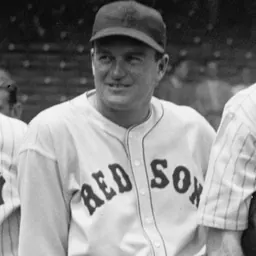





Related people
Same field, nearest in time
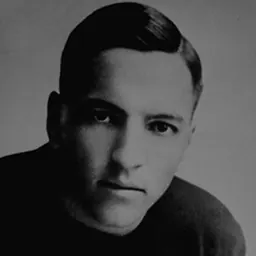
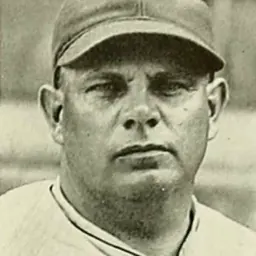

Contemporaries
People whose lives overlapped Johnny Marcum's

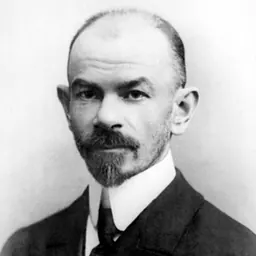



Frequently asked questions
Who was Johnny Marcum?
American baseball player
When was Johnny Marcum born?
Johnny Marcum was born on 9 September 1909 in Campbellsburg.
When did Johnny Marcum die?
Johnny Marcum died on 10 September 1984 in Louisville.
What was Johnny Marcum's occupation?
Johnny Marcum was a baseball player.
What nationality was Johnny Marcum?
Johnny Marcum was American.
Sources & further reading
Cite this page
APA: Biography.guide. (2026). Johnny Marcum. https://biography.guide/johnny-marcum/
MLA: "Johnny Marcum." Biography.guide, https://biography.guide/johnny-marcum/.
Chicago: "Johnny Marcum." Biography.guide. https://biography.guide/johnny-marcum/.
Data last updated: 2026-09-26 · Spot an error? Report a correction.
Page generated 2026-09-27 05:15 UTC