
About John William Ellis
Lived 1853 – 1918 (aged 64–65). John William Ellis was a businessperson.
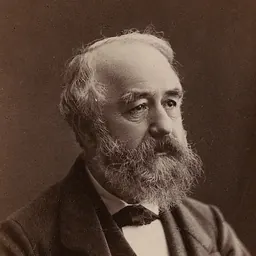
John William Ellis MBE (1853 – 6 August 1918) was a New Zealand businessman and mayor of Hamilton from 1917 to 1918.
His progressive mother encouraged him to integrate with local Māori from an early age, which later facilitated his trading on the borders of the King Country and go on to gain rights to fell and mill timber. That led to formation of one of the largest timber companies, Ellis & Burnand, with its head office in Hamilton, where he became a councillor, then mayor.
Early life and family
John William was born to early feminist, Ellen Elizabeth Ellis (née Colebrook), and Oliver Sidney Ellis (a builder) in 1853 at Guildford. His two younger brothers died in their childhood. They emigrated to Auckland in 1859, where his mother encouraged her sons to learn Māori and play with Māori children, so that John became an interpreter, then a teacher. He and his mother returned to England in 1864. She left him at boarding school when she returned to Auckland in 1865.
John returned when he was 14 and worked in a stationer's shop in Auckland. Around 6 years later (in 1900 he said he'd been in the King Country for 26 years, so about 1874) he opened a general store at Moawhango.
By 1875 he had Motakotako store, just north of Aotea Harbour. That seems to coincide with a report of a post office, with a courteous postmaster, reopening to serve Aotea. Much of the trade exchanged goods for pigs, which he shipped to Auckland, at one stage owning a schooner, which was wrecked in 1877. In 1880 he was described as, "acquiring a reputation for honour and probity, alike from European and Maori, which a prince might envy; and his sleek teams of ten or more bullocks drawing his heavily laded American waggon (an innovation which caused much needless speculation as to its usefulness), as seen winding along the ill-formed roads of the unkempt wilderness". John sold the Motakotako store in 1882.
At Motakotako John taught Wiremu Tauira's daughter, Te Remi Kauki Tauira, European ways and, despite attempts to discourage a romance, in 1877, he and Kauki seem to have been approved in a Māori hui 'marriage'. A daughter, Lucy, was born in 1879. John and Kauki separated in 1885 after she was called home by her family. She died at Rukumoana Marae in 1922. Lucy married John, son of Rev. J. H. Gray.
John's father, Oliver, died on 12 March 1883 and his mother, Ellen, on 17 April 1895. John burnt most copies of his mother's 1882 feminist novel, believing his father to be an occasional drinker, rather than the drunkard portrayed in the novel.
The sources are sometimes not quite in agreement as to dates, or people over the next decade, but it seems that in December 1882 (or 1883), and he continued with the store until at least 1893. Henry Valder joined as a partner in 1884. The old store and home at Motakotako burnt down about 1885. though other sources say it wasn't until 1886.
John moved to Ōtorohanga in 1885, where he became postmaster and opened another store and John Taonui Hetet, of Ngāti Maniapoto descent. J T Hetet & Co built the first building in Te Kūiti, then joining with John, also just before the arrival of the railway construction gangs, though still there when a raid at the store resulted in a police invasion in 1890. Between the mid-1880s and mid 1890s Ellis Bros & Valder stores and followed the navvies up the North Island Main Trunk line as it was built, with stores at Hunterville, Valder sold his interest in the stores in 1900 and returned to England, but was soon to reappear in John's business life. or 1889 and Sidney. (or in the Dardanelles in 1915) and returned later that year to be a timber merchant. Stanley became an engineer, Percy a farmer at Puketarata, near Ōtorohanga, and Sidney, who was back by 1919, stayed in sawmilling. Stanley died on 3 February 1946, aged 58.
Sawmilling Having started in 1884, John seems to have left further expansion in milling for a few years. Coulthard Bros had a mill at Ohaupo, which they moved to Rahu, Te Awamutu in 1882. Graham joined the mill in 1883, Stephen N Westney in 1885, then John seems to have joined them at Rangiaohia from 1889 to 1890.
Ellis and Burnand In 1889 railway engineer, Harry Burnand, and John spent 6 days taking a canoe down the Ongarue and Whanganui Rivers from Poro-o-tarao tunnel, where Harry was inspector of works.
Henry Lewis and John started building a sawmill at Ōtorohanga early in 1890, with a daily capacity of , mostly of kahikatea, and probably including plant from John's 1884 Kihikihi mill. for a short tramway.
John and Harry Burnand became business partners in 1890 (or, more probably, in 1891), when Harry bought Henry Lewis's interest in the Ōtorohanga mill and left his railway job. John's partnership with Henry was dissolved on 12 August 1891, the first reference to 'Ellis and Burnand' being later that month.
Becoming the confidential adviser of King Tāwhiao, helped John acquire timber rights over large areas of bush at Manunui, Ōtorohanga and Mangapehi, (he was still described as a store owner in 1894). Ellis and Burnand Ltd and opened in 1903,
In 1903, the capital value of Ellis and Burnand's operations was about £30,000. In order to meet development costs at Mangapehi, the company appears to have negotiated with the Kauri Timber Company, which in 1904 secured a 47.5% stake in Ellis and Burnand. and then expanded it. By January 1905 the factory had begun production and was employing 40 staff.
After extension of the railway to Taumarunui, a timber mill and box factory was opened at Manunui in 1907 but after Henry Valder became managing director in 1908, and set up Ellis Veneer Co Ltd at Manunui in 1911. The family moved to Hamilton in 1905, He was on Frankton Town Board from 1912 and then on its Borough Council. and on 4 May was elected Mayor of Hamilton, but died after only 15 months in office.
Death John died at Muriaroha on 6 August 1918. He had been ill for some months, and in his last fortnight was confined to his room, suffering carbuncles and diabetes.
Manawa stayed at Muriaroha until when the house became Braemar Hospital, demolished after the hospital moved in 2009. Manawa died at Rotorua outliving all their children.
Don’t just read it —
keep it.
Full-length biographies made to live with: read them, listen on the way to work, watch them tonight.
- E-book
- Audio
- Video
Instant download · yours to keep · every purchase keeps this site free
Important facts
People in John William Ellis's life
Named in this biography and alive at the same time




Related people
Same field, nearest in time


Contemporaries
People whose lives overlapped John William Ellis's



Frequently asked questions
Who was John William Ellis?
New Zealand businessman and mayor of Hamilton
When was John William Ellis born?
John William Ellis was born in 1853 in Guildford.
When did John William Ellis die?
John William Ellis died on 6 August 1918 in Hamilton.
What was John William Ellis's occupation?
John William Ellis was a businessperson.
Sources & further reading
· Wikipedia: John William Ellis
Cite this page
APA: Biography.guide. (2026). John William Ellis. https://biography.guide/john-william-ellis/
MLA: "John William Ellis." Biography.guide, https://biography.guide/john-william-ellis/.
Chicago: "John William Ellis." Biography.guide. https://biography.guide/john-william-ellis/.
Data last updated: 2026-09-24 · Spot an error? Report a correction.
Page generated 2026-09-27 05:04 UTC